
Fiji National Budget 2026 - 2027: Progress and Persistent Gaps in Social Investment
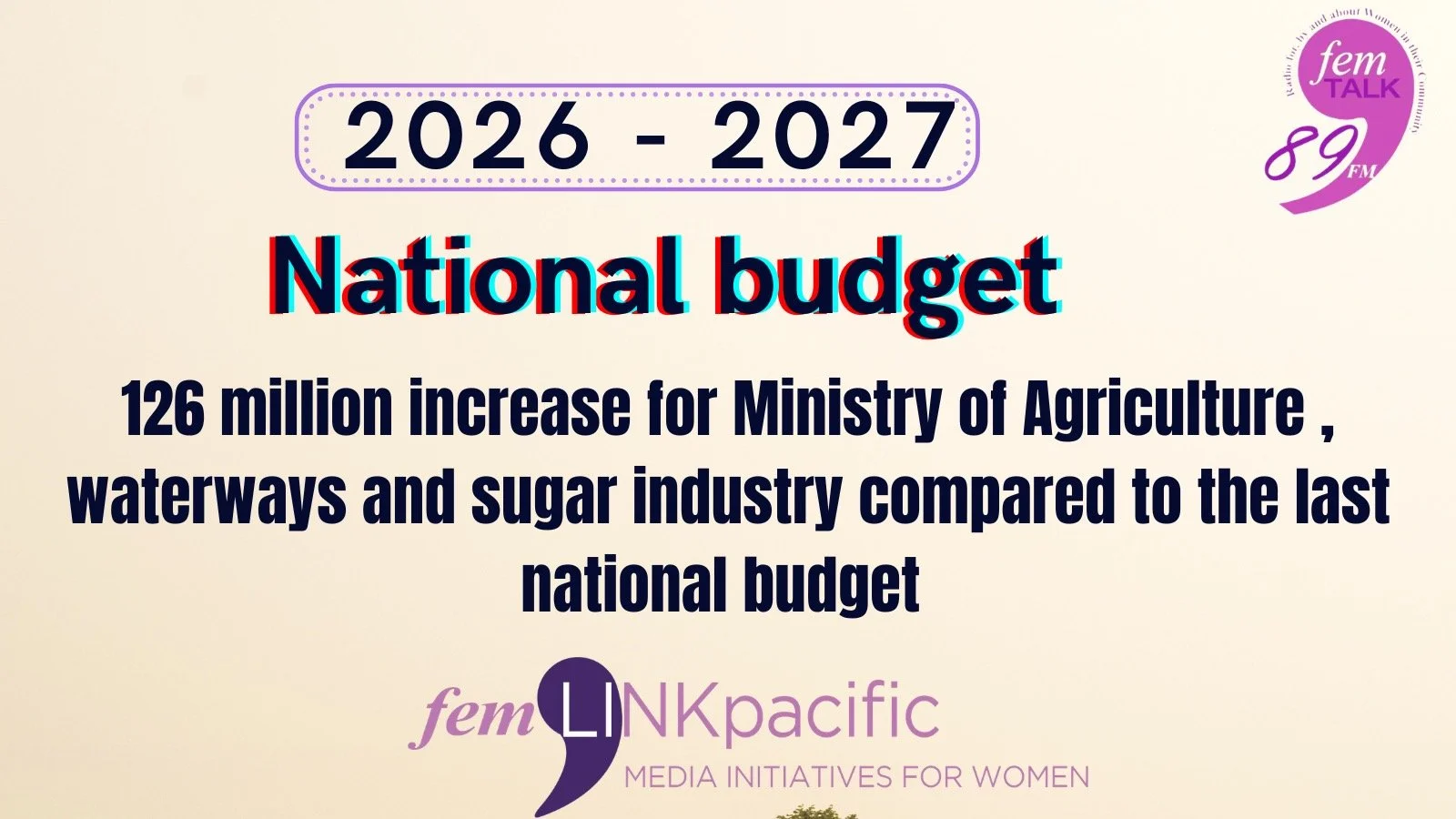
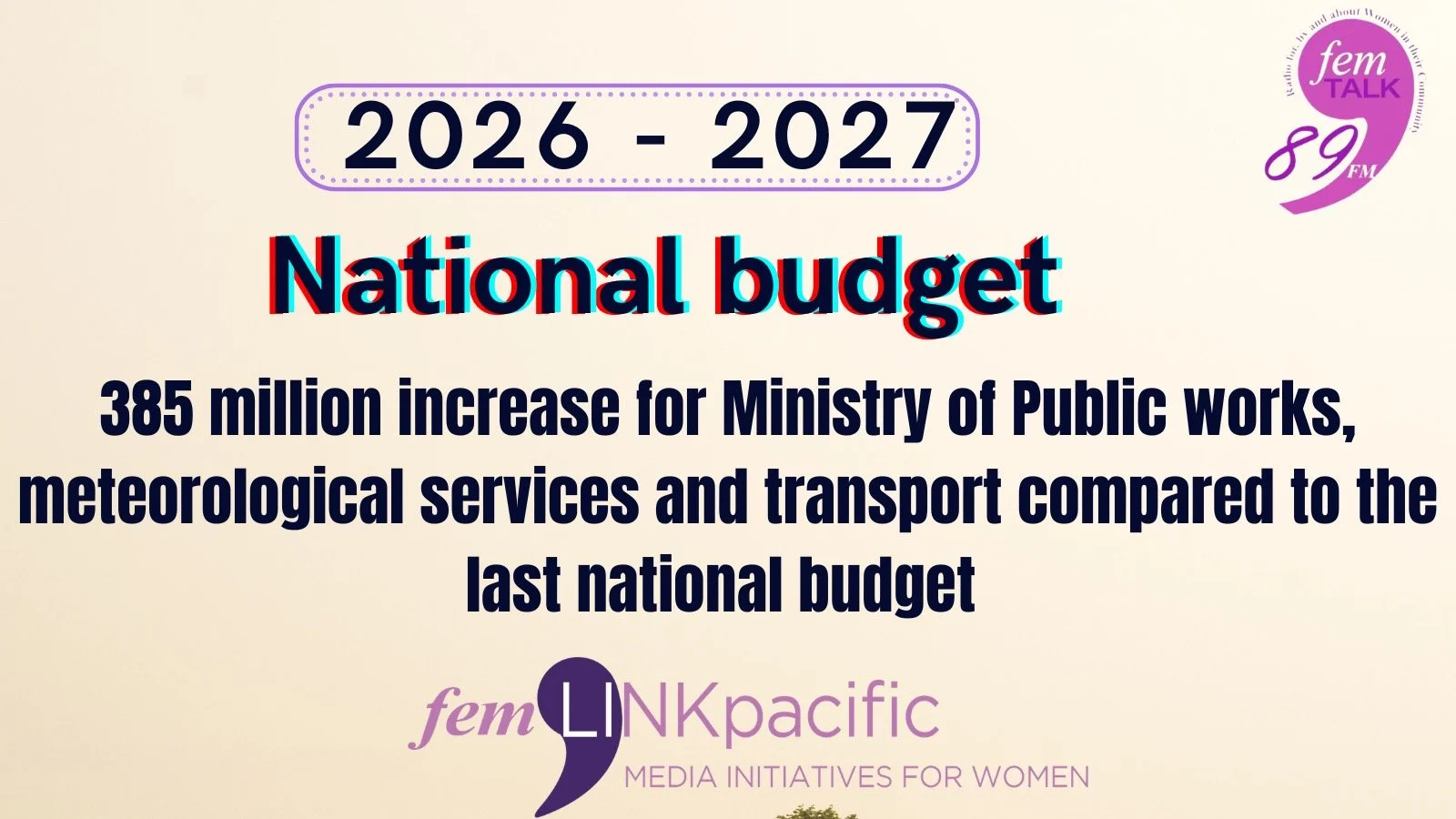
The 2026 - 2027 national budget marks a year of ambitious allocations across Fiji’s key ministries, signaling a government focus on health, education, infrastructure, and social protection. Yet, while the numbers reflect progress, the lived realities of communities especially women, youth, and those in rural and maritime areas reveal ongoing gaps that call for deeper, inclusive planning.
Health: Expanding Access, But Equity Still Uneven
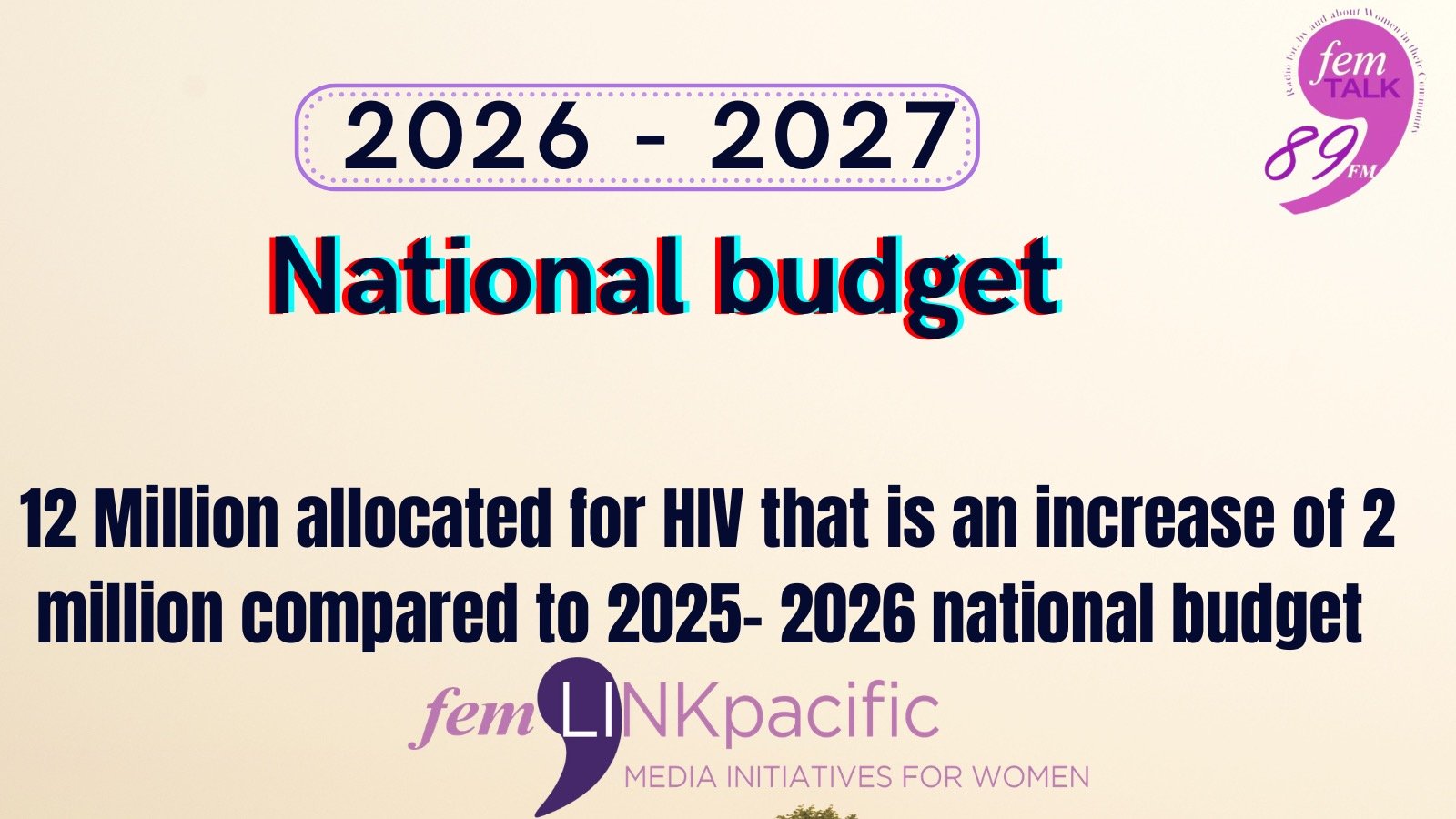
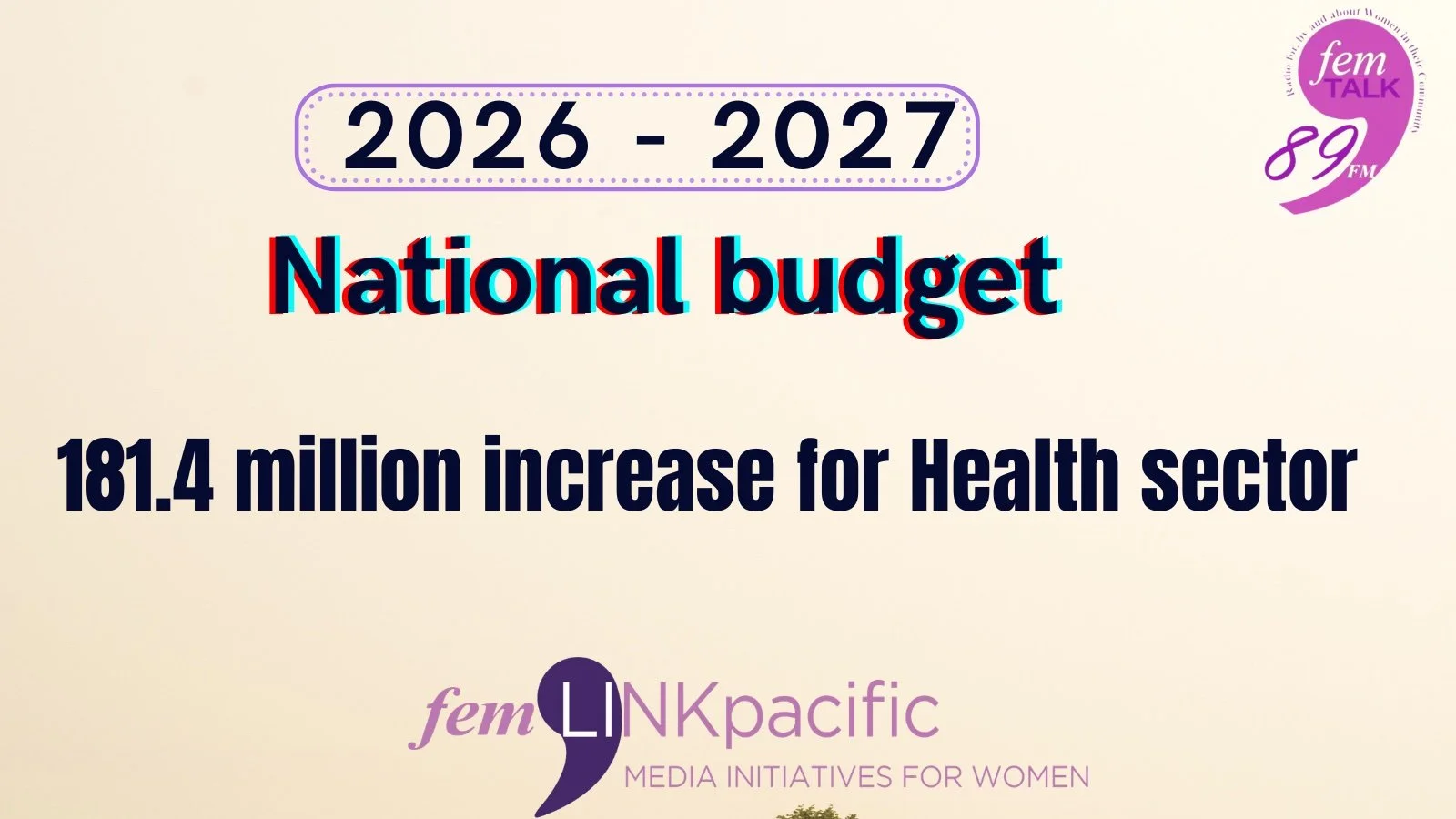
The health sector receives a $181.4 million increase, with $12 million dedicated to HIV programs, a $2 million rise from last year. This expansion strengthens Fiji’s public health response and infrastructure. However, rural health centers continue to face shortages of trained personnel and essential supplies. The budget’s focus on facilities must be matched with investment in community-based health education and mobile outreach especially for women and youth who remain underserved in remote areas.
Women, Children, and Social Protection: Incremental Gains
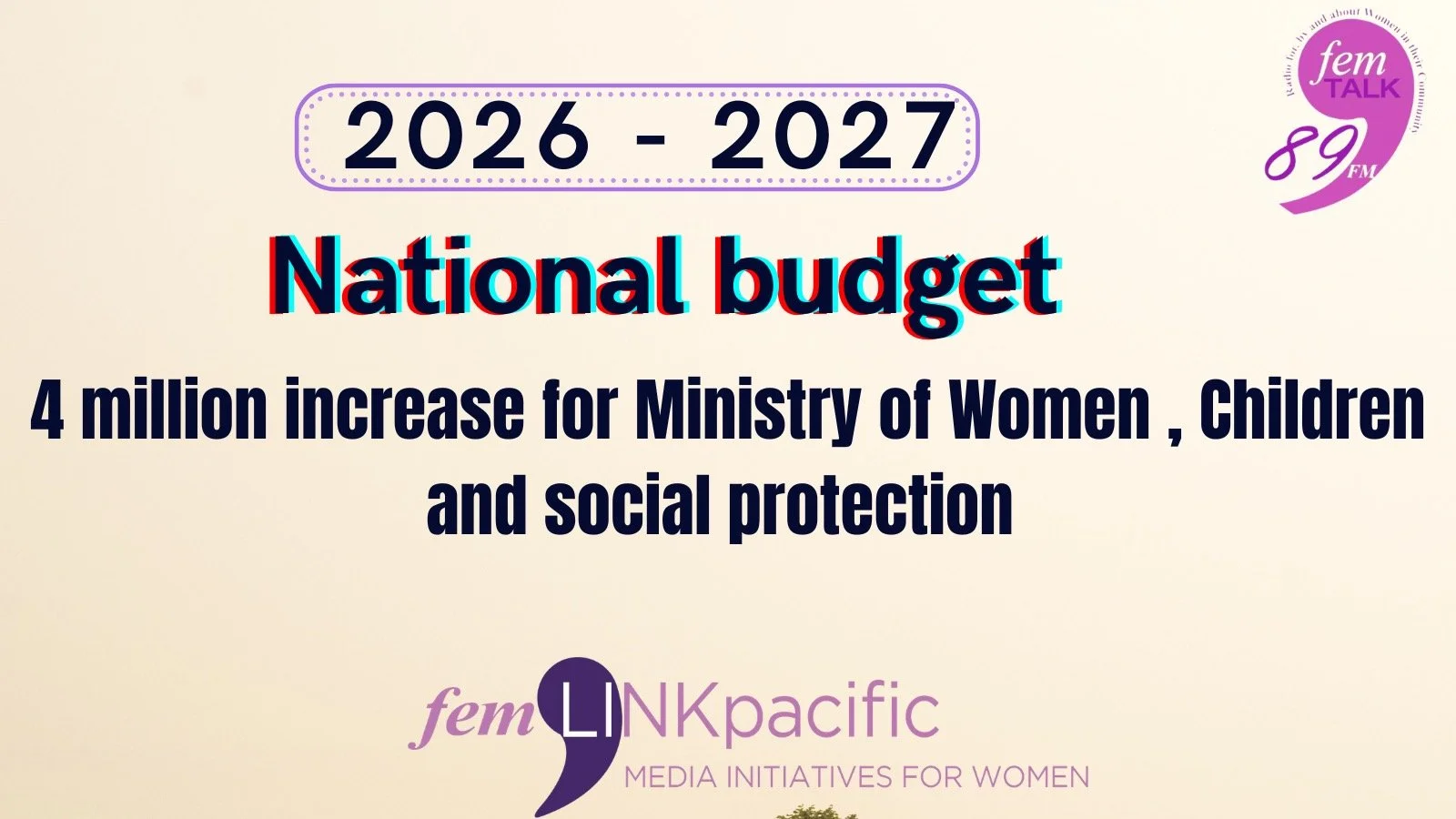
A $4 million increase for the Ministry of Women, Children, and Social Protection is a welcome step toward improving welfare programs and gender equality initiatives. Yet, the allocation remains modest compared to the scale of need. Grassroots women’s networks, including those supported by femLINKpacific, continue to advocate for stronger funding for gender-responsive budgeting, disability inclusion, and protection services that reach beyond urban centers.
Education: Building Foundations, But Digital Divide Persists
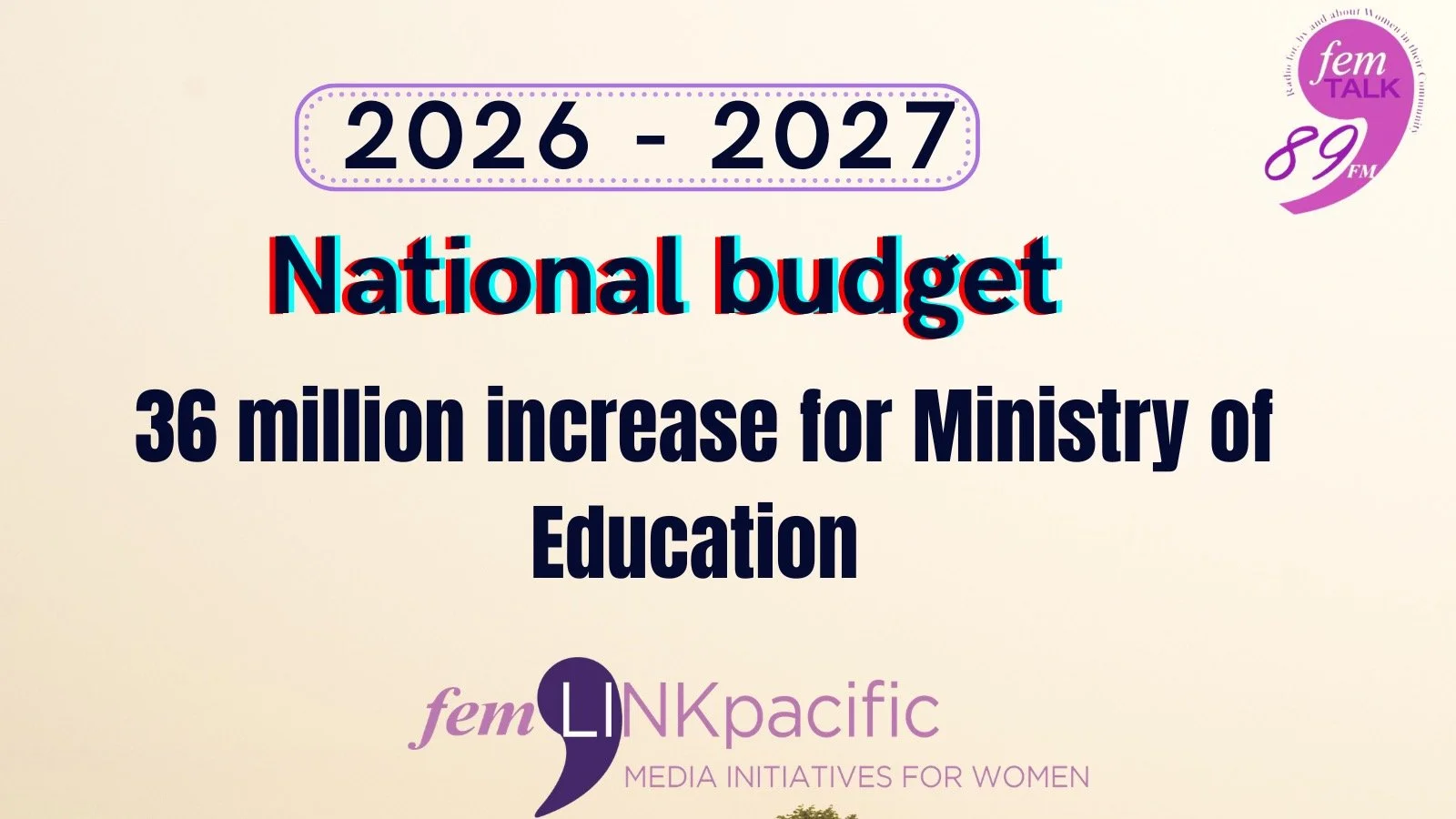
The $36 million increase for education supports teacher development and school infrastructure. However, the digital divide remains a pressing concern. Many rural schools lack reliable internet access and digital learning tools, limiting opportunities for students to engage with modern education platforms. Without targeted investment in digital literacy and connectivity, these gaps risk widening.
Agriculture and Rural Development: Strengthening Livelihoods
The Ministry of Agriculture, Waterways, and Sugar Industry sees a $126 million increase, aimed at revitalizing farming and water management. This investment supports food security and climate resilience yet smallholder farmers, particularly women, still face barriers to accessing credit, technology, and training. The budget could go further by integrating gender-sensitive agricultural programs and community-led climate adaptation initiatives.
Infrastructure and Climate Resilience: Major Investment, Local Impact Unclear
The largest increase, $385 million, goes to the Ministry of Public Works, Meteorological Services, and Transport. This funding promises improved roads, bridges, and transport systems, alongside climate resilience projects. However, the challenge remains ensuring these investments translate into tangible benefits for remote communities. Local consultation and participatory planning are essential to ensure infrastructure development aligns with community priorities and environmental sustainability.
While the 2026–2027 budget demonstrates progress in national planning, it also exposes persistent gaps in gender equity, rural access, and community participation. For Fiji’s development to be truly inclusive, policy implementation must center the voices of women, youth, and marginalized groups ensuring that every dollar spent strengthens the foundation of a more just, resilient, and connected Pacific.
World Food Safety Day 2026
Keeping My Family and Community Healthy Through Safe Food
By a Single Mother in a Rural Community
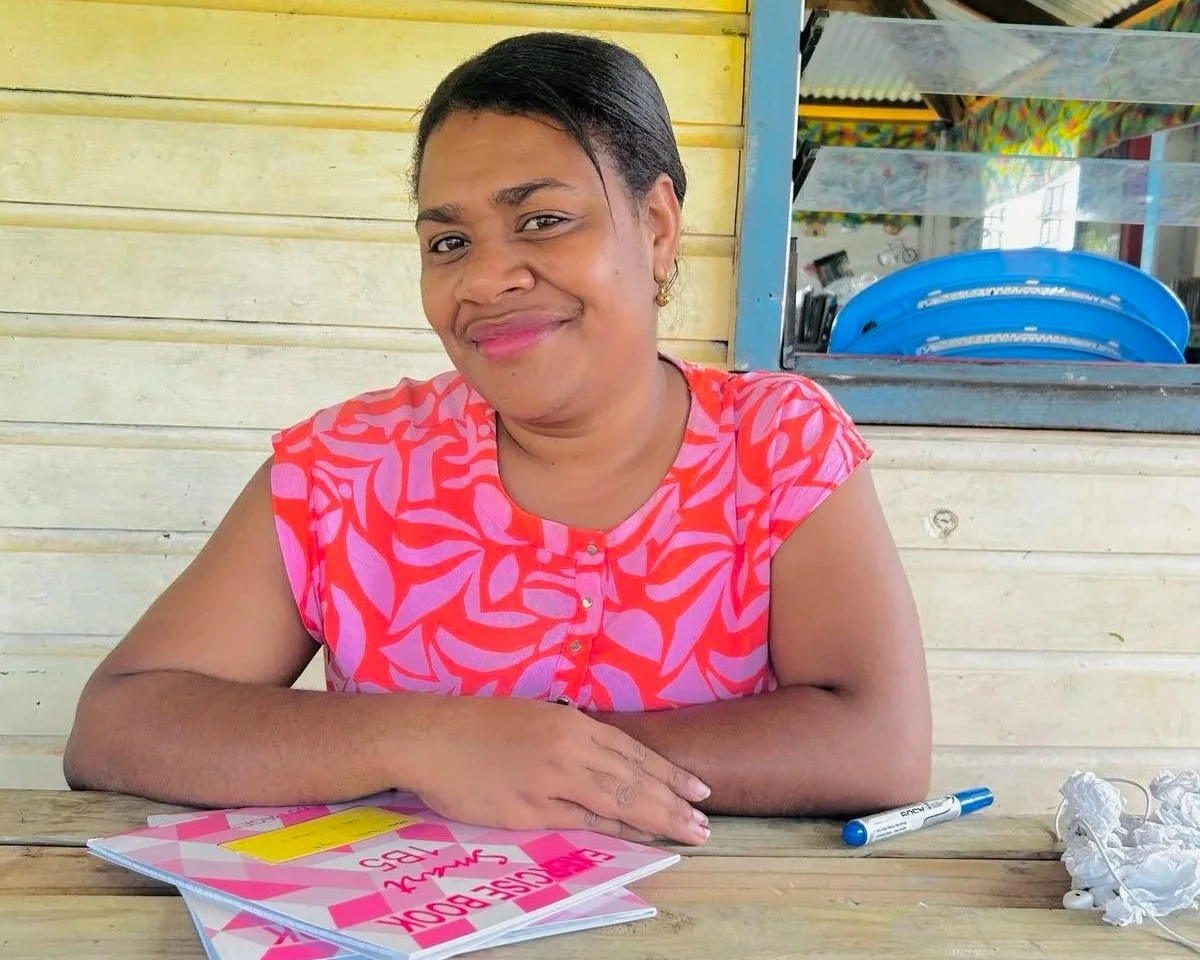
Litia Likuvasakula
“Rural women have a powerful role to play in improving food safety within our communities. By sharing knowledge about hygiene, safe food handling, and proper storage methods, we can help prevent illness.”
Every day, as a single mother living in a rural village, one of my biggest responsibilities is making sure the food I prepare for my children and the food I sell to support my family is safe to eat. Food is more than nourishment; it is health, livelihood, and security.
This World Food Safety Day, I reflect on the importance of food safety, and the role rural women play in protecting their families and communities. Ensuring food safety begins with simple but important practices. Before preparing meals, I wash my hands thoroughly with soap and clean water. I make sure cooking utensils, cutting boards, and food containers are properly cleaned. When cooking meat, fish, or vegetables, I ensure they are cooked thoroughly to kill harmful germs. Leftover food is covered immediately to protect it from flies, dust, and other contaminants. As someone who also sells food occasionally, I understand that customers trust me to provide meals that are safe. I use fresh ingredients whenever possible and avoid selling food that has been left out for too long, especially during hot weather. Clean preparation and proper storage are essential to maintaining that trust.
However, food safety is not always easy in rural communities. One of the biggest challenges we face is access to clean water. During dry seasons or after heavy rains, water sources can become contaminated, making it difficult to wash food and utensils properly. Another challenge is the lack of reliable refrigeration. Without electricity or cooling facilities, food can spoil quickly, particularly meat, fish, and dairy products. Flies and pests are also common problems in the village. They can easily contaminate food if it is left uncovered. Poor waste disposal systems and limited sanitation facilities can further increase the risk of foodborne illnesses. These challenges require constant vigilance and creative solutions. Fortunately, many traditional food preservation and preparation methods have helped our communities keep food safe for generations. Drying fish, fruits, and vegetables in the sun reduces moisture and helps prevent spoilage. Smoking meat and fish extends their shelf life while adding flavor. Fermentation of certain foods can also improve preservation and safety. We often use woven baskets, covered containers, and elevated storage structures to protect food from pests and contamination.
I have personally witnessed the effects of unsafe food. There have been times when family members or neighbors suffered from stomach illnesses after eating spoiled or contaminated food. Children are especially vulnerable. When a child becomes sick from food poisoning, it can lead to dehydration, missed school days, and costly medical expenses. These experiences remind us that food safety is not something we can take for granted.
Rural women have a powerful role to play in improving food safety within our communities. By sharing knowledge about hygiene, safe food handling, and proper storage methods, we can help prevent illness. Women's groups can organize community clean-up campaigns, advocate for better water and sanitation facilities, and support one another in adopting safe food practices. Training programs on food safety can empower women who sell food in local markets.
Communities can also establish shared storage facilities and encourage the use of clean water sources. When women work together, they become agents of change who protect the health of entire villages. This World Food Safety Day, I encourage everyone to remember that safe food saves lives. Whether we are preparing meals for our families or selling food to our neighbors, every step we take toward food safety contributes to a healthier community. As rural women, we may face many challenges, but by working together and practicing safe food handling every day, we can ensure that the food we produce, prepare, and sell nourishes rather than harms those we care about most.
Celebrating 22 Years of FemTALK 89FM!!
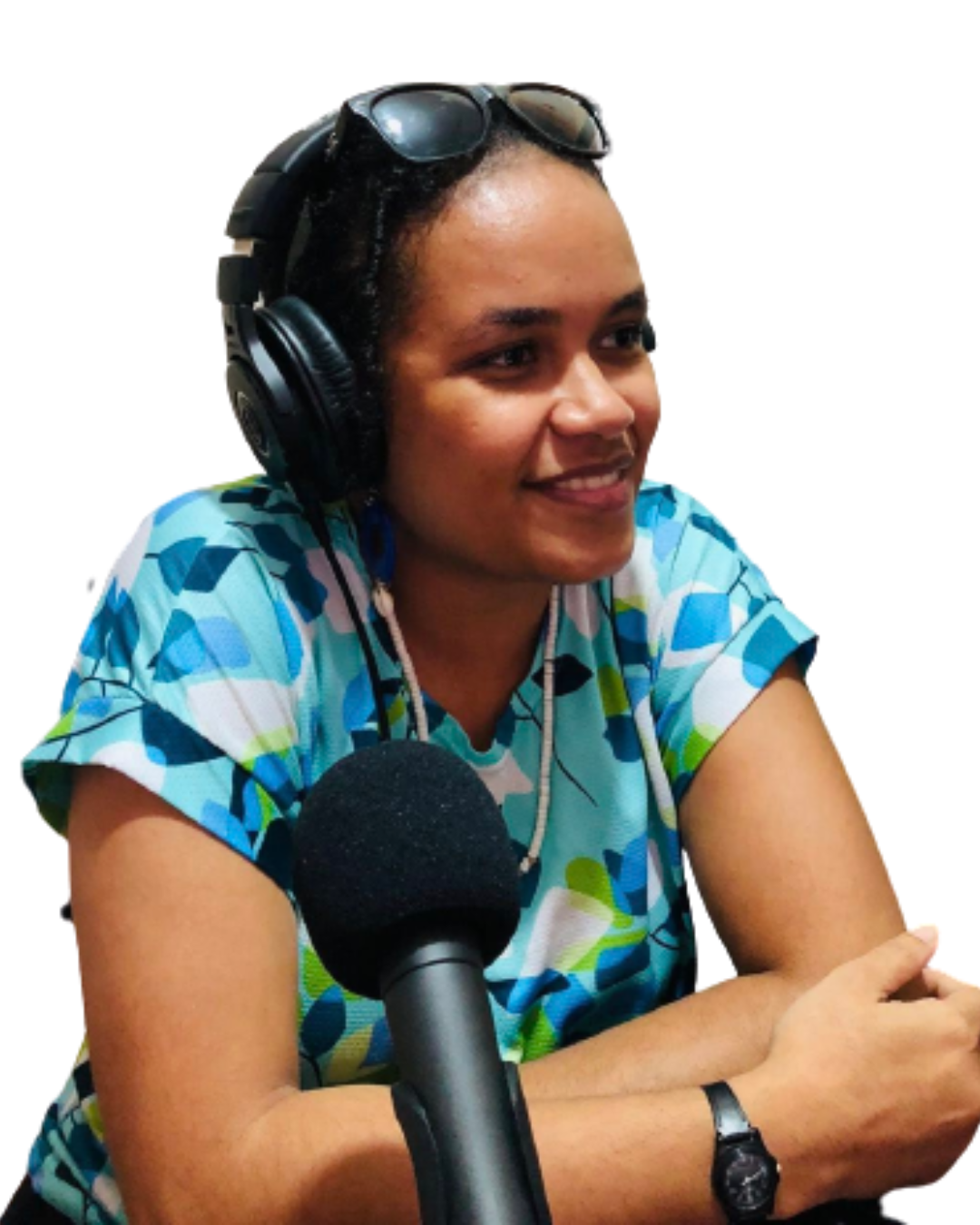
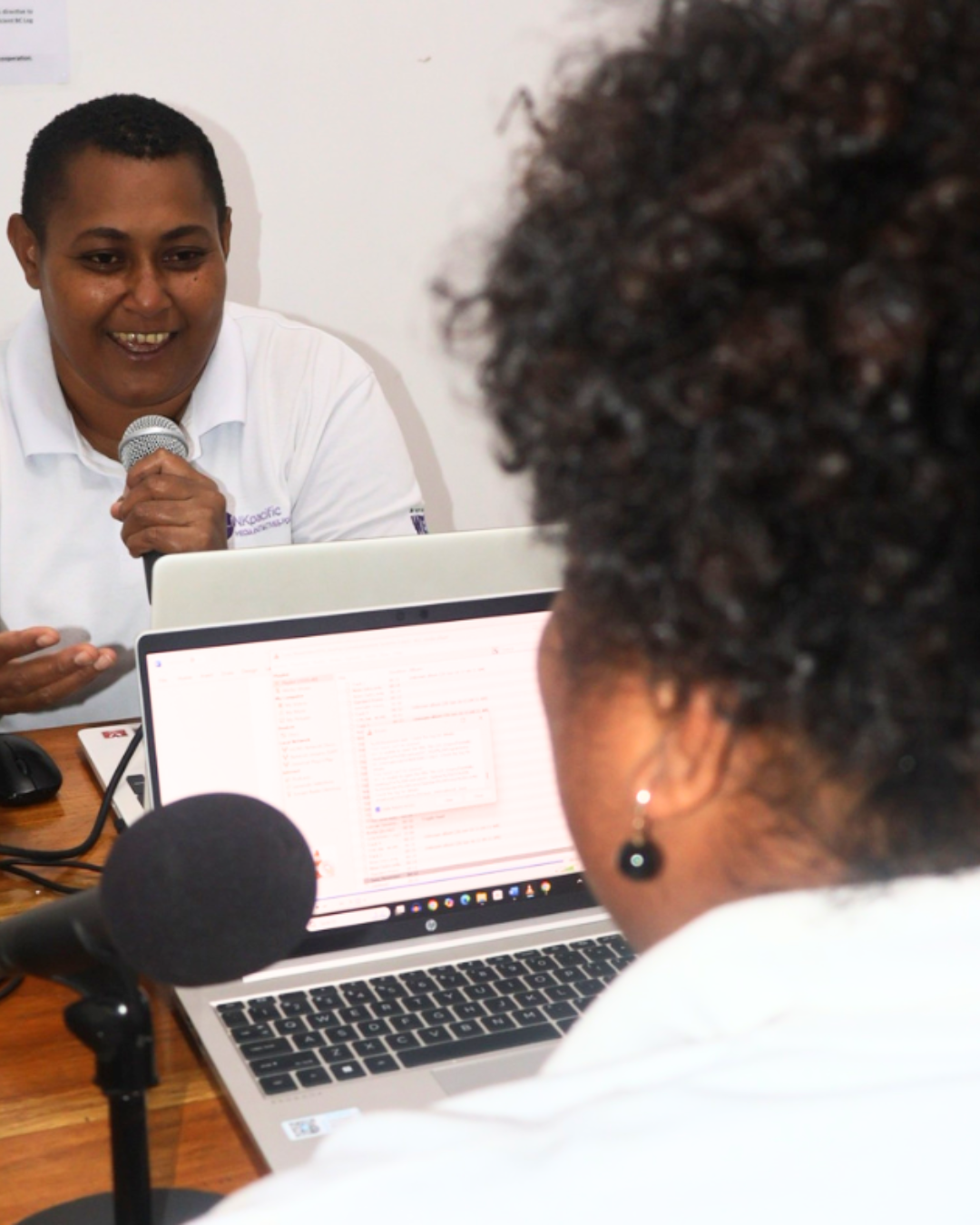
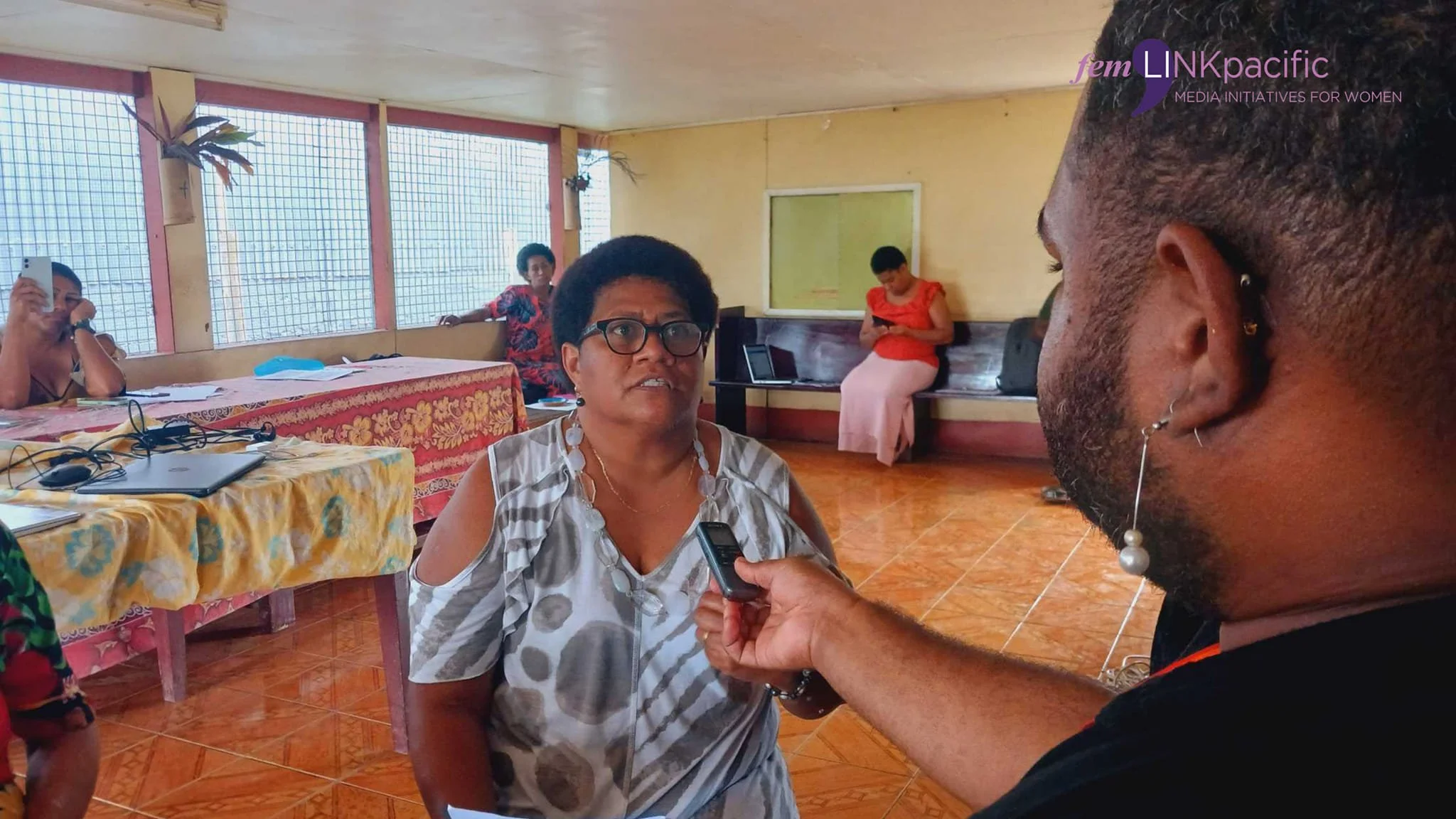
Born from Feminist Resistance
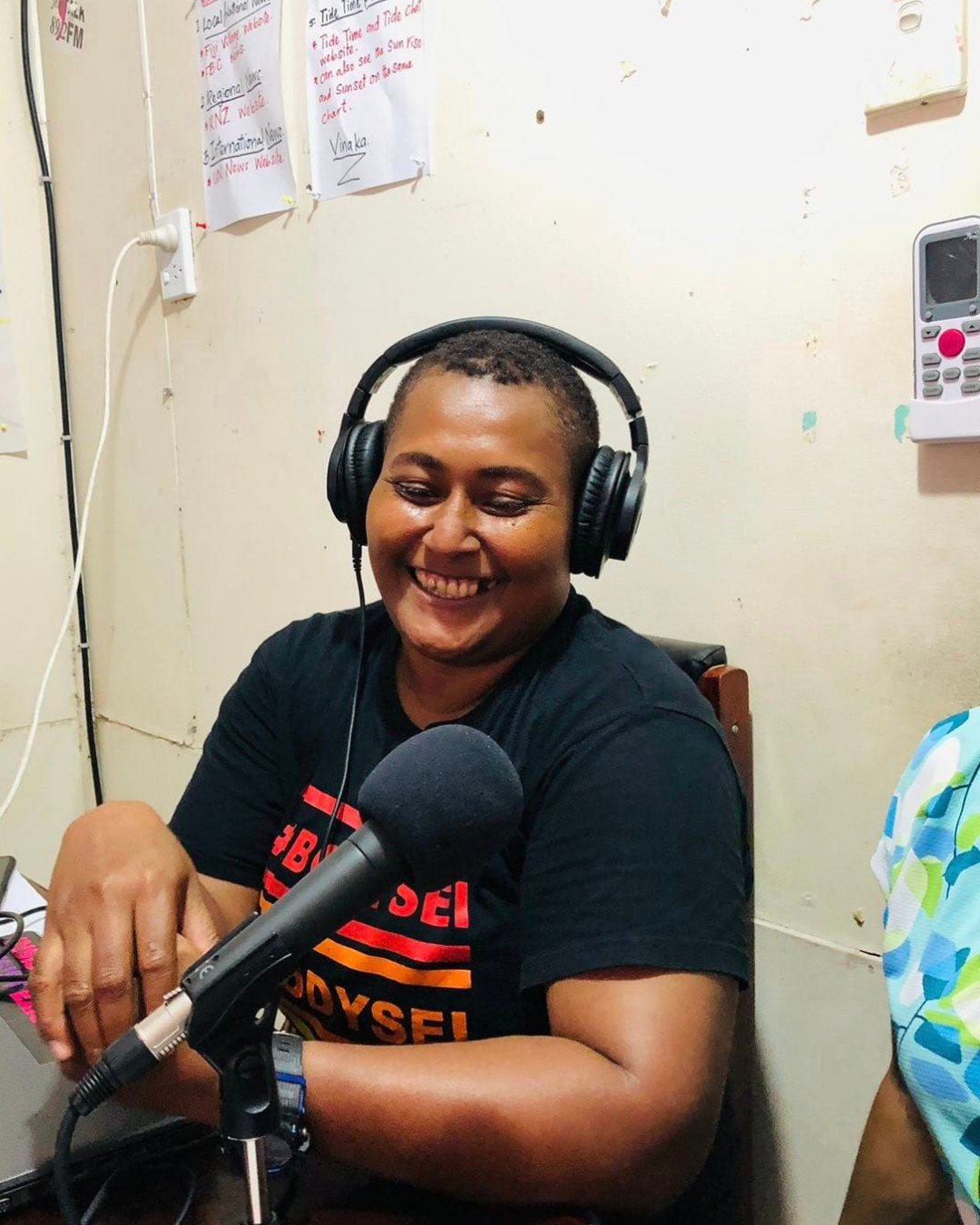
femTALK89FM emerged from FemLINKPacific, a feminist media and broadcasting organization founded in September 2000. Its roots lie in the Blue Ribbon Peace Vigil during Fiji’s 2000 coup, where families of hostages found a safe space to share their voices. Out of that moment of solidarity grew a station dedicated to amplifying women’s perspectives.
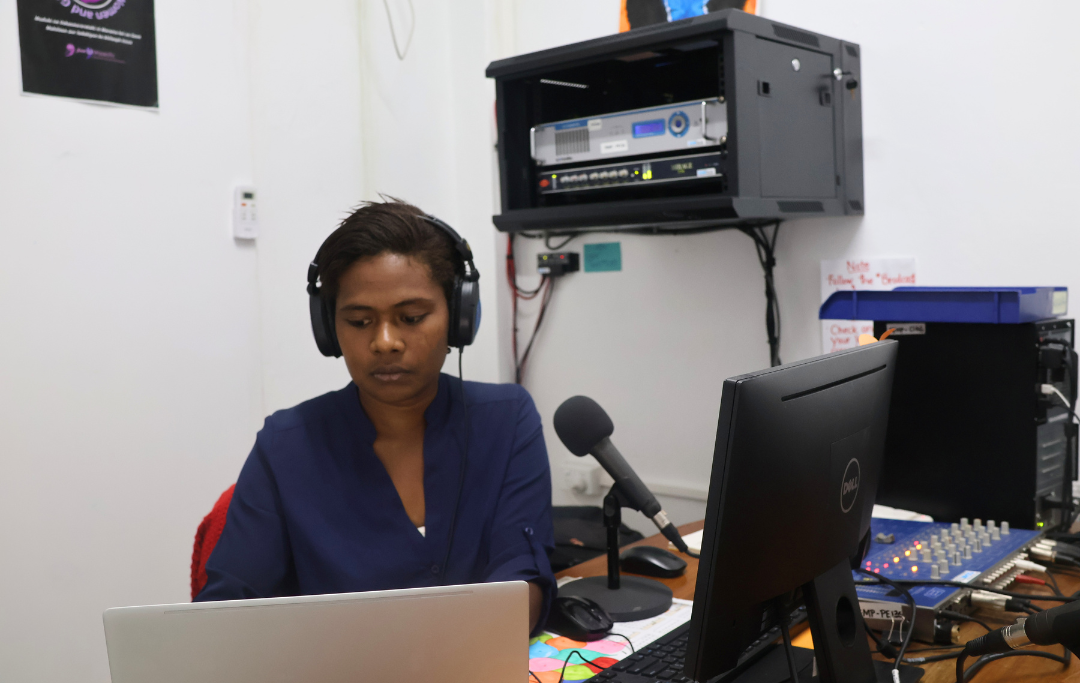
Unlike commercial radio, femTALK89FM was designed as a community radio station for, by, and about women. It prioritizes diverse rural women, young women, women with disabilities, and LGBTIQ advocates. Operating 24 hours in Suva with a 300-watt transmitter, the station has also broadcasted from Labasa and through mobile units, ensuring rural communities are never left unheard.
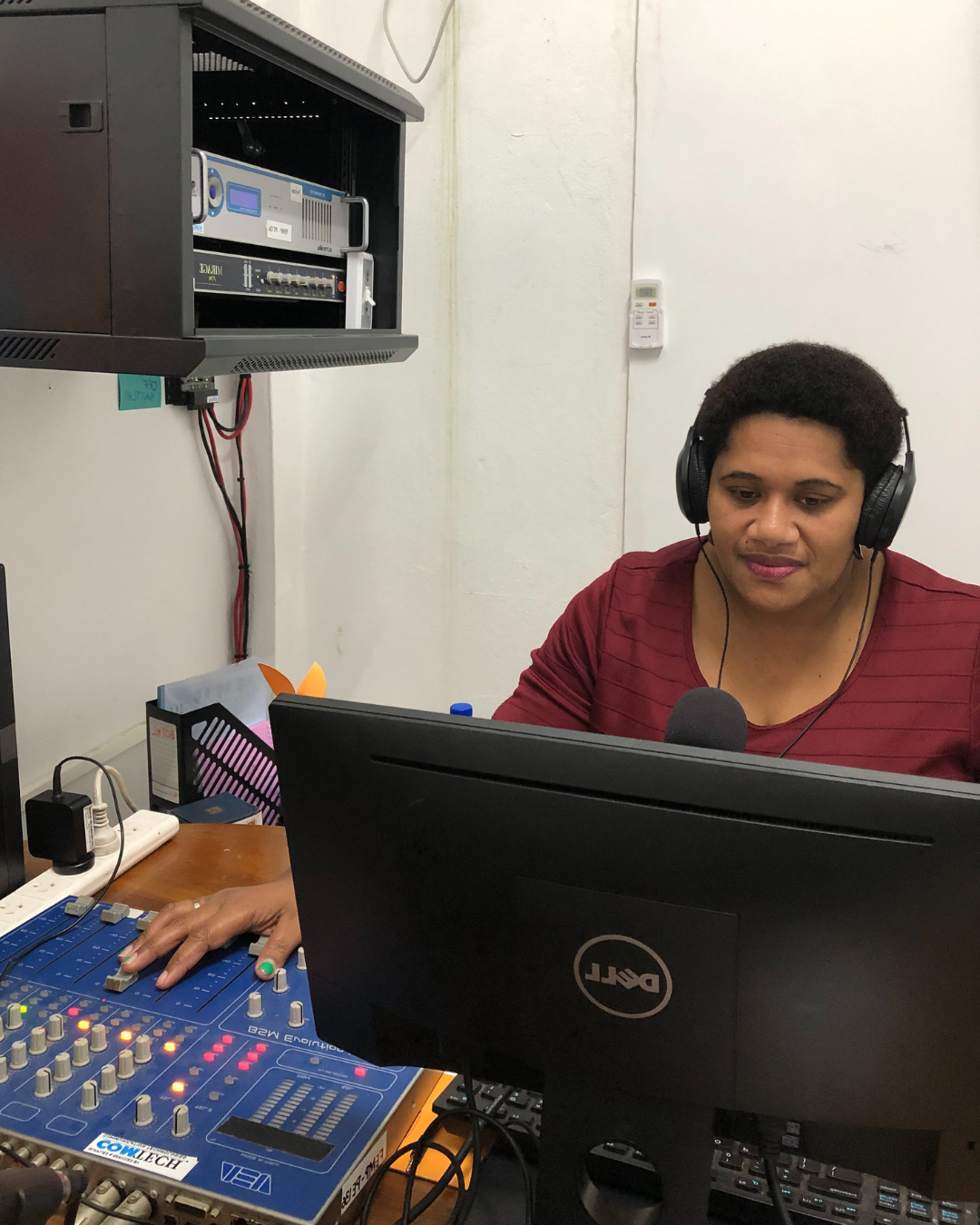
Starting with suitcase radio equipment, femTALK89FM has since upgraded to modern consoles, enabling consistent and professional broadcasts. The station has given rural women leaders a platform to speak directly about development, human security, peace, and disaster resilience. Their voices reach national audiences, ensuring that local and provincial leaders, who are often men, hear women’s perspectives.

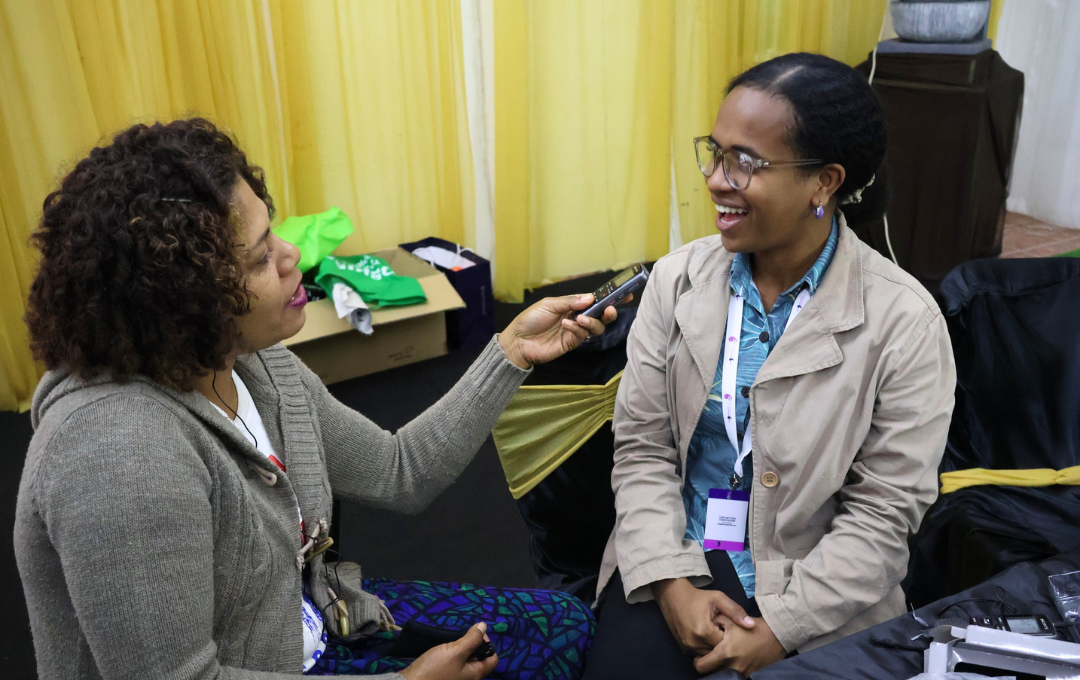
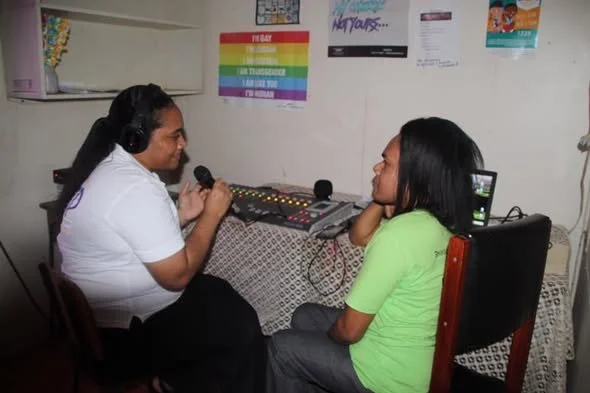
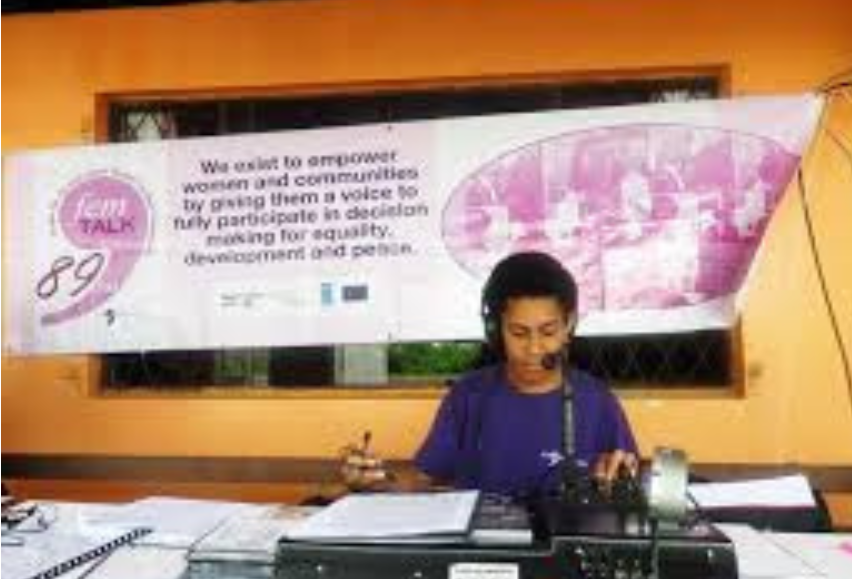
Through feminist media training, young diverse women have learnt to lead broadcasts, create content, and step into leadership roles. This has built a pipeline of women leaders in both media and advocacy.
Initiatives like the Women’s Weather Watch highlight women’s role as first responders in rural communities. By mobilizing engagement and resilience during disaster cycles, femTALK89FM has reinforced the importance of inclusive decision-making at all levels of governance.
To the young diverse women broadcasters, past and present, thank you for your passion in voicing women’s issues on air.
To the diverse rural women, your contribution has been a catalyst for change in communities and across the nation.
To the staff of FemLINKPacific and convenors, your hard work in empowerment, advocacy, and showcasing women’s success stories has been invaluable.
To the donors, your support has ensured femTALK89FM continues to thrive.
For the past 21 years, femTALK89FM remains a feminist media space that breaks silences, nurtures leadership, and ensures women’s voices, especially from rural Fiji, are part of shaping peace, development, and resilience.
POWER UP PROJECT: 2023 - 2024
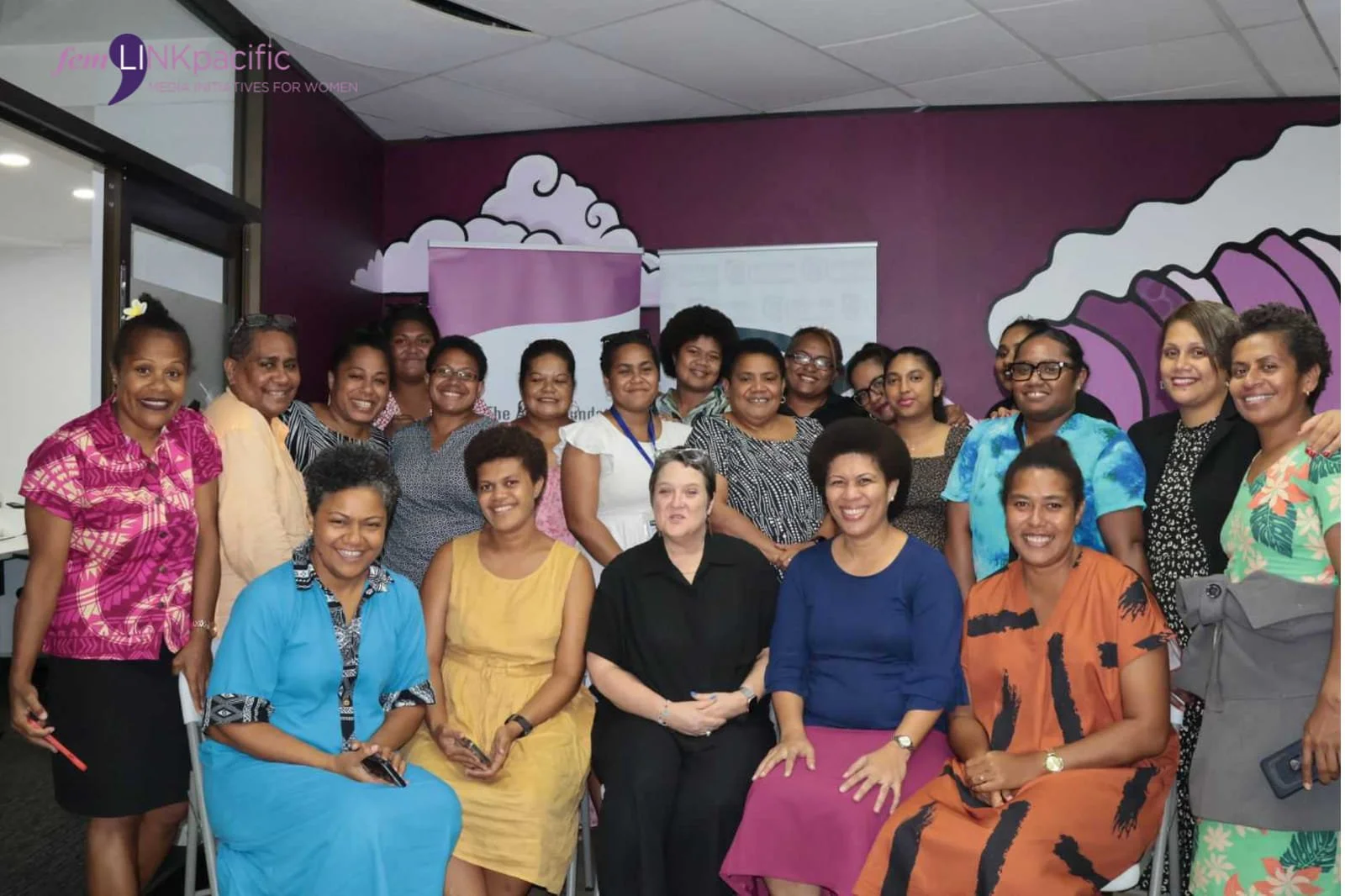
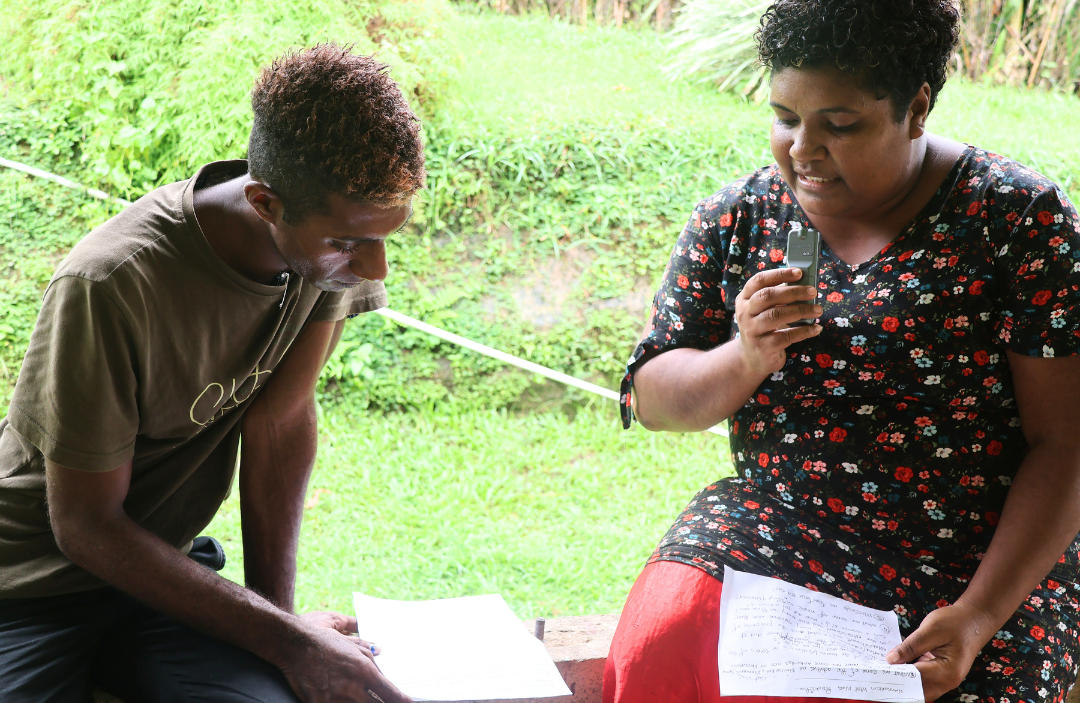
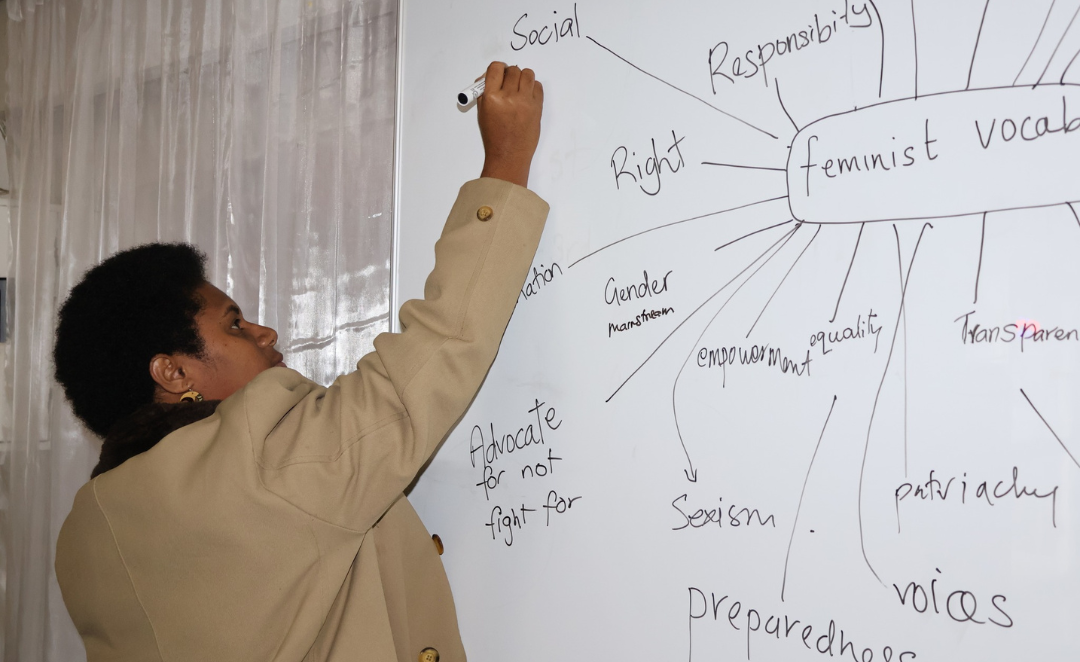
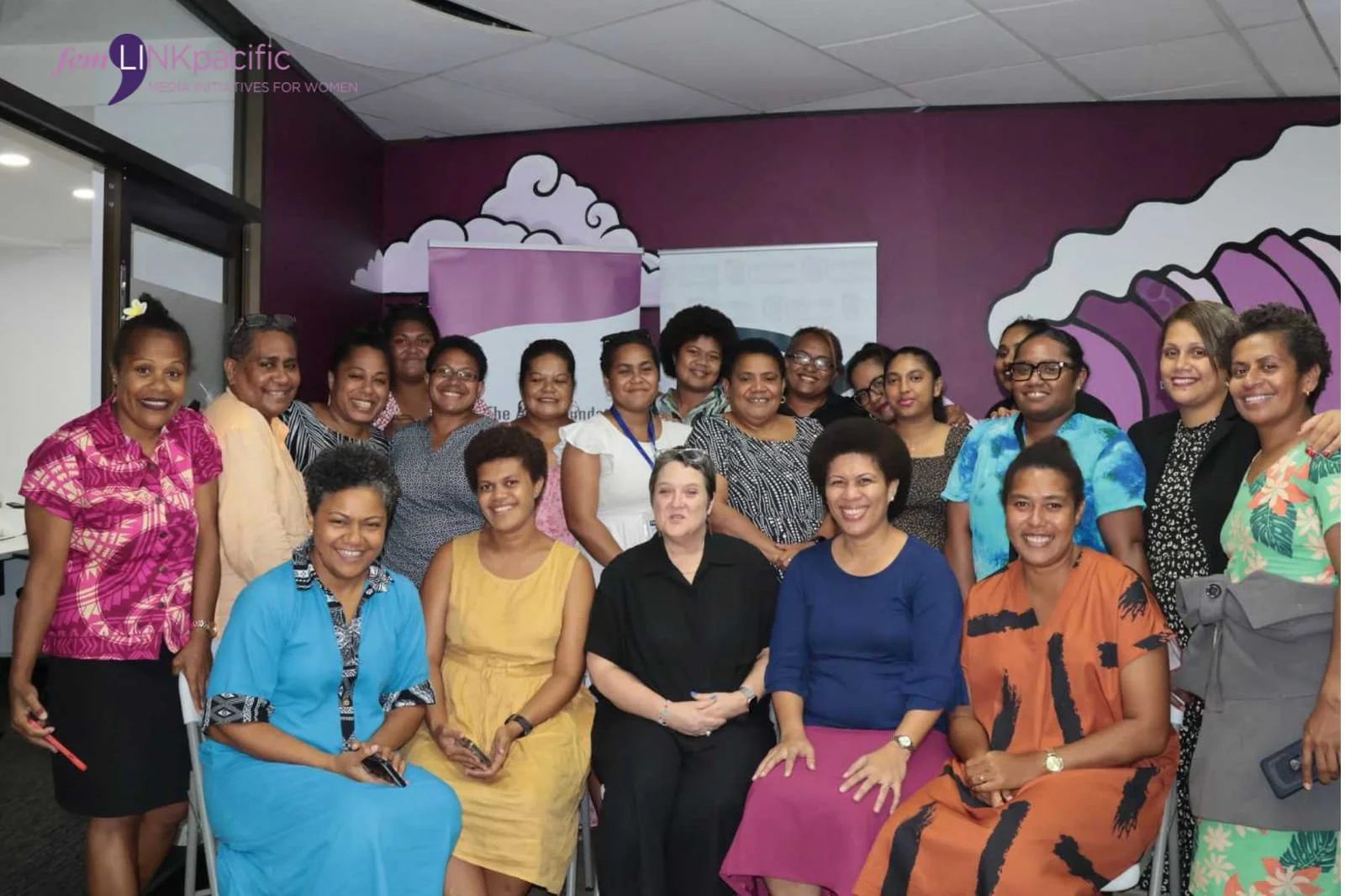
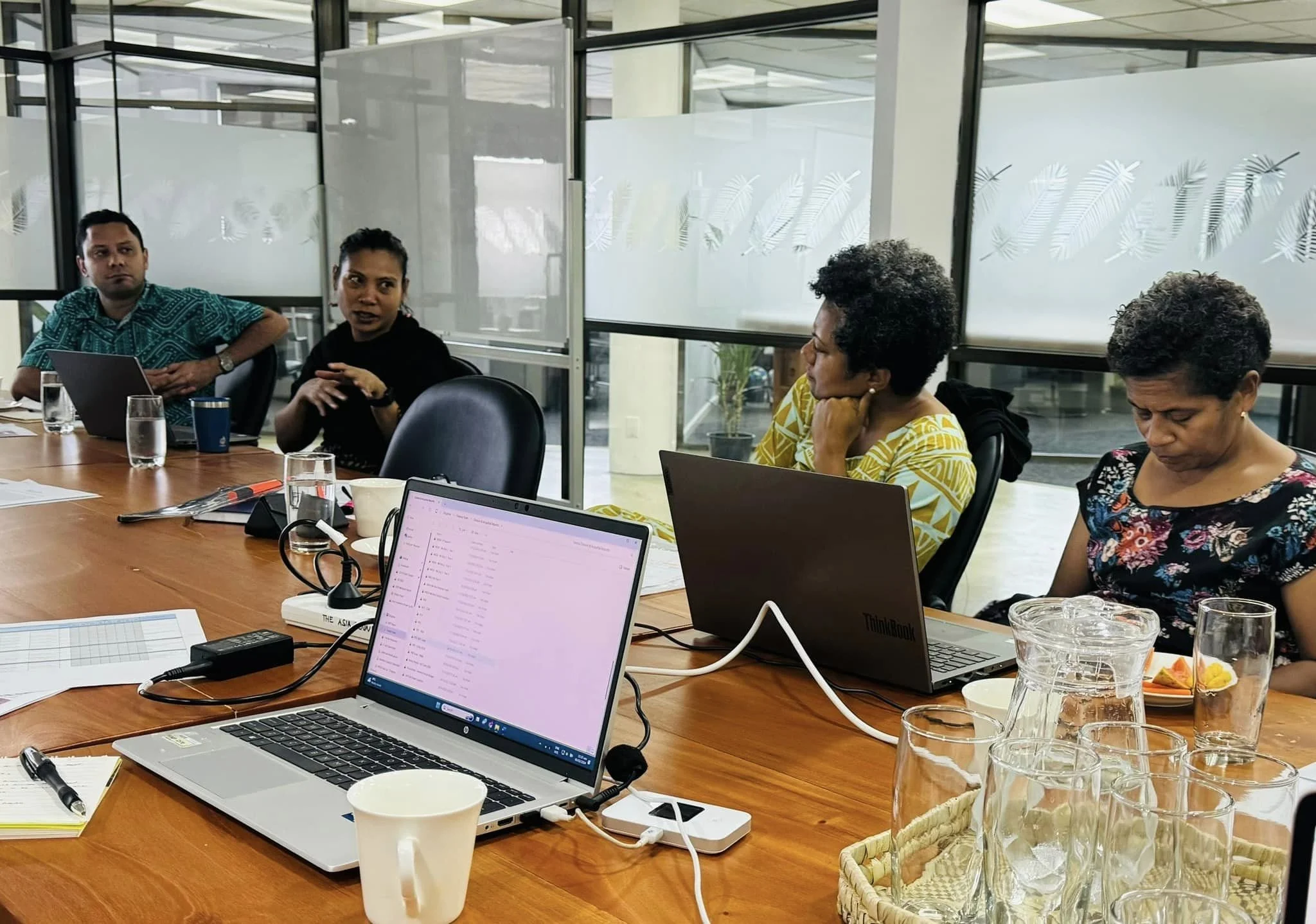
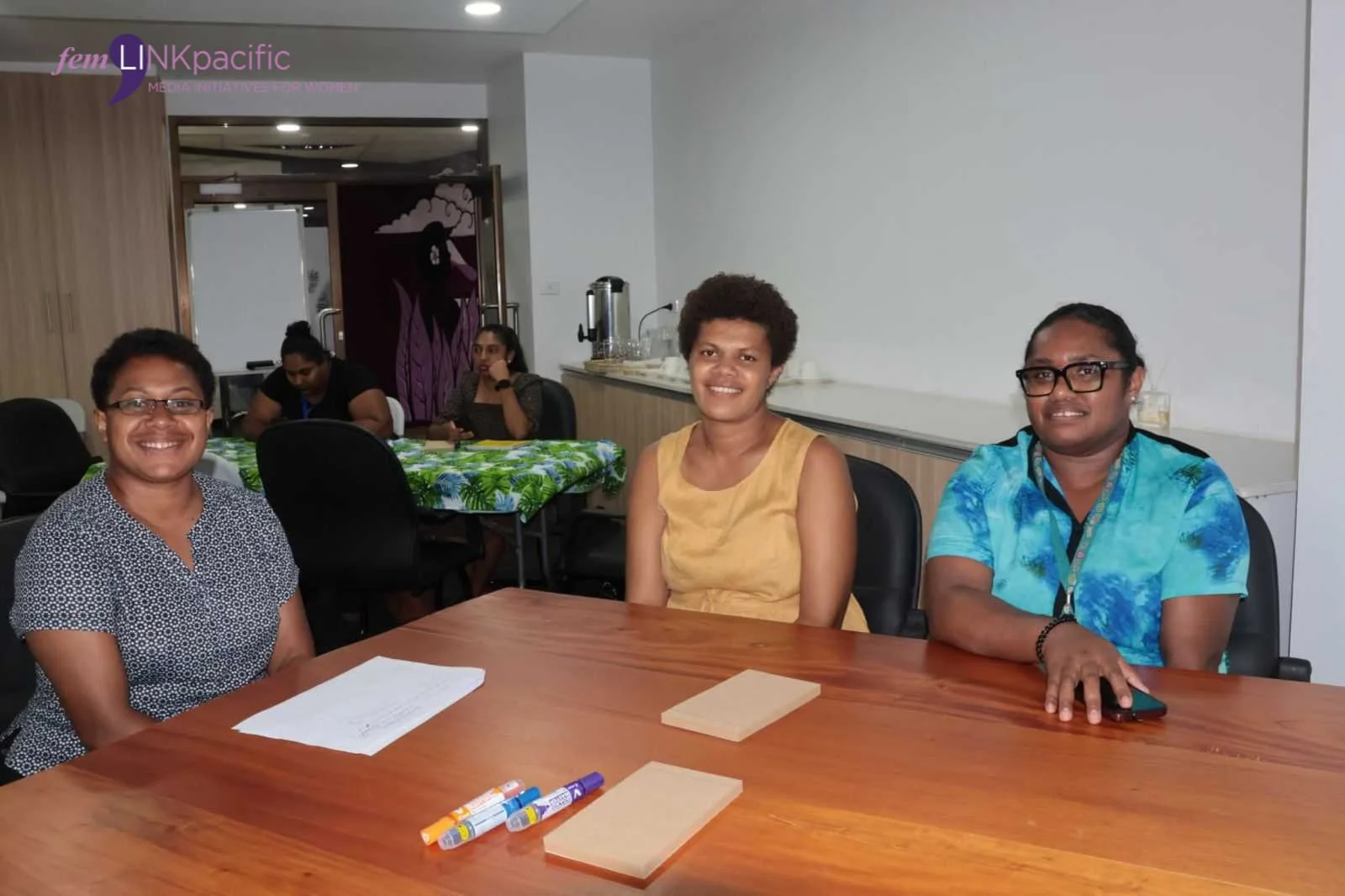
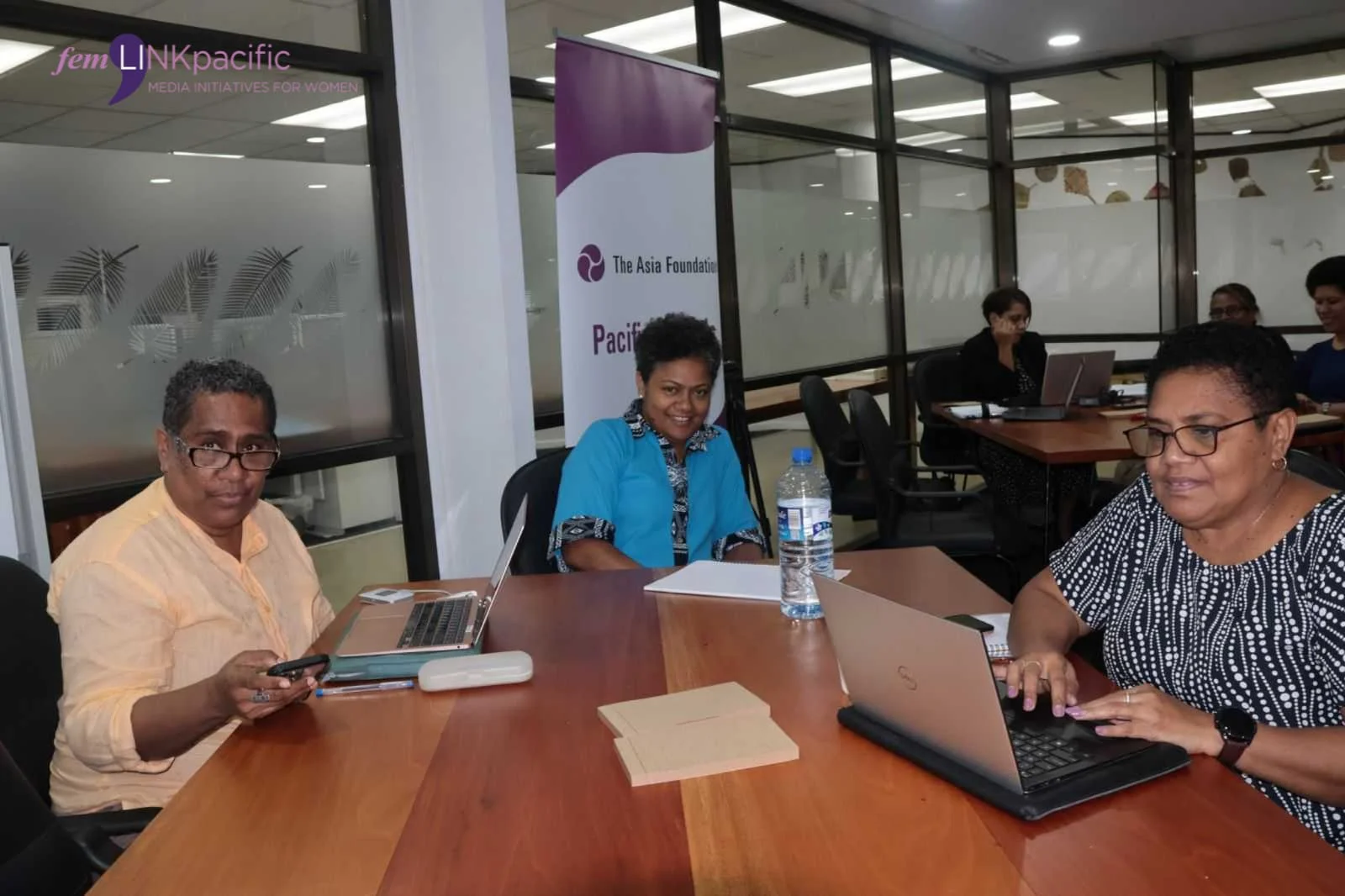
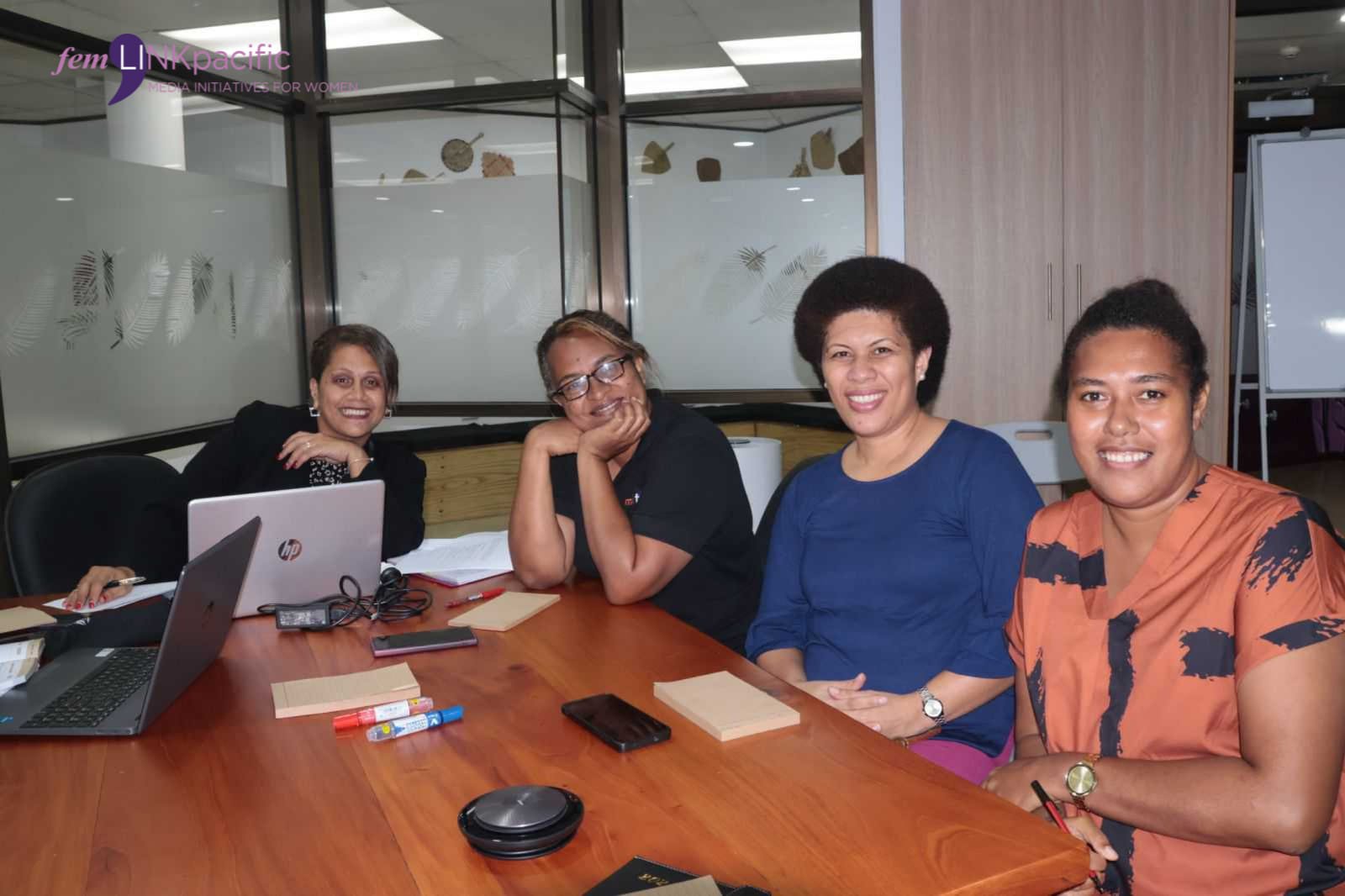
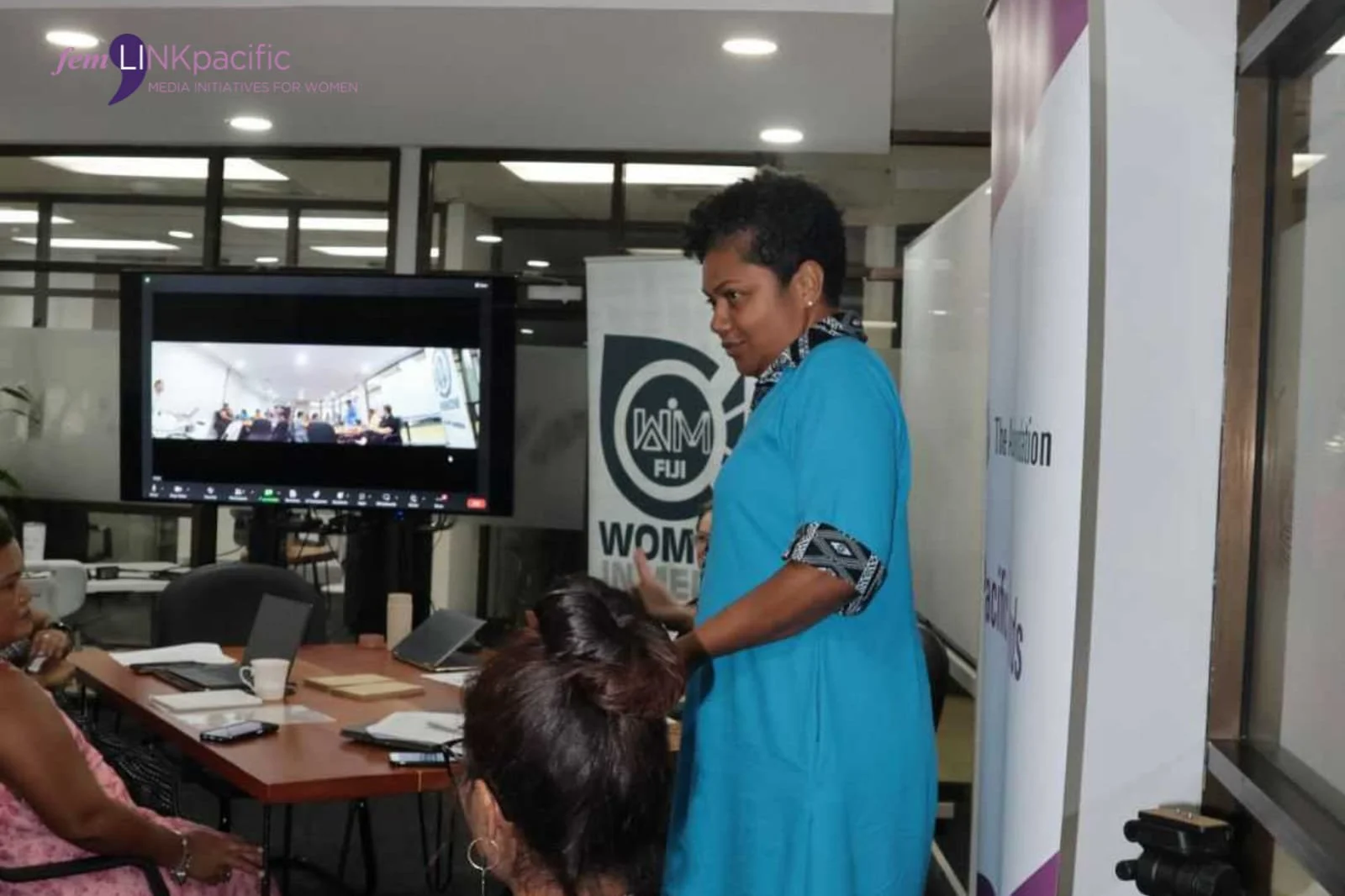
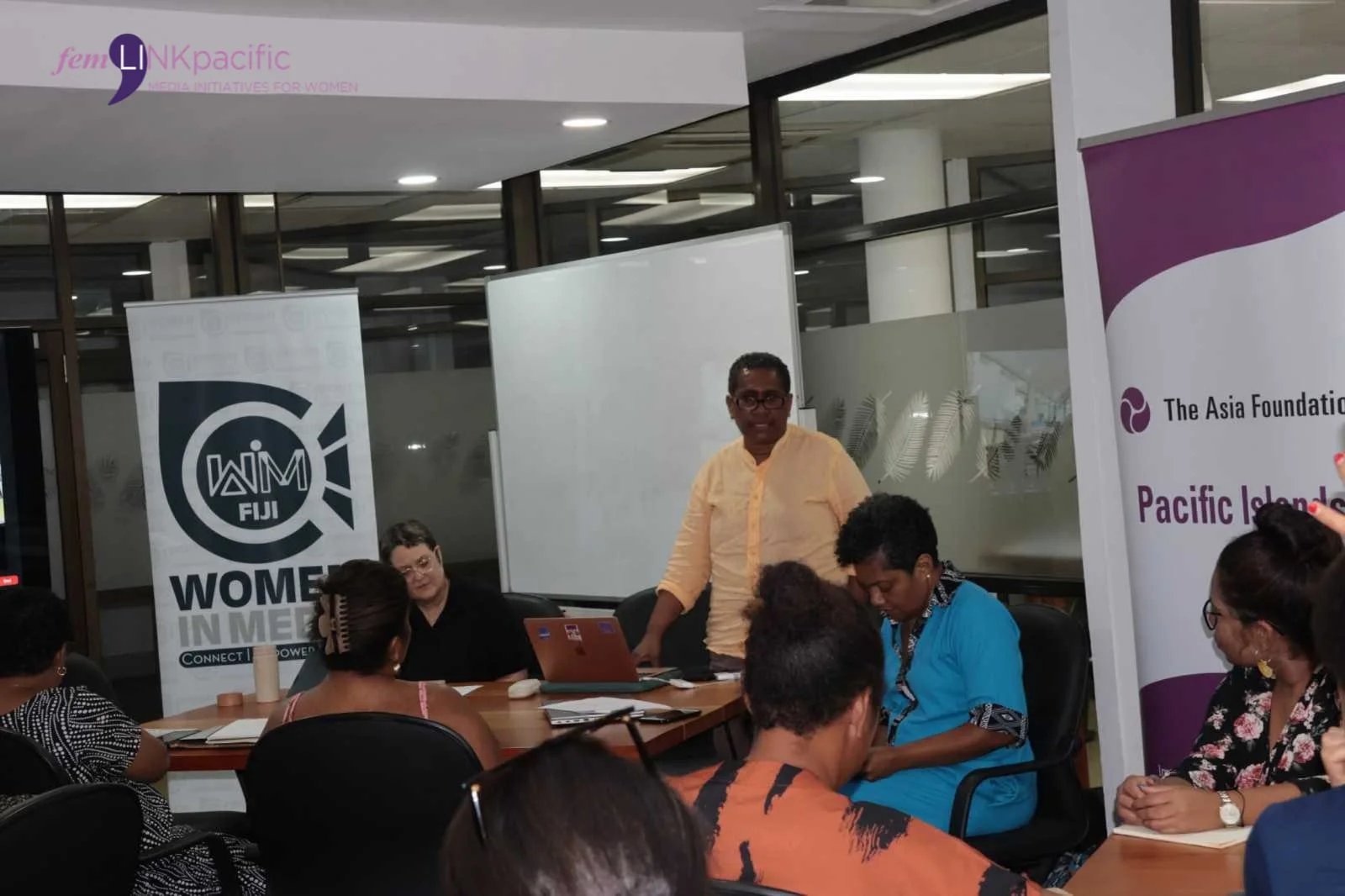
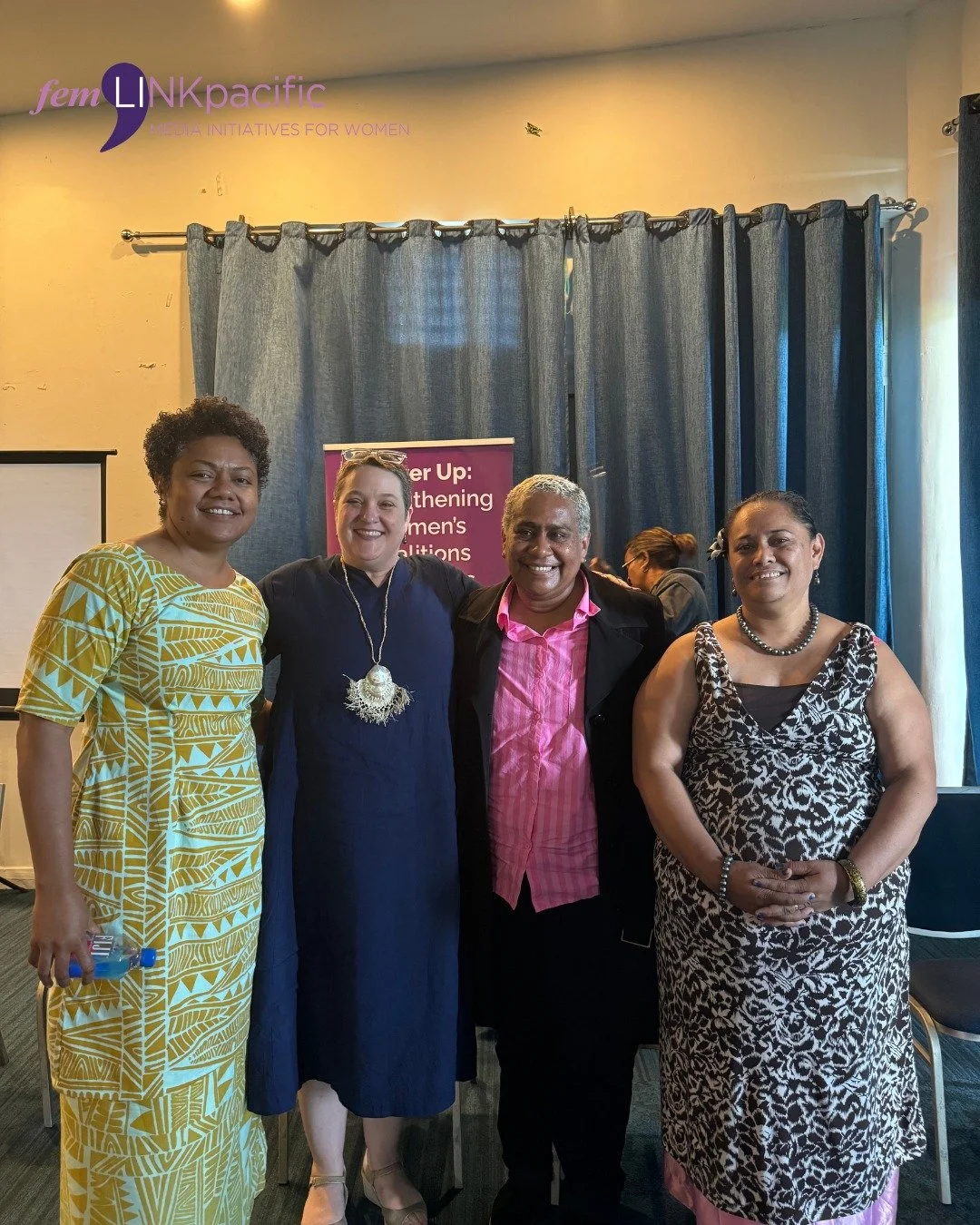
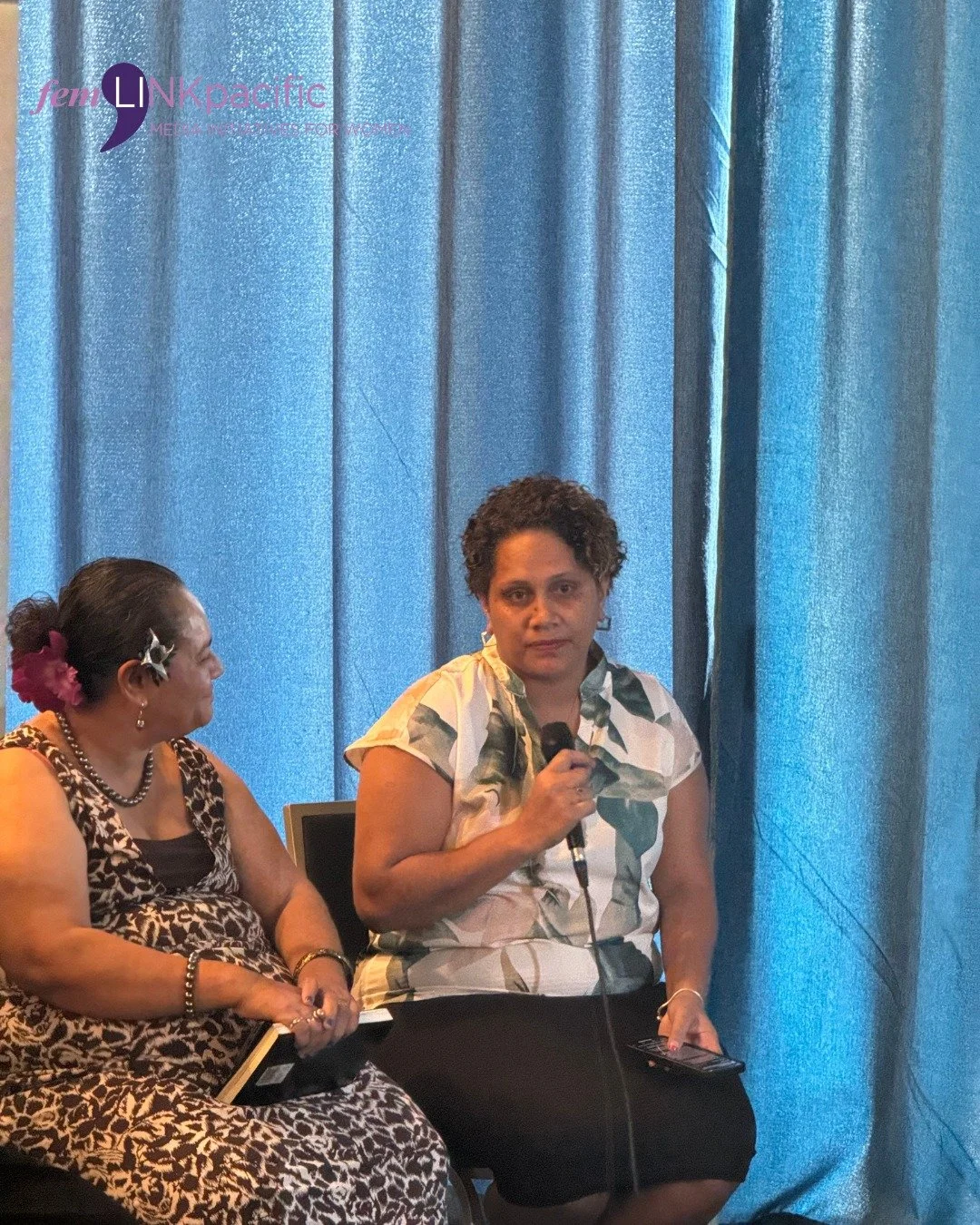
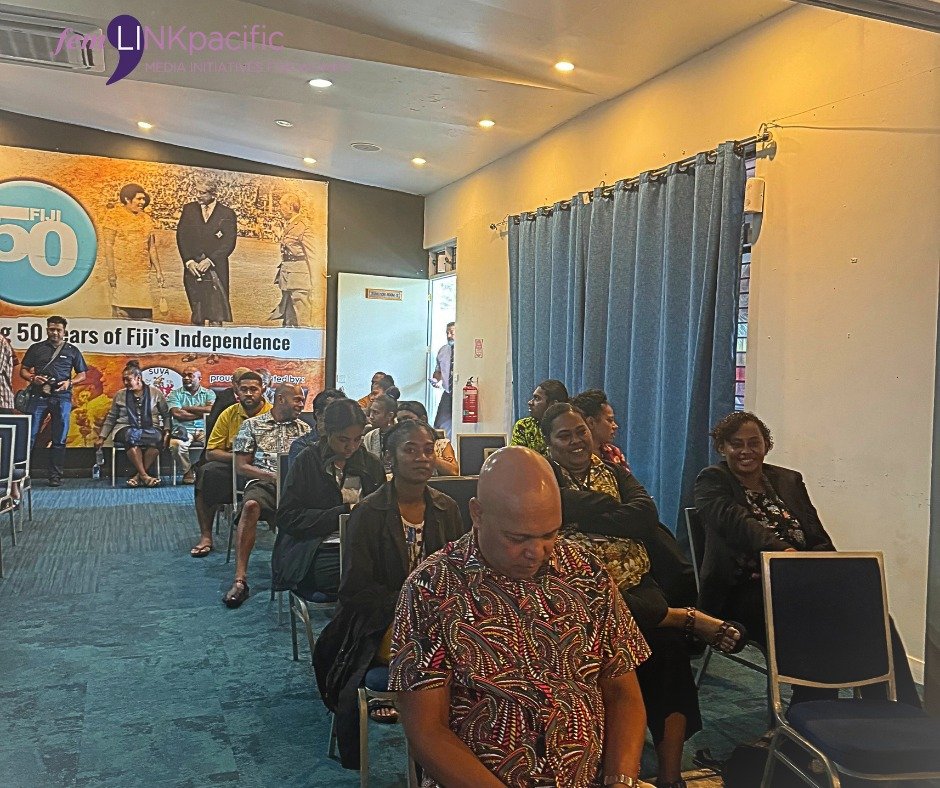
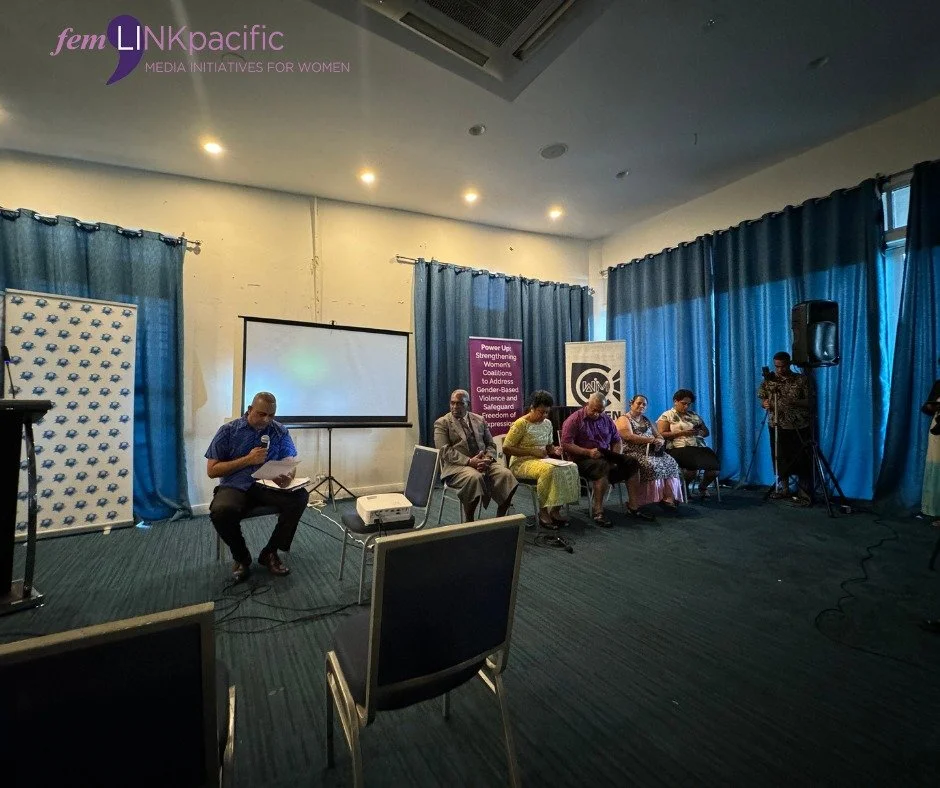
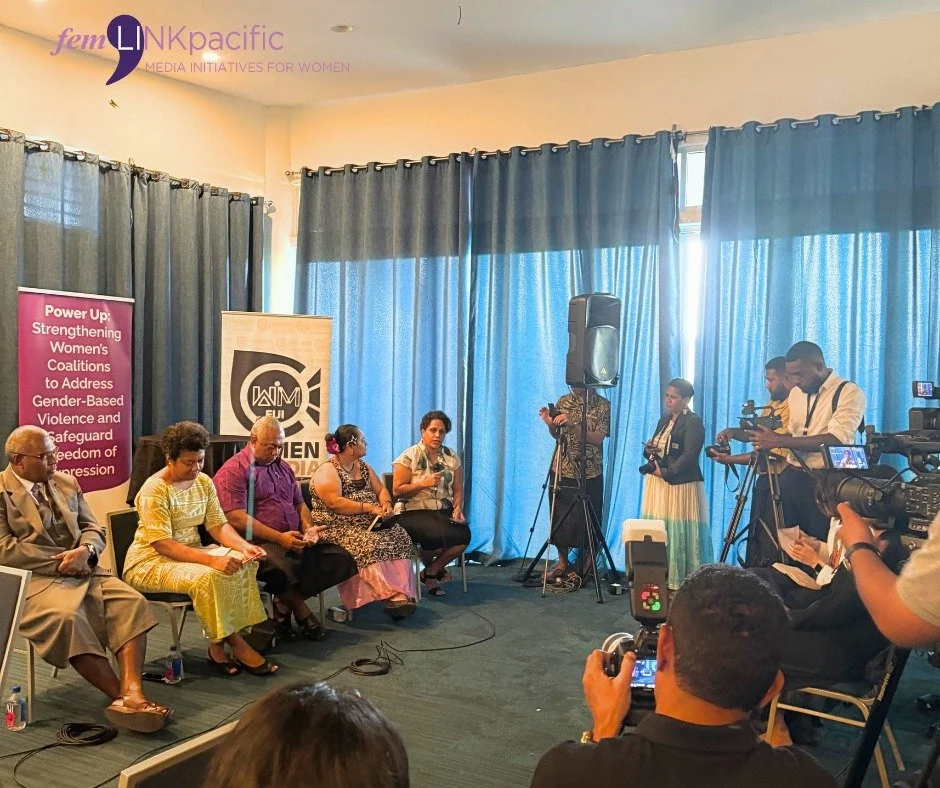
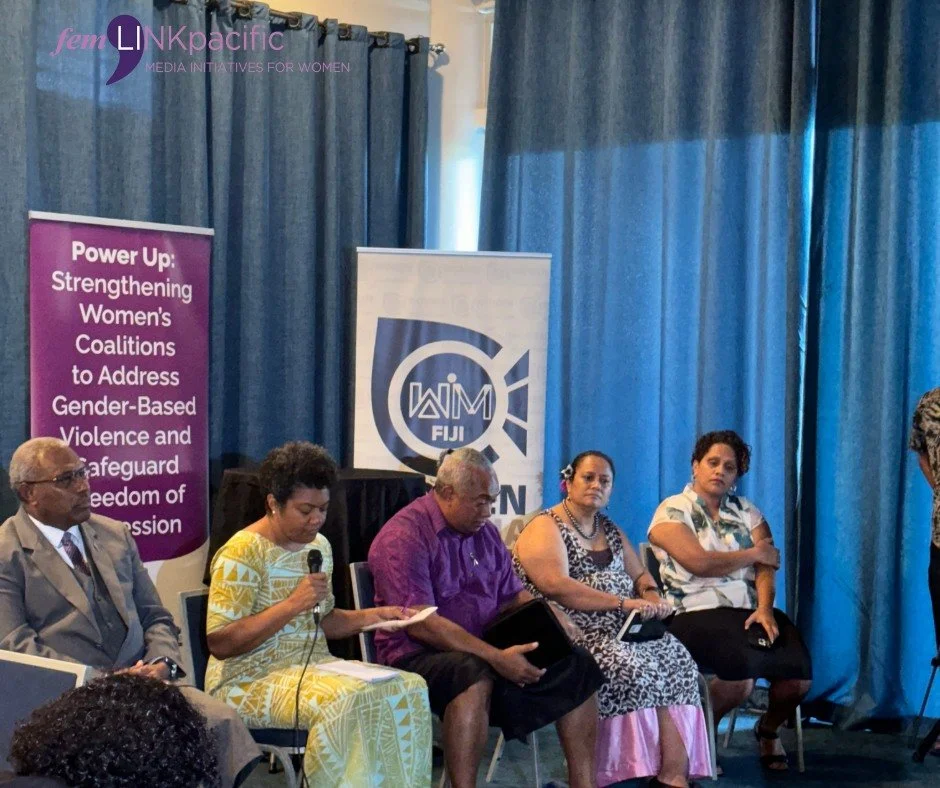
Power Up Partners - femLINKpacific, PINA and Women in Media during a networking session
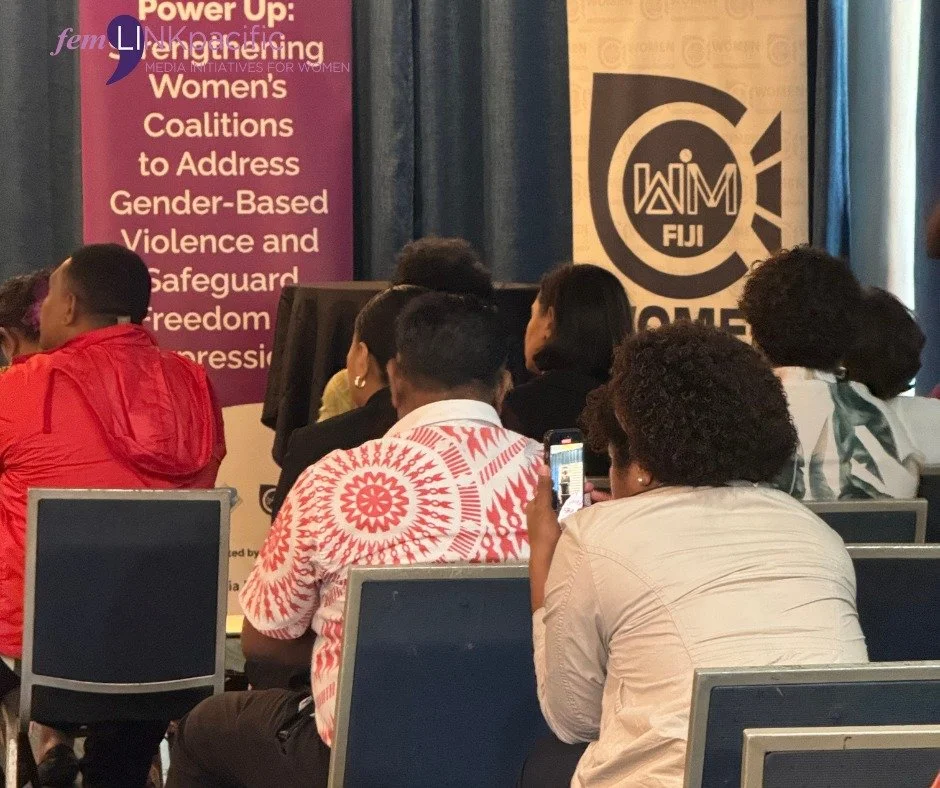
The POWER UP Project, supported by the Asia Foundation (TAF) is a collaboration of three organizations, namely WIM (Women in Media) Fiji, PINA (Pacific Islands News Association) and femLINKpacific (femLINK).The collaboration is to support the three organizations to strengthen women’s coalition to address Gender Based Violence and Safeguard Freedom of Expression.
The project which will run for two years started on the 5th of February 2024 and will end on June 30th 2025.
The project has been a positive collaboration, in that as a feminist media organization, femLINKpacific has been able to share its expertise and knowledge with the other two media organizations which in turn have shared their networks, experiences and knowledge to benefit the work of femLINKpacific.
The three organizations have held collaborative activities and these have either been trainings, celebration of special days or for special events like the PINA summit.
Activities with Women In Media (WIM) FIJI
FemLINK has been invited to various activities by WIM Fiji and two of which were the celebrations for International Women’s Day and World Media Freedom Day. The Executive Director of FemLINKpacific was invited to be part of a panel discussion in Lami and spoke on the topic of Empowering Women in The Digital Era and Combatting Gender Based Violence whilst discussing the correlation between Conventions, and the Elimination of Gender Based Violence. FemLINK was also invited on World Media Freedom Day, with other media agencies, to listen to a panel discussion featuring the Attorney General and other notable media personalities, to discuss the Challenges faced by the Media Industry.
FemLINK has also been part of various trainings and recently conducted two trainings for various media houses one on the PPSEAH (Prevention of Sexual Exploitation, Abuse and Harrassment) and the other on making connections on gender, international conventions and work policies and ethics. The two organizations constantly meet to see how they can help each other and WIM Fiji will be conducting media trainings to expose the Fiji media landscape to the FemLINK networks soon.
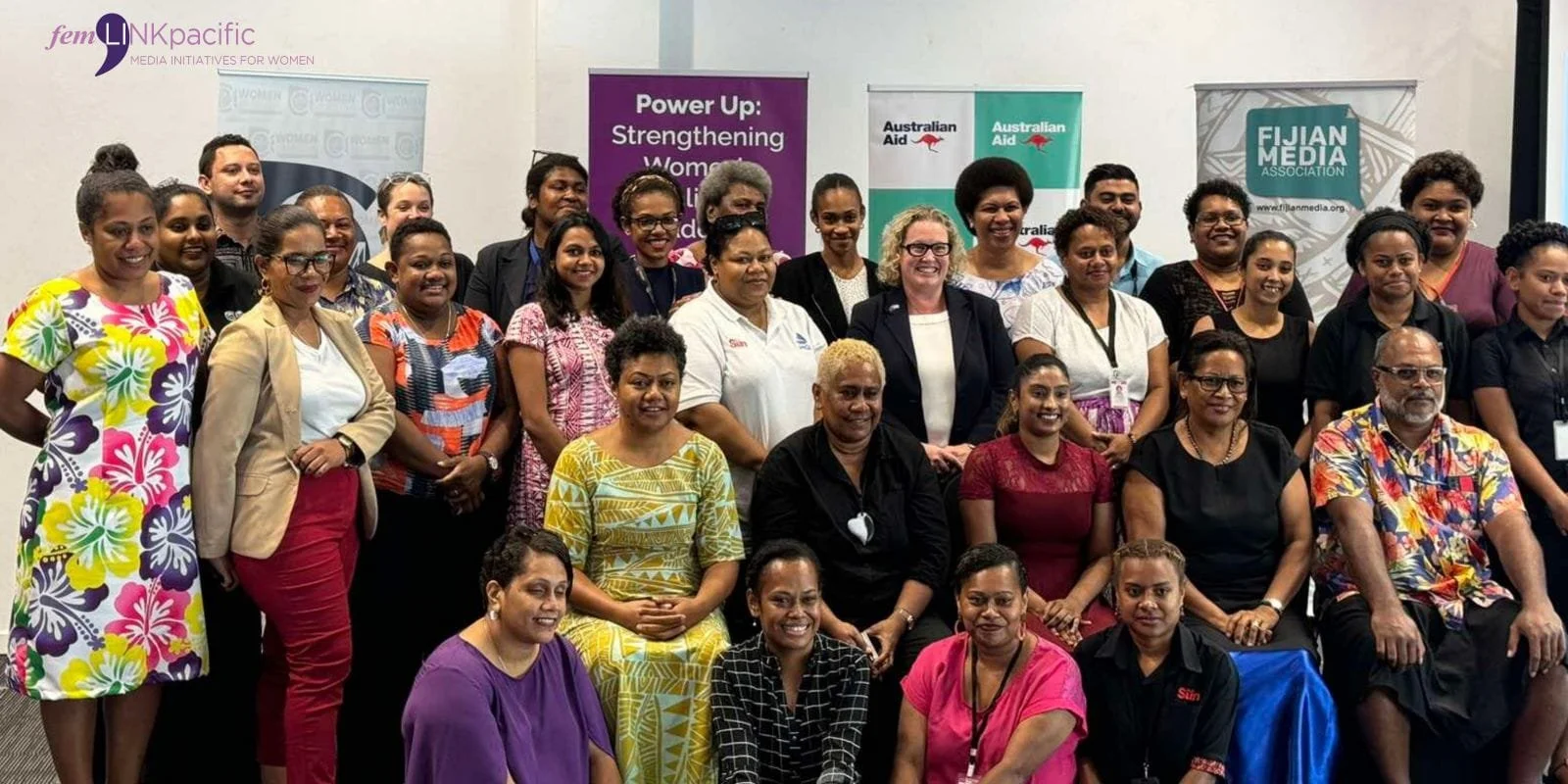
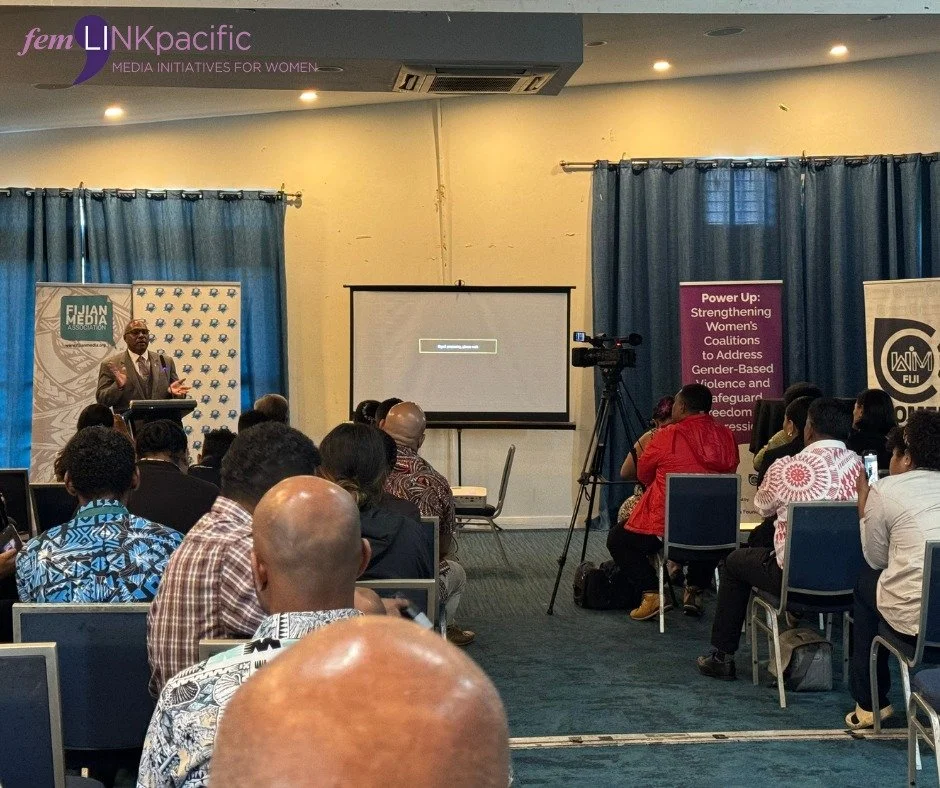
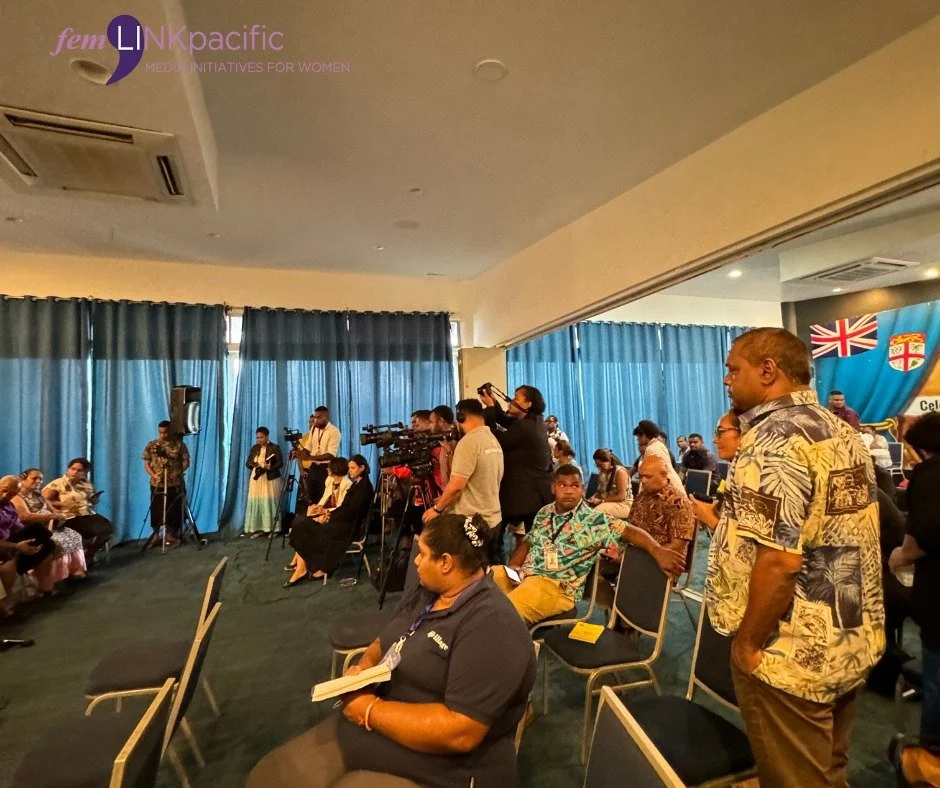
Power Up Partners - WIM Fiji, Asia Foundation, FemLINKpacific and PINA during the World Press Freedom Day 2024 event
Activities with Pacific Islands News Association (PINA)
The engagement with the Pacific Islands News Association has been to empower the women in media in various countries in the Pacific. WIM Fiji is a partner but through PINA, femLINKpacific has been able to work with other media agencies and have conducted trainings for Women in media representatives from Papua New Guinea, Solomons, Vanuatu, Kiribati and even had a representative from WIM Australia in one of their training sessions. There have been trainings conducted in Vanuatu and this is all in the hope of empowering women in media to know their gender roles and how to protect themselves by understanding and utilizing local and international legal instruments to help them in combatting gender based violence. The workshops have enabled women in media to realise the importance of CEDAW (Convention on the Elimination of Discrimination Against Women) and more importantly appreciate the role of femLINKpacific and other women human rights organizations in advocating issues about women.
In the trainings the women have been able to coordinate and form their women in media organizations and also during the PINA summit women journalists were able to push for more women in the executive board, which they achieved by having 50 percent of women in leadership.
Collaboration
The collaboration between the three organizations have been beneficial to all and the learning and empowerment that have been a result of the collaboration has not only been felt immediately, but it is hoped that this learnings will also be shared to the male counterparts in the various media organizations in Fiji and in the Pacific.
We thank The Asia Foundation for this very unique and inspiring project and we hope that it can be extended to reach all media organizations and islands in the Pacific.
EXECUTIVE DIRECTOR’s REPORT: 68th SESSION OF THE COMISSION ON THE STATUS OF WOMEN 2024
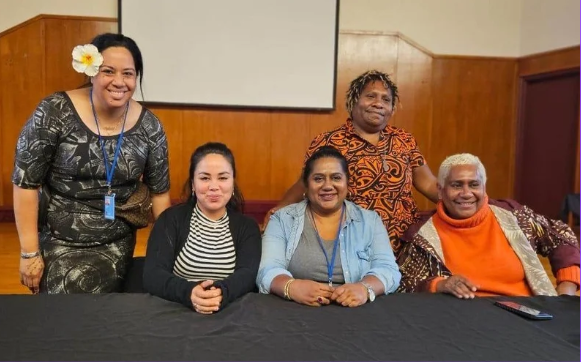
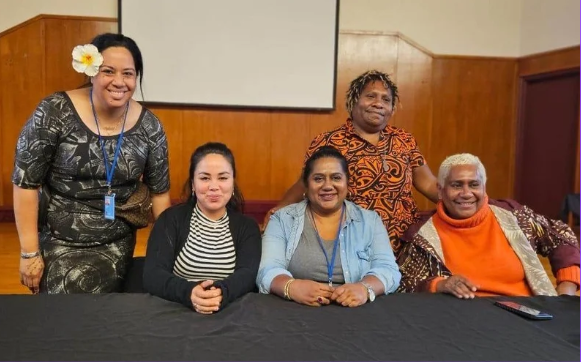
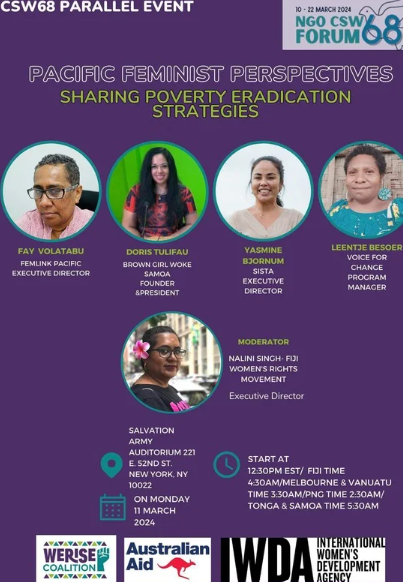
From left - Founder and President of BROWN GIRL WOKE, Doris Tulifau, Executive Director of SISTA, Yasmine Bjornum, Fiji Women’s Rights Movement Executive Director, Nalini Singh, Voice for Change Jiwaka Program Manager, Leentje Besoer and Executive Director of femLINKpacific, Fay Volatabu
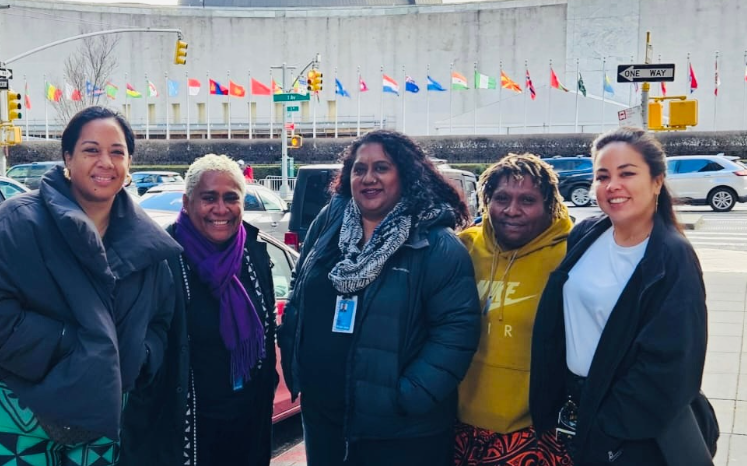
This year I was fortunate to be part of the CSW with Executive Directors of four other organizations that make up the WE RISE Coalition. The WE RISE Coalition is a coalition of feminist organizations in the Pacific and this include the International Women’s Development Agency (Australia), Fiji Women’s Rights Movement(Fiji), Brown Girl Woke (Samoa), SISTA(Vanuatu), Voice for Change-Jiwaka( PNG). The WE RISE COALITION members were able to attend the CSW as IWDA has ECOSOC status. The meeting was for two weeks from the 11th- 22nd of March and this is when governments all over the world report on the progress of Beijing and the problems they encounter whilst trying to ensure Beijing Declaration is followed.
As government delegations give their reports, CSO leaders listen in to see how the reports reflect the reality in each of their countries. In addition to the reporting, there are also side events organized by the UN and the Civil Society Organizations. This year more then 300 side events were organized all over the UN building Complex ,and nearby buildings and this included panel discussions, workshop type presentations or discussions.
The women delegates and CSO leaders had a wide variety of sessions to choose from and some of the topics covered were Water Health and Sanitation, Climate Change, Disaster Preparedness, Cyber Security, Media, Business , Digital Innovations and how all these relate to the theme. The theme for this year was “Accelerating the achievement of gender equality and the empowerment of all women and girls by addressing poverty and strengthening institutions and financing with a gender perspective”.
The WE RISE COALITION (WRC) also had a session and the panel discussion was titled : Pacific feminist Perspectives Sharing Poverty Eradication Strategies. This was attended by organizations in the Pacific and even some donor agencies representatives. The WRC members also participated in other panels and discussions and information gathered would be really beneficial in the various organizations.
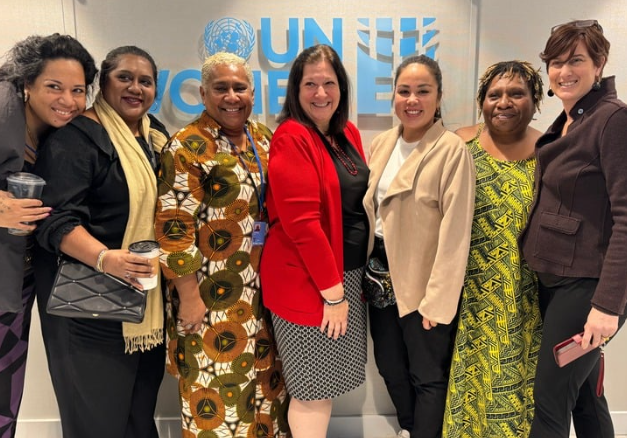
The WRC also had time to visit their own embassies and also the UNWomen office in New York. The trip though very short was an enormous opportunity to Build new networks, make new friends whilst committing to the global agenda of monitoring the progress of Beijing Declaration and Platform of Action.
Next year the CSW will be looking at 40 years since Beijing and analysing progress and problems over the last 40 years.
I was fortunate to be part of this year’s CSW and it is an event that every women CSO leader should embark to be part of as it helps us in reaffirming the work we do, and what more we need to do, to ensure that Women’s issues, Women’s Concerns, Women’s Rights and Women’s Lives matter and that they must be at the forefront of every nations development and fiscal plans. I thank the WRC for this opportunity to be have our concerns raised at the global level and to have the good fortune to bring back learnings from CSW to be shared with our rural and local networks and communities in the form of the Agreed Conclusion of the particular CSW. It would be beneficial to have a read of Agreed Conclusion for CSW 68 to know what transpired in this year’s CSW.
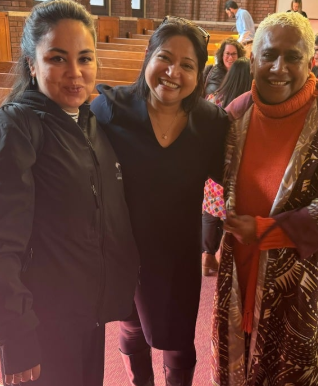
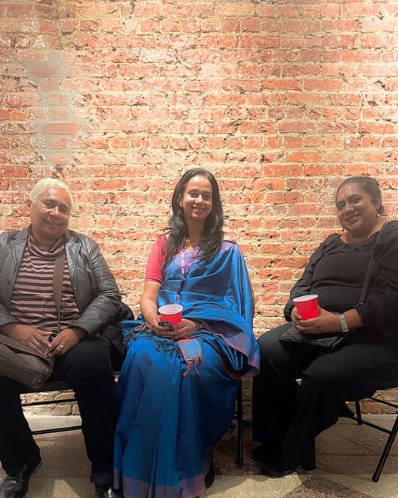
From the left - SISTA Executive Director Yasmine Bjornun, IWDA CEO Nayomi Kannangara, and femLINKPacific Executive Director, Fay Volatabu
WHAT IS THE CSW?
The Commission on the Status of Women (CSW) is the principal global intergovernmental body exclusively dedicated to the promotion of gender equality and the empowerment of women. The CSW is instrumental in promoting women’s rights, documenting the reality of women’s lives throughout the world, and shaping global standards on gender equality and the empowerment of women
It was established by UN Economic and Social Council resolution 11(II) of 21 June 1946 and is a functional commission of the Economic and Social Council (ECOSOC),
In 1996, ECOSOC in resolution 1996/6 expanded the Commission’s mandate and decided that it should take a leading role in monitoring and reviewing progress and problems in the implementation of the Beijing Declaration and Platform for Action, and in mainstreaming a gender perspective in UN activities.
The CSW membership consists of 45 States elected by ECOSOC on the basis of equitable geographical distribution as follows:
13 members from Africa,
11 from Asia,
9 from Latin America and Caribbean,
8 from Western Europe and other States,
4 from Eastern Europe.
New members are elected for a four-year term when the term of the incumbent expires.
The CSW makes recommendations in the form of negotiated agreed conclusions on the priority themes. These are issued annually. They contain an analysis of the priority theme and a set of concrete recommendations for governments, intergovernmental bodies, other institutions, civil society actors, and other relevant stakeholders.
Agreed conclusions are available from the UN Women website and searchable from the United Nations Digital Library.
Source: Gender and the UN Commission on the status of Women : a quick guide
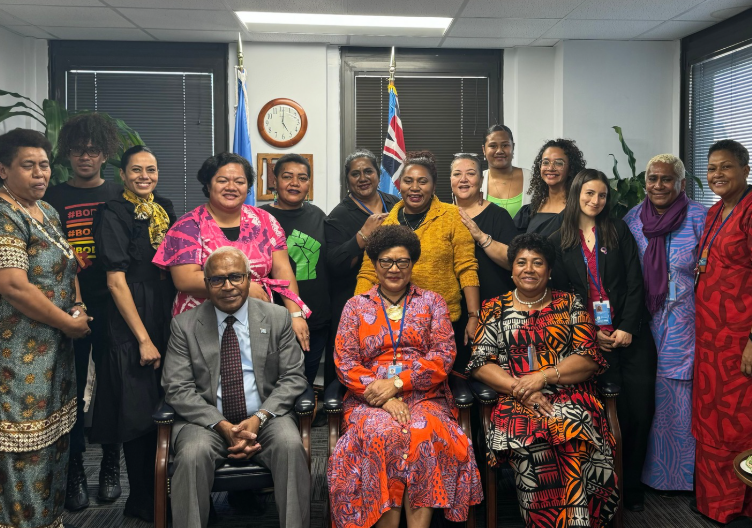
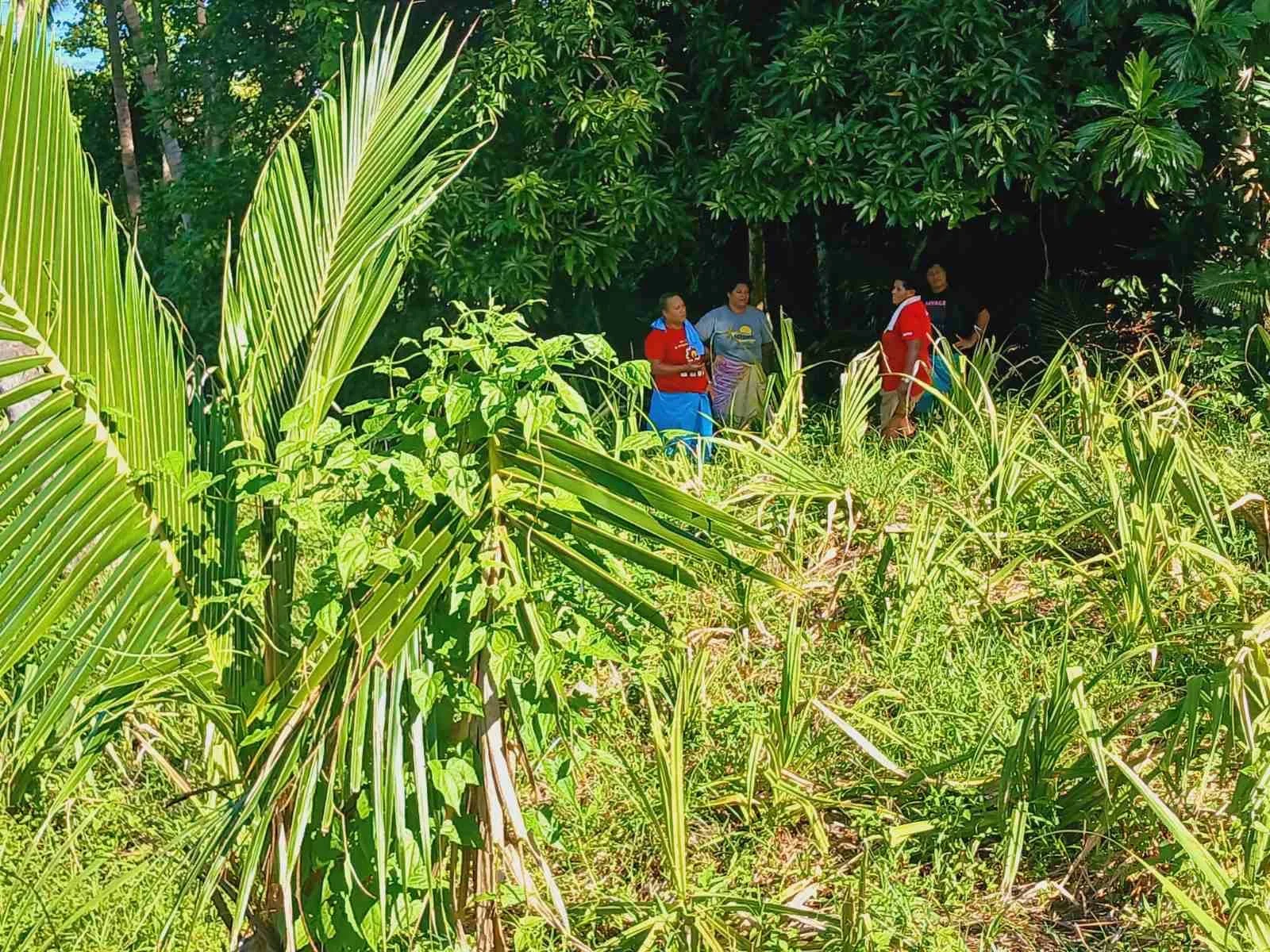
Women Work Towards Resilience in Communities - 2024
Women’s Resilience to Disasters (WRD) is an initiative to strengthen women’s resilience to disasters and threats, which is inclusive of climate change and Covid-19. There are two main objectives for the WRD programme:
1.To adopt a gender-responsive decision making and governance system
2.To enable targeted action in building the resilience of women and girls.
Supported by the Australian government, the WRD programme is currently implemented in the Pacific – in Fiji, Kiribati, Vanuatu and the Solomon Islands; advancing women’s leadership and gender-responsiveness in global risk reduction and climate change enabling environments and frameworks.
In Fiji, UN Women is partnering with FemLINKpacific in this regard, whereby, FemLINKpacific receives Expressions of Interest (EOI) from interested women groups, together with the necessary requirements. UN Women, through FemLINKpacific then funds the approved projects, at the same time monitoring the progresses until completion.
Prior to the issuance of funds and commencement of the projects, FemLINKpacific had conducted a one and half day orientation and training where the sub-partners were taken through a comprehensive coverage of all the requirements by the organization and also by the Donor – UN Women.
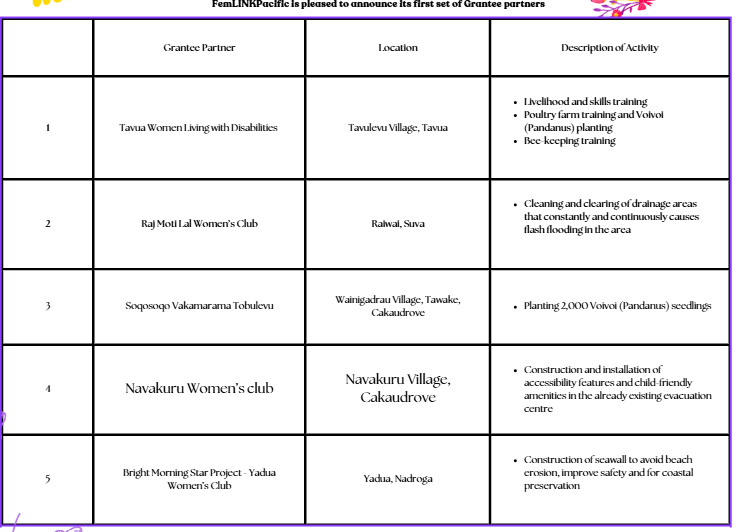
Brief Background and Update of Each Project
1.Tavua Women Living with Disabilities
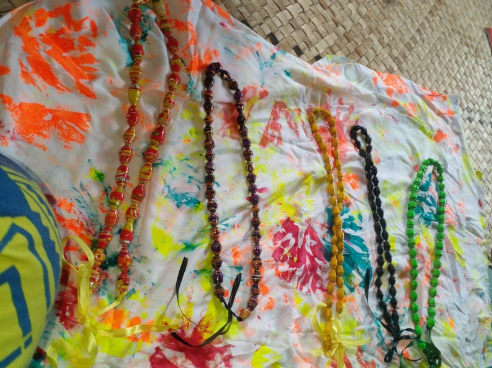
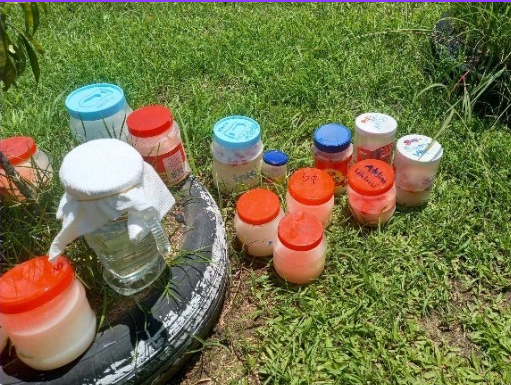
In villages and communities, it has always been the vulnerable who are left behind in almost all life situations. For the Tavua Women Living with Disabilities, inclusivity is paramount, and they desire to move ahead together with no one being left behind. Hence, the request to FemLINKpacific for the WRD funds to assist in training and equipping these rural, disabled women to learn practical skills that not only empowers them, but also increases their earning capacity. Additionally, the women have planted Voivoi (Pandanus) that is intended to be a source of income too.
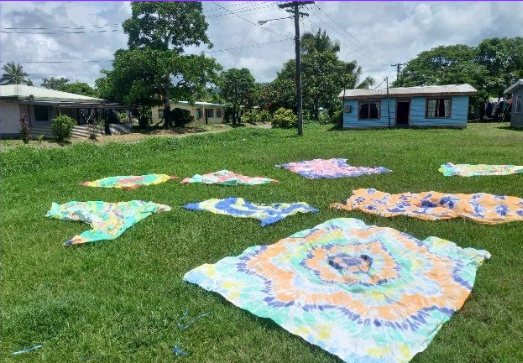
2. Raj Moti Lal Women’s Club
Located in one of the busiest and notorious residential landmarks in Suva, the women of Raj Moti Lal women’s club determined in themselves to also contribute to building resilience in their community. The desire led to their request for assistance from FemLINKpacific to help with general cleaning and clearing of their drainage systems that have always led to constant and continuous flash flooding in the area. Execution and implementation of their plans and actions have come in handy, especially in these recent heavy falls. Members of the community have voiced how grateful they are for the assistance, which has enabled them to experience a flood-free neighborhood after a very long time.
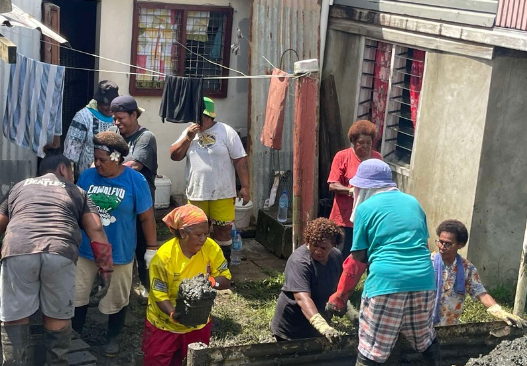
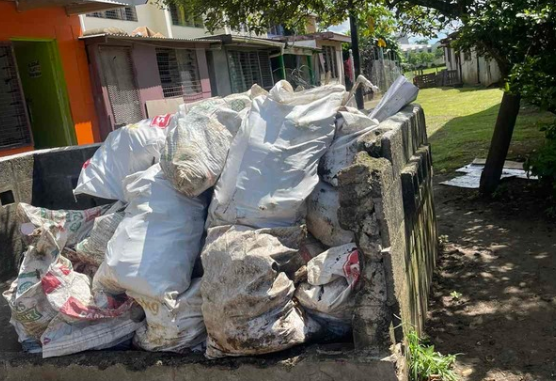
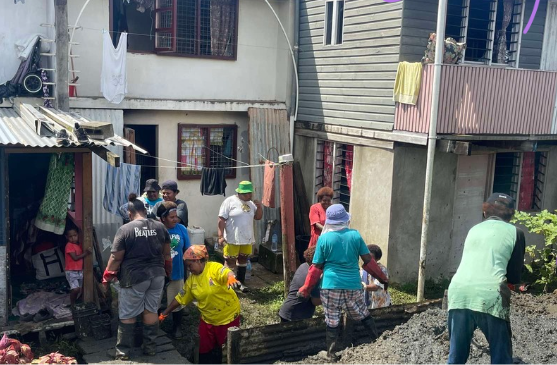
3. Nai Soqosoqo Vakamarama Tobulevu
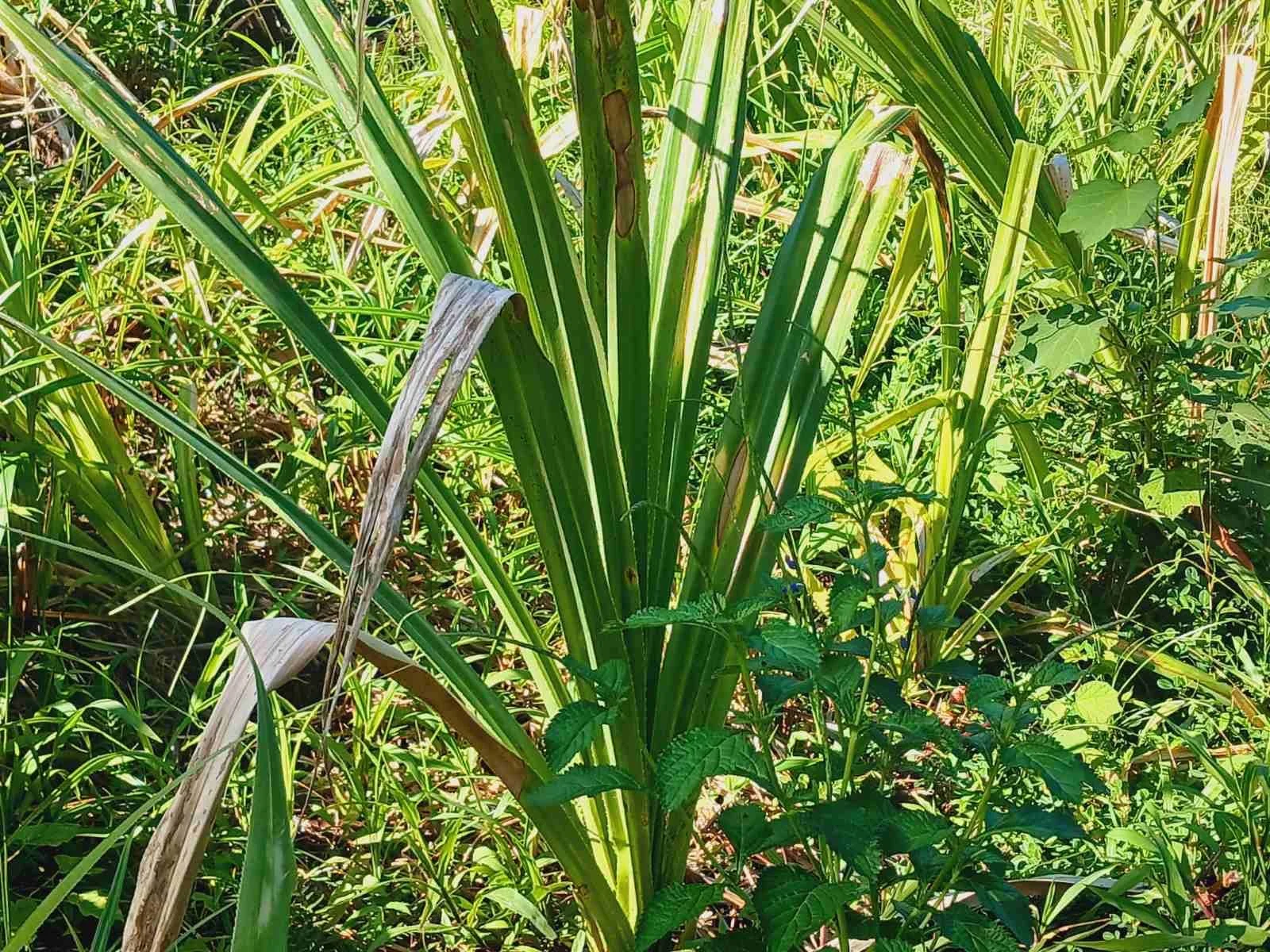
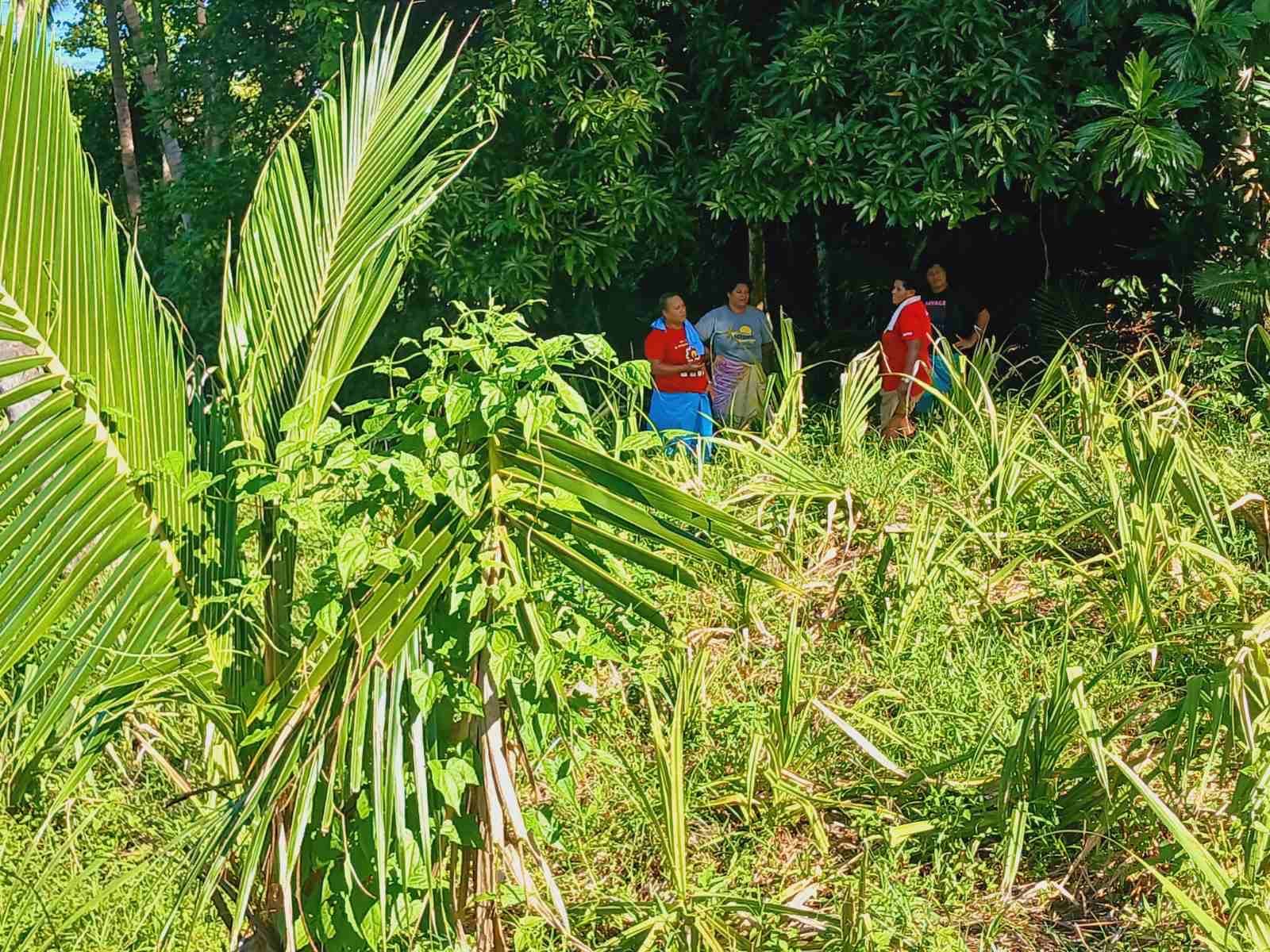
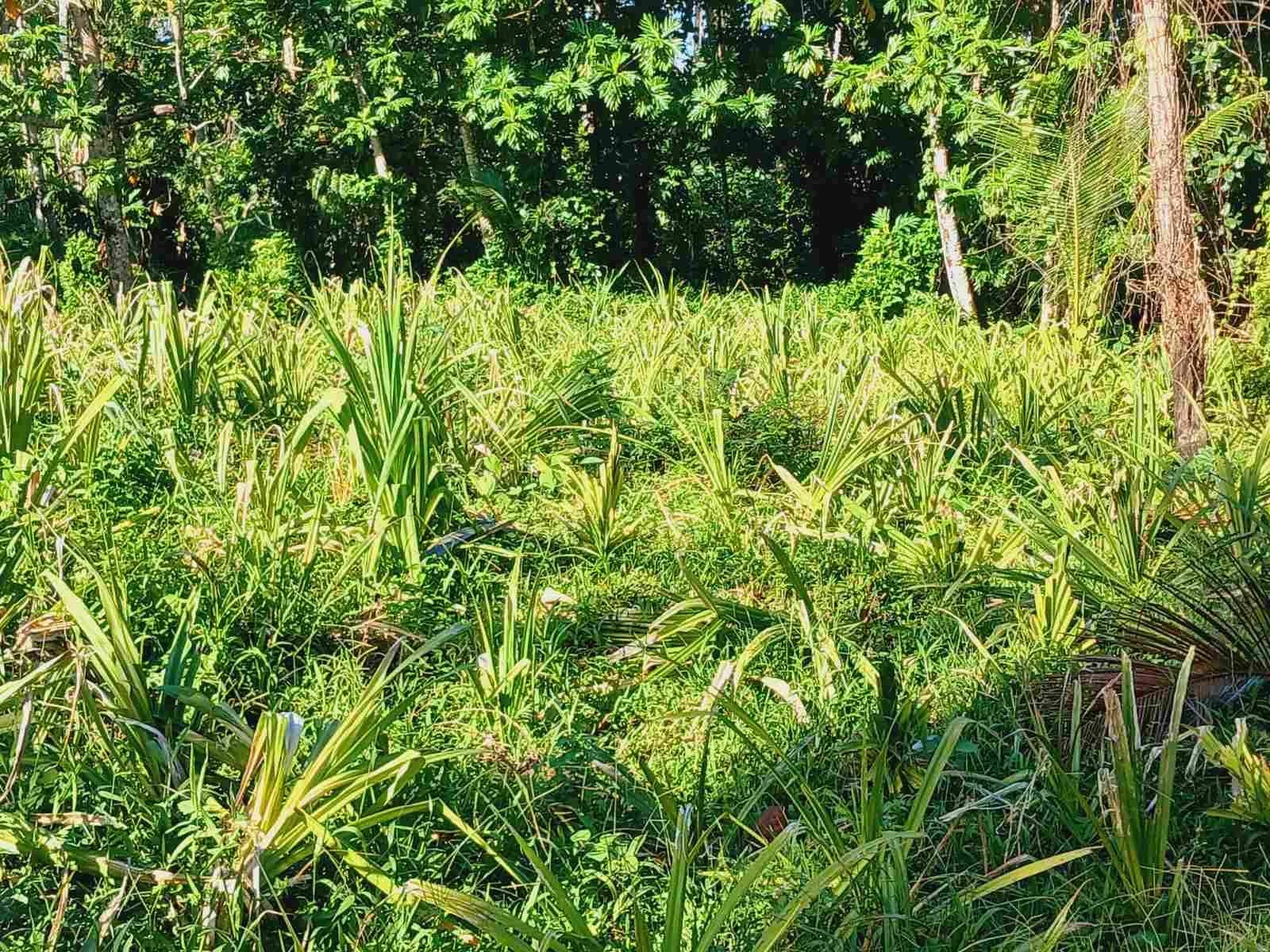
Climate change has not only affected landscapes but has even distorted income earning sources for the members of Wainigadru village in Cakaudrove. For this reason, the women’s group sought assistance from FemLINKpacific to fund a Voivoi (pandanus) planting project. They have planted more than 2000 seedlings which will be their source of income in the years to come. The choice (Voivoi) is based on the concept that you plant once, but harvest every year for the next 30 plus years. Interestingly, all the members of the village (men, women, children, youths) unite in the execution of this project. The Voivoi plants are growing well and the women are anticipating a harvest of at least 10 leaves per plant from October this year and the harvest is expected to roll every month for the next 30 years.
4.Navakuru Women’s Club
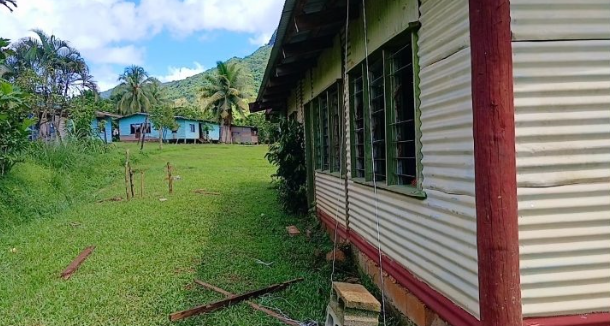
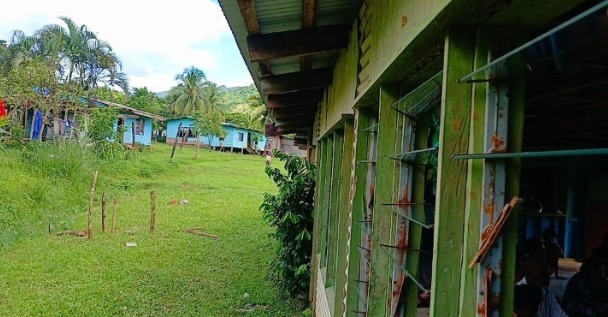
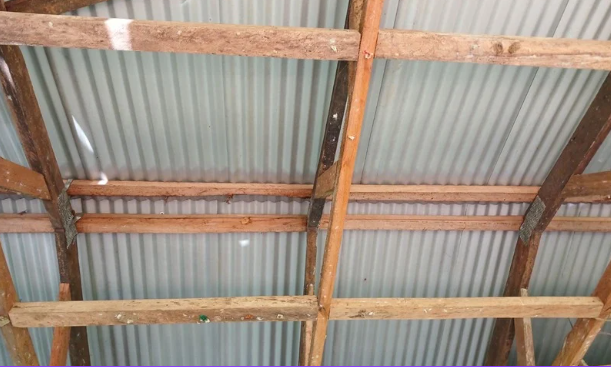
Seeing that inclusivity is crucial in every community, the Navakuru women’s club requested funds from FemLINKpacific to help improve their Evacuation centre which is expected to accommodate the whole village at the height of a natural disaster, at the same time improving accessibility for people living with disability. This includes the construction of 2 extra rooms to sleep women and girls during a disaster, as well as the installation of proper bathrooms and lavatories which is not currently factored in the existing Evacuation centre. What makes the project even more worthwhile is the fact that Navakuru village is located across a river. An interesting and inclusive initiative making sure that all community members look out for each other and work towards preparedness and resilience to disasters.
5. Bright Morning Star project – Yadua Women’s Club
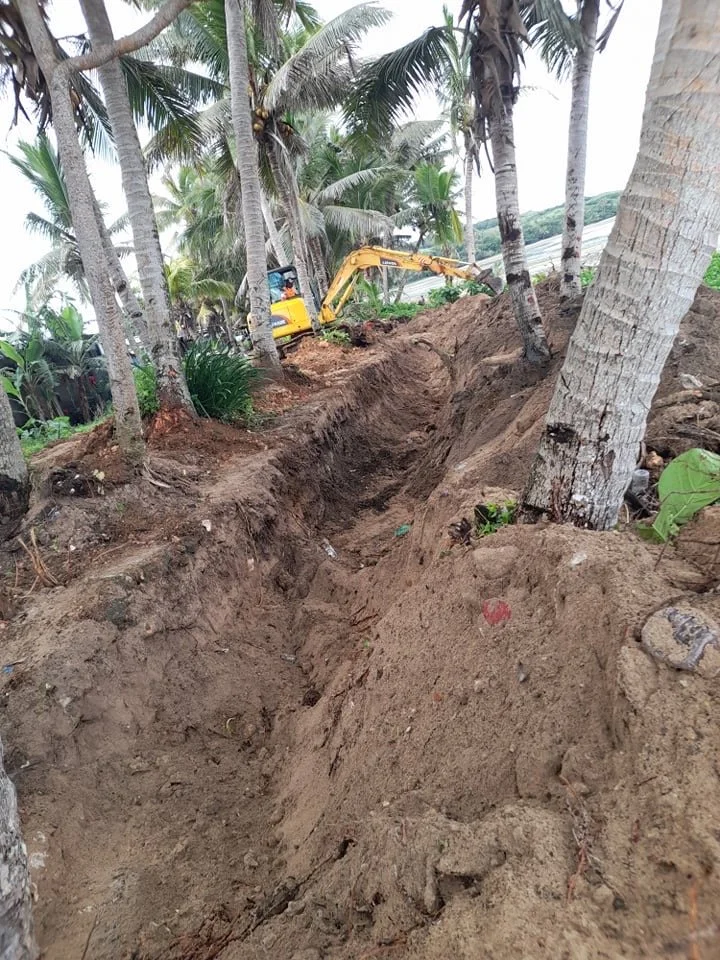
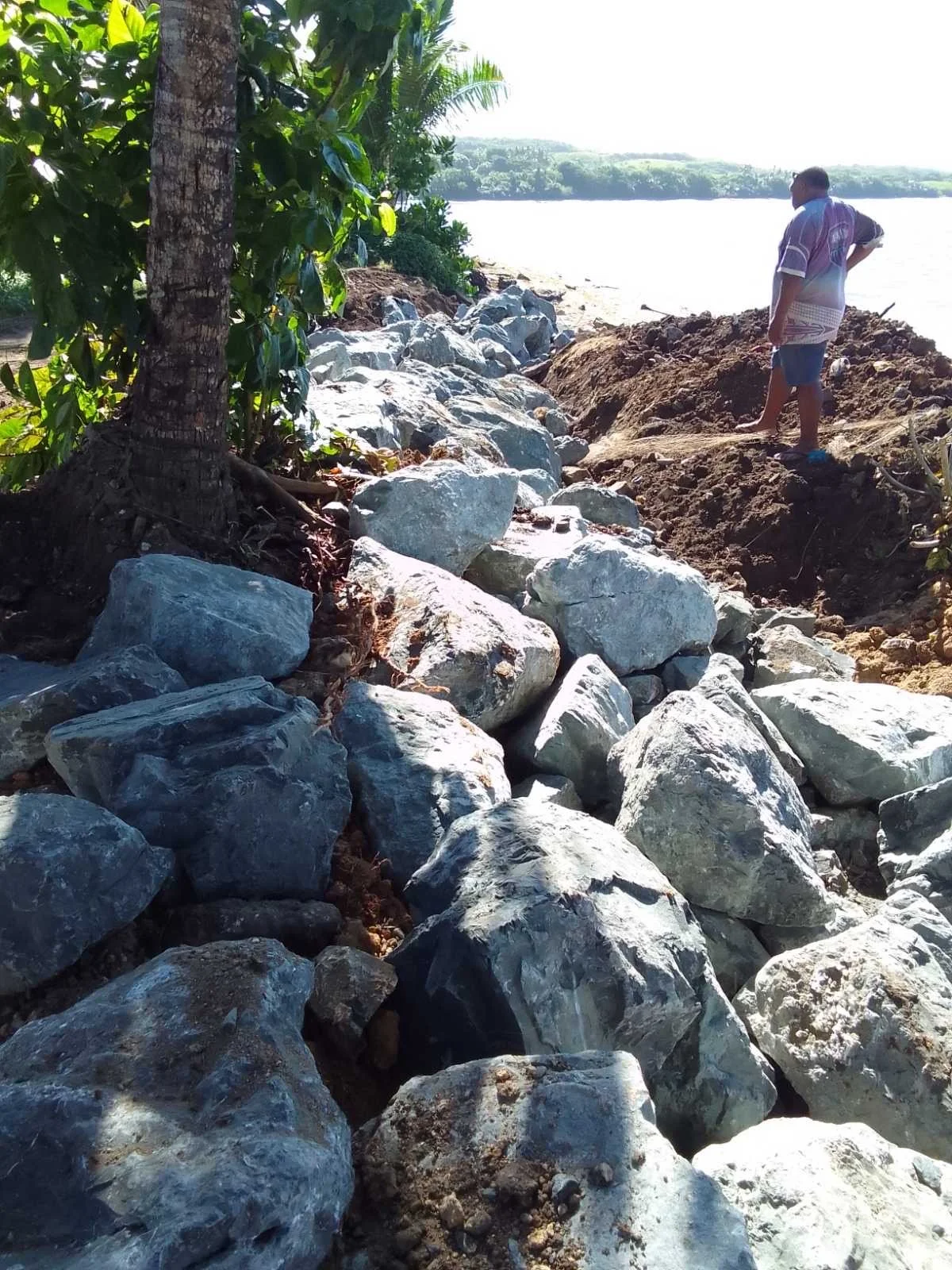
For so long, the people of Yadua have been appealing to authorities for the renovation or re-make of the village seawall, which had run down more than 30 years ago. Their pleas seem to have fallen on deaf ears until FemLINKpacific accepted their Application. The seawall will stop beach erosion, preserve the Yadua coastline and ensure the safety of the Yadua community. Though construction was a little delayed due to the adverse weather condition in the month of March, it is now well-underway and the whole community is appreciative of the initiative.
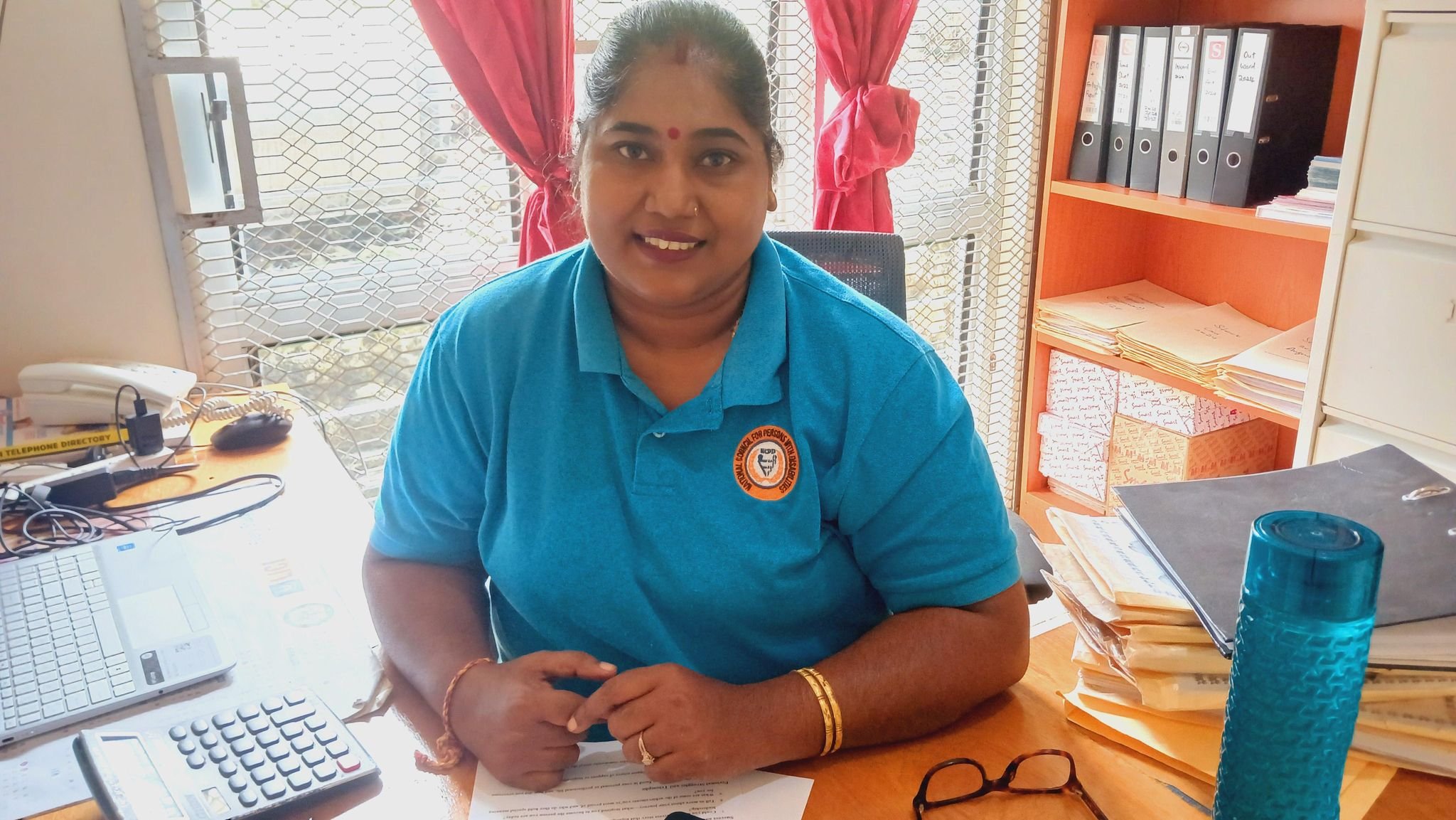
Amplifying the Leadership of Persons with Disabilities
Nothing about us without us; is more than a slogan for Monisha Rao—it is her firm call to
action as she passionately advocates for inclusivity for persons with disabilities.
Monisha has been with the Fiji National Council for Disabled Persons; Labasa Branch for
over 12 years. While reflecting on the International Day for Persons with Disabilities, she
emphasized,
“If you want to know about us (the challenges of disability), you have to come into our shoes”.
The International Day of Persons with Disabilities is commemorated annually on December
3rd . We highlight the day as part of the advocacy for 16 Days of Activism Against Gender-
Based Violence. This year’s theme, “Amplifying the Leadership of Persons with Disabilities for
an Inclusive and Sustainable Future”; highlights the critical need for the inclusion of persons
with disabilities in decision-making processes.
Monisha acknowledges some progress, such as the requirement for representation of
persons with disabilities on village committees, advancements in inclusive education, and
improvements in disability allowances. However, she stresses that much more needs to be
done, particularly in ensuring accessibility.
Accessibility, Monisha explains, benefits not just persons with disabilities but also the
elderly, expectant mothers, and those who are unwell. She notes that making towns and
public spaces, such as supermarkets, accessible would provide persons with disabilities the
freedom to make their own choices—like independently shopping for their goods—instead
of relying on others.
Healthcare accessibility also remains a significant concern. Monisha highlights that the
dental clinic at Labasa Hospital is not accessible for persons with physical impairments.
Carers must physically carry patients to the clinic, creating unnecessary hardship.
Additionally, the absence of interpreters for the deaf at hospitals makes it difficult for them
to communicate their health concerns, often leading to misdiagnoses or improper
prescriptions.
Monisha advocates for disability-friendly infrastructure in future development plans,
emphasizing that while older buildings may be harder to modify, new buildings must cater
to the needs of persons with disabilities.
To address inclusivity, Monisha stresses the importance of involving persons with disabilities
in decision-making. “Nothing about us without us,” she reiterates, emphasizing that those
directly affected are best equipped to articulate the challenges they face, such as
communication barriers and accessibility issues. She also highlights the need to dispel
stereotypes, such as the misconception that physical disabilities are often accompanied by
mental disabilities, reinforcing the importance of their active participation in shaping
policies and initiatives.
Through her unwavering advocacy, Monisha calls for a future where inclusivity is not just an
ideal but a reality.


Vanuatu Regional Convening - Parametric Insurance 2023
A big VINAKA VAKALEVU to Vanuatu Young Women For Change, Anne Pakoa and the diverse rural women leadersand first respondents of Vanuatu for opening up your space and affirming our feminist media work in Fiji and in the region.

Today we held our first Climate Finance awareness session with almost 50 Vanuatu diverse rural women leaders. There was an emphasis of discussion on disaster preparedness, violence against women and girls, information access and sharing climate finance information that the grassroot and low income earners should understand in order to help in their disaster responses and recovery.
We acknowledge the space where there were lots of sharing especially post COVID and their genuine gratitude to a space where they can connect and learn each other's work and of course our feminist media work and it's important role in amplifying their voices towards influence and advocacy towards change. There were lots of discussion and joy we all shared.

We all look forward to a much strengthened regional relationship building and networking that is needed in connecting all our feminist and social movement building work. Vinaka VanCare Insurance Limited for your attendance and useful information session to support climate finance access to our rural communities.
Acknowledging UN Capital Development Fund for this collaboration work with femLINKpacific and seeing the value and significance of diverse rural women in accessing climate insurance and helping build stronger community resilience in the face of climate crises.
femLINKpacific launches it's 14th district in Levuka
A historical and special moment for #femLINKpacific and the wider diverse rural women leaders network today as we launch our #feministmedia work in Levuka today.
With more than 30 diverse rural women participants, we shared the femlink #herstory, our moving work in the area of Women, Peace and Security and the importance of feminist media in linking diverse women's voices into public and policy spaces.
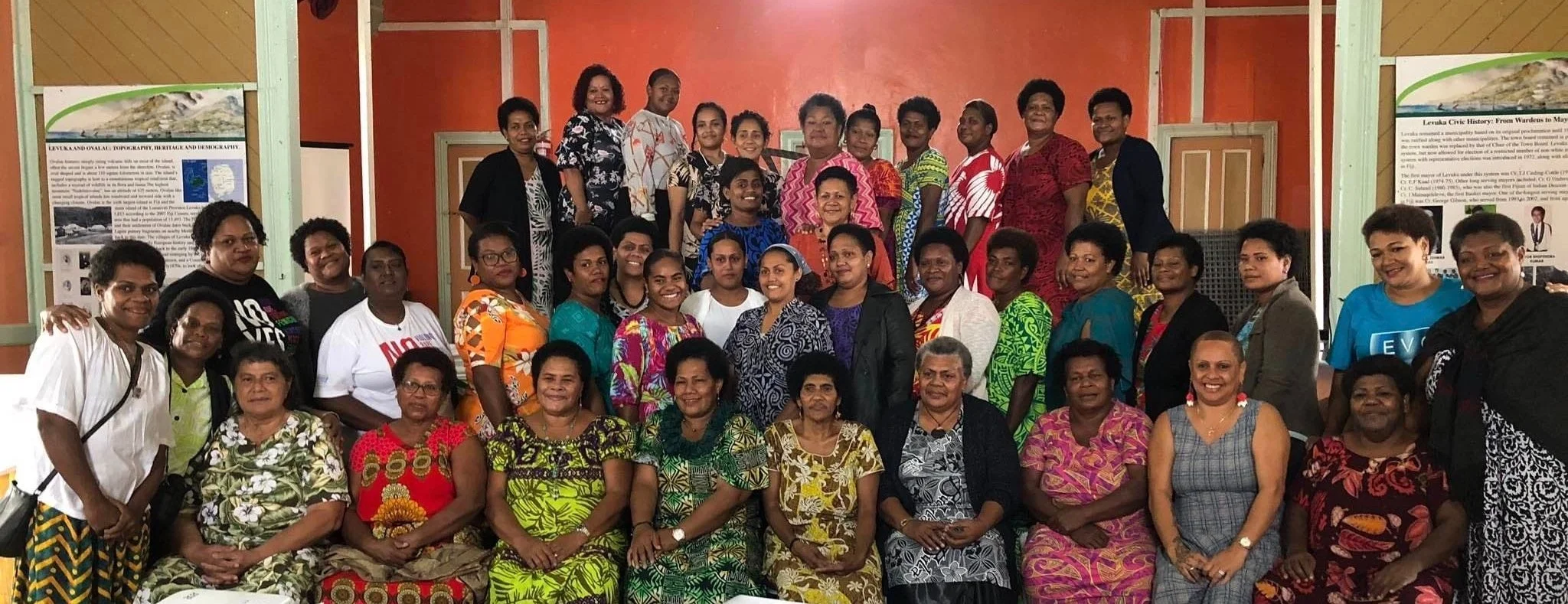
Some of the issues that came out included;
- the lack of medical equipments in Levuka hospital where women with their first and last born and other high-risk cases have to travel to Suva hospital which often places higher burden on women and families.
- rape and violence cases still being addressed through the traditional "veisorosoi" process which involves perpetrators asking rape and violence victims for forgiveness
-lack of awareness that comes to the grassroot communities including women's health informations.
A powerful and inspiring start for Levuka. We look forward to more future dialogue with diverse women moving many breakthrough work in Levuka, Ovalau.
Acknowledging Women's Fund Fiji for making all these feminist media expansion into Levuka possible.
Rural Women Leaders Want 50% Women Parliamentarians
by Vilimaina Tamata
Hear Timaima at our Regional Convening talking on Learnings and Policy Conversations around the recent Pacific Islands Forum Leaders Meeting, Womens representation in Parliament and women empowering women. Tima urges Women leaders to advance strategies that assist women in grass-root communities.
This Regional Convening is implemented in partnership with the Pacific Islands Forum Secretariat (Forum Secretariat) with funding from the European Union through Technical Cooperation and Capacity Building Facility (TECCBUF). Under KRA4 of the TECCBUF, the programme supports the strengthening of the participation of NSAs and CSOs) to participate more effectively in regional policy making, development and implementation processes. Also, through the Pacific Partnership to End Violence Against Women and Girls (Pacific Partnership). The Pacific Partnership brings together governments, civil society organisations, communities and other partners to promote gender equality, prevent violence against women and girls (VAWG), and increase access to quality response services for survivors.


The revitalization of the Pacific Leaders Gender Equality Declaration is a way forward for Gender Equality in our Blue Pacific Continent
by Sulueti Waqa
“The Pacific Leaders Gender Equality Declaration has a key role to play in advancing gender equality in the region “, shared Rosy Akbar, the Minister for Women, Children and Poverty Alleviation for Fiji and the Chair of the Pacific Island Women Leaders meeting last week.

This meeting was the result of a decade of endorsing the Gender Equality Declaration. The main conversation was around revitalizing the Pacific Leaders Gender Equality Declaration
It was clear from the press conference that the revitalized Pacific Leaders Gender Equality Declaration that was endorsed by the government ministers and delegates last week should pave the way for addressing issues of gender inequality in our Blue Pacific Continent.
Akbar adds that the declaration must reflect regional development priorities. Once taken into consideration, it should assist with a lot of implementation processes in the region.
This will also ensure better collaboration with CSO partners when it comes to gender mainstreaming. Conversations on defense and security by the government will also include gender.
“The Boe Declaration, human security is the core part of that declaration. So, we are working as the secretariat to ensure that gender and women are part of that discussion but also, particularly around the women’s peace and security agenda looking at it on a wider aspect so as not just focus on women as part of the law enforcement but also women as peacemakers,” said Melania Nawadra, Social Inclusion Adviser at the Pacific Island Forum Secretariat.

She adds “Gender-based violence is part of that discussion so the revitalization of the Pacific Gender Equality declaration will take that into the aspect and so that is why we would like to ensure the revitalization, the 2050 strategy, and all the sectoral strategies that we have included gender as part of the work that we do”
Collaboration in the Pacific is the key.
“We noted the importance of a collective voice to highlight issues of common interest including the disproportionate impact and effects of Climate Change and disaster on our women and children” shared Mrs. Akbar.
The Pacific Leaders Gender Equality Declaration of 2012 had five key outcomes that pacific leaders need to implement. Gender Responsive Government Program and Policies, decision making, economic empowerment, ending violence against women and girls, and health and education.
Within this outcome, there is a need to consider temporary special measures to accelerate the number of women in decision-making. The need to incorporate CEDAW into legislation. The need to see into the economic empowerment of women by ensuring that women participate equally informal and formal sectors ensuring legislation is in place to ensure access to employment opportunities. The need to work collaboratively with Civil Society Organisations.


Melanesian Women Leaders Call For Leaders to Prioritise Human Security Issues
by Vilimaina Tamata

Diverse Rural Women Leaders in Port Vila are now facing the impacts of the COVID19 Pandemic
Fourty (40) rural women leaders in Fiji and Vanuatu, members of femLINKpacific’s Women’s Weather Watch, met in between 28th – 29th April, the first Regional Convening for the year, in an online hybrid mode, focusing on “Strengthening the Voice and Visibility of Pacific Women for Leadership and Ending the Violence”.
“If I was elected in parliament, my priorities would be the safeguarding of our human securities, these are interlinked, it would make life easier - our issues are rising because certain human securities are not met.”, Vani Tuvuki, a rural woman leader from Ba sharing what she’d push for if she was a woman in national politics, emphasizing the seven human security pillars prioritized by femLINKpacific when it comes to women, peace and security. “For us women, it affects us a lot, because we are the power engine of our families - we are at the forefront of every disaster… I’d really emphasize that we have clean drinking water, lower the cost of living, see that Ministry of Poverty Alleviation gives adequate allowance that could feed a family for a month - and see that our children are not wasting time spending years in USP, but when they graduate they don’t have a job.” added Tuvuki.

Vani Tuvuki speaking on Womens leadership in rural communities
Across the West and North West divisions in Fiji, increased prices of basic food items is a concern, highlighting that with the fact that people were still recovering from job loss caused by the COVID-19 lockdown, this has become a key human security issue as low-income households are not able to cope with the increase in food prices, and therefore opting for low quality foods at cheaper prices. Mrs. Sushma Lal of femLINKpacific’s Ba Rural Women Leaders Community Media Network shared that she has noticed that some food items are being sold at the same price, but with a decreased amount, for instance, a 9kg bag of flour being packaged and sold as a 10kg bag of flour. Rural Women leaders in the Central Division fear that the increase in food prices will trigger more crimes in communities. At the time of the regional meeting, a single kilogram of sugar costs $3.05 FJD, and the minimum wage rate, as passed by Parliament as of April 01, 2022 is $3.01 FJD – therefore, workers on minimum wage will have to work two hours in order to be able to afford a kilogram of sugar. Rural Women leaders continue to advocate for a decrease in basic food items to cater for low-income earners.
Child labour is a growing issue in North west parts of Fiji, as some families face extreme poverty and children are working in order to pay bills and meals. Recommendations to the State, include running a data collection system for skilled and unskilled workers, the youth, women and matured women, so that there can be some assistance provided to the unemployed in getting work abroad. In addition, rural women leaders want better internet connectivity, so that families in rural communities can have adequate access to online courses, and do not get left behind in the digital method of learning.
Rural Women leaders in Vanuatu reported on how they have been facing the impacts of COVID-19 as a nation, with the lockdowns, resulting in job loss, reduced pay and reduced hours. Better Health services and employment opportunities are the identified needs and recommendations from the Nivan Rural Women leaders. They report that a single face mask costs 150 to 200 vatu, which is too expensive for homes, especially with large families. Women have had to resort to risky means of income such as prostitution, due to the loss of income brought on by the COVID19 Pandemic. Recommendations around the economic human security are towards opportunities for unemployed mothers to sell their produce, food stalls to compensate for finances lost due to the COVID restricted places such as kava bars, etc. Women are also recommending that face masks be made free of charge, hand sanitizers and hygiene resources also, to be subsidized by the Vanuatu government. In addition, recommendations on subsidizing the high cost of housing, to ensure proper accommodation and safety.

Nivan Rural women leaders want their elected representatives to lobby for more hospital availability and community resources – more clinics to be set up in the center of their communities and outer islands, to cater for the marginalized and vulnerable groups i.e. People living with disabilities, pregnant women, young mothers, etc).
In a post-convening survey, Fiji women leaders shared issues they would want their elected representatives to push for, leading the list of these findings, above “Water and Sanitation”, above “COVID 19 pandemic challenges” was “Women and Girls issues”, stating that women and girls issues are ongoing with no one directly addressing it in Parliament. These issues of violence and health are ongoing, but are somehow only considered serious when addressed alongside Fiji’s cyclone season, due to the lack of privacy and safety for women and girls at Evacuation Centers. Recommendations from young women in the room were for community health workers to be better trained on serving and respecting young women who require medical assistance, and that mindset towards pap smear tests need a positive change in communities. Young women also expressed concerns on the lack of medicine at medical centers, and they have had to purchase their own medicine.
Single mothers, representatives of the Mama Ashy Project report that social welfare assistance has not been responsive, and recommendations towards the Department of Social Welfare at the Ministry of Women, Children and Poverty Alleviation are for clarification on the criteria for assistance towards single mothers, as they’ve seen that not all single mothers are given assistance when seeking help.
Women leaders further expressed concerns on how women are underrepresented across sectors and the need to advocate for CEDAW and the national gender policy, and therefore have strong recommendations for policy reviews to be implemented. Rural Women Leaders Community Media Network continue to push for policy makers to practice fairness and transparency in their decision making and decision making processes, ensuring that the policies are implemented, effective and reviewed from time to time.

Rural Women leaders in Vanuatu and Fiji recommend that Pacific Island Government need to re-look at its gender commitments and to consider deployment of the Ministry of Women representatives into other Ministerial arms (gender officers), as the gender officers would provide guidance surrounding gender inclusion in projects. In addition to recommendations to Pacific Islands governments, national leaders need to assess how women in rural communities can be better resourced and provided opportunities for economic empowerment.
femLINKpacific’s Executive Director, Susan Naisara provided some insight on Women and the Media, global standings of Fiji in terms of press freedom, and the women were also given a brief training on Feminist Media, how femLINKpacific uses its platforms to amplify rural women’s voices. Vanuatu and Fiji participants at the Regional convening were leaders from various groups and associations, including Single Mothers, LGBTQI+, Young Women, Marama ni Koro’s, members of the Fiji District of Social Services (FCOSS), members of the Soqosoqo Vakamarama i-Taukei and community health workers.

What Labasa rural women think about the economy and what political security means to them
Voices from the Field – Women, Peace and Human Security.
by Sulueti Waqa
Twenty-seven (27) diverse rural women and young women leaders gathered at the St Thomas Anglican Church Hall in Labasa on Friday last week for femLINKpacific’s Rural Women Leaders Consultation. The discussion was on the theme of International Women’s Day “Gender equality today for a sustainable tomorrow”. The participants in line with the theme highlighted their women, peace and human security issues.
Mereia Tabuvale from Bulileka, representing Labasa Market Vendors Association in her introduction spoke of the struggles currently faced by market vendors in the Labasa Market. She had been in the market for more than ten years. She left last year and returned- beginning of the year; she was shocked to see the increase in prices of items in the market.
“It feels like the prices are going up every day, every week, every month “. Tabuvale stated this as she highlighted that they are making very limited profit from their sales. Political security was also part of the agenda. There were discussions around what political security meant for the participant.

Swatika Sagar from the Vanua Levu Mahila Mandal shared that political security for her is having the right to vote and an investment in women’s development. Ms Tabuvale shared the same sentiments stating that for market vendors, their political security is knowing the importance and the power of their voice.
Keleni Vosatabu, diverse young women representative shared that political security is about freedom of choice. She stated this after reflecting on the laws that are being passed without proper consultation with the communities. She adds that it is also about accessing justice as young people. Accessing accurate information particularly for rural communities while Fiji prepares itself for election is very important. The need for communities to be informed in order to effectively participate on the process that leads up to the general election. With that in mind, rural women and young women leaders spoke of the way forward. They highlighted what kind of leaders they want. The need for representation of women with a perception that with women in leadership, women’s issues will be properly addressed and attended to.
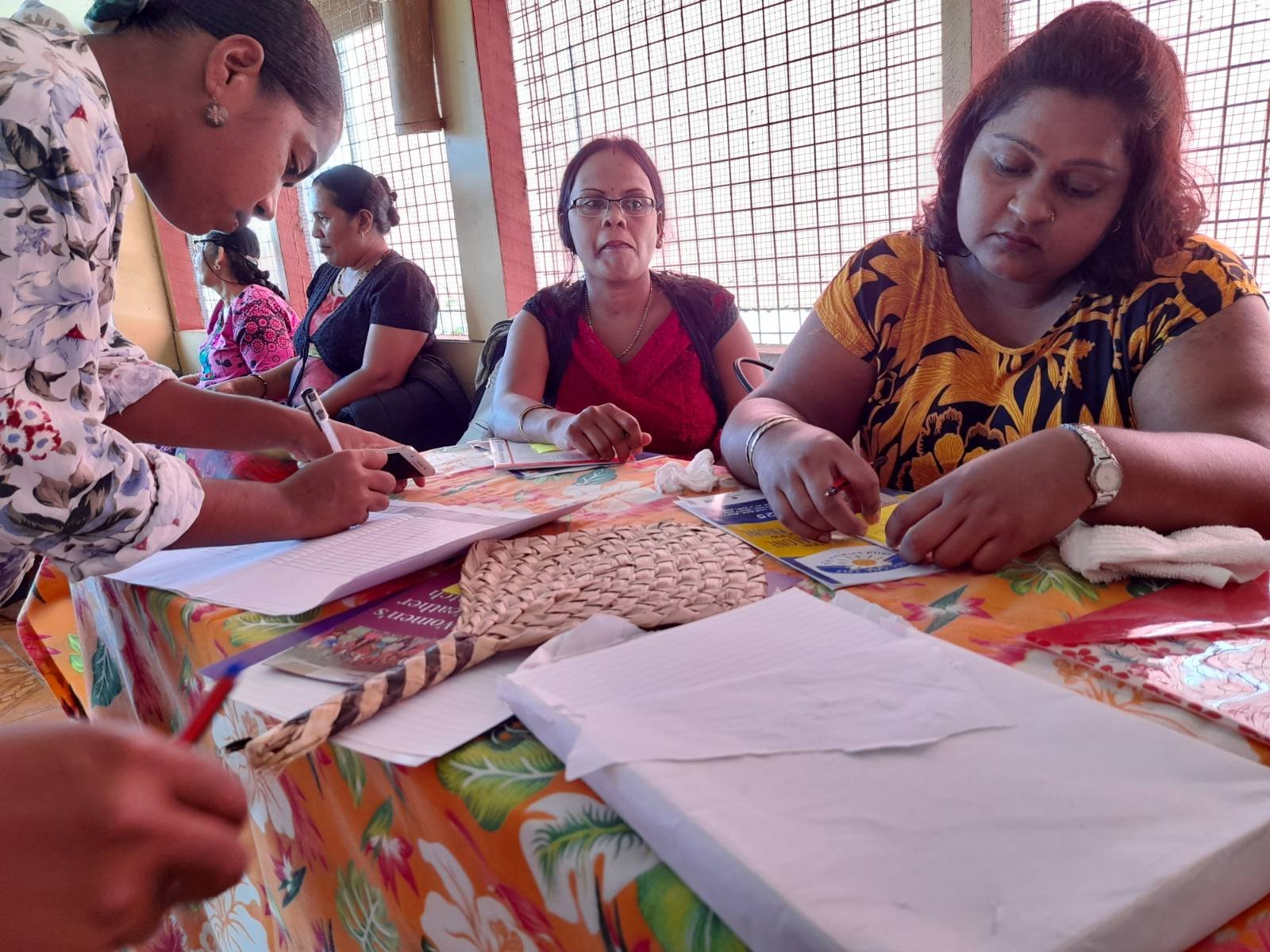
Esther Brown, representing women with disabilities stated the need for leaders to listen to the people and not only during campaign. “Quite often this is the case, when they are elected, they totally forget about the people.”, added Esther.
The issues that they wished to be addressed is the poor infrastructure. The need for proper road, bridges in remote communities.
She adds that for persons with disabilities, it is about making towns and public services accessible. This could be achieved by building ramps for persons with disabilities. There is also a need to look into accessible evacuation centre during times of disasters.
Accountability and transparency was also highlighted as an important characteristic by young women.
The twenty seven participants at the Rural Women Leaders consultation were representative from Vunicuicui Mutltiracial Women Group, Vanua Levu Arya Mahila Mandel, Naleba Mutiracial Women’s Group, Navakakuru Women’s Club, House of Colors , Labasa Market Vendors Association , Association of Anglican Women , Fiji Early Chilhood Education , Diverse Voices for Equality – Fiji ( Labasa Hub).

Diverse Rural Women Calling for Leaders to Prioritize Access to Education
by Vilimaina Tamata
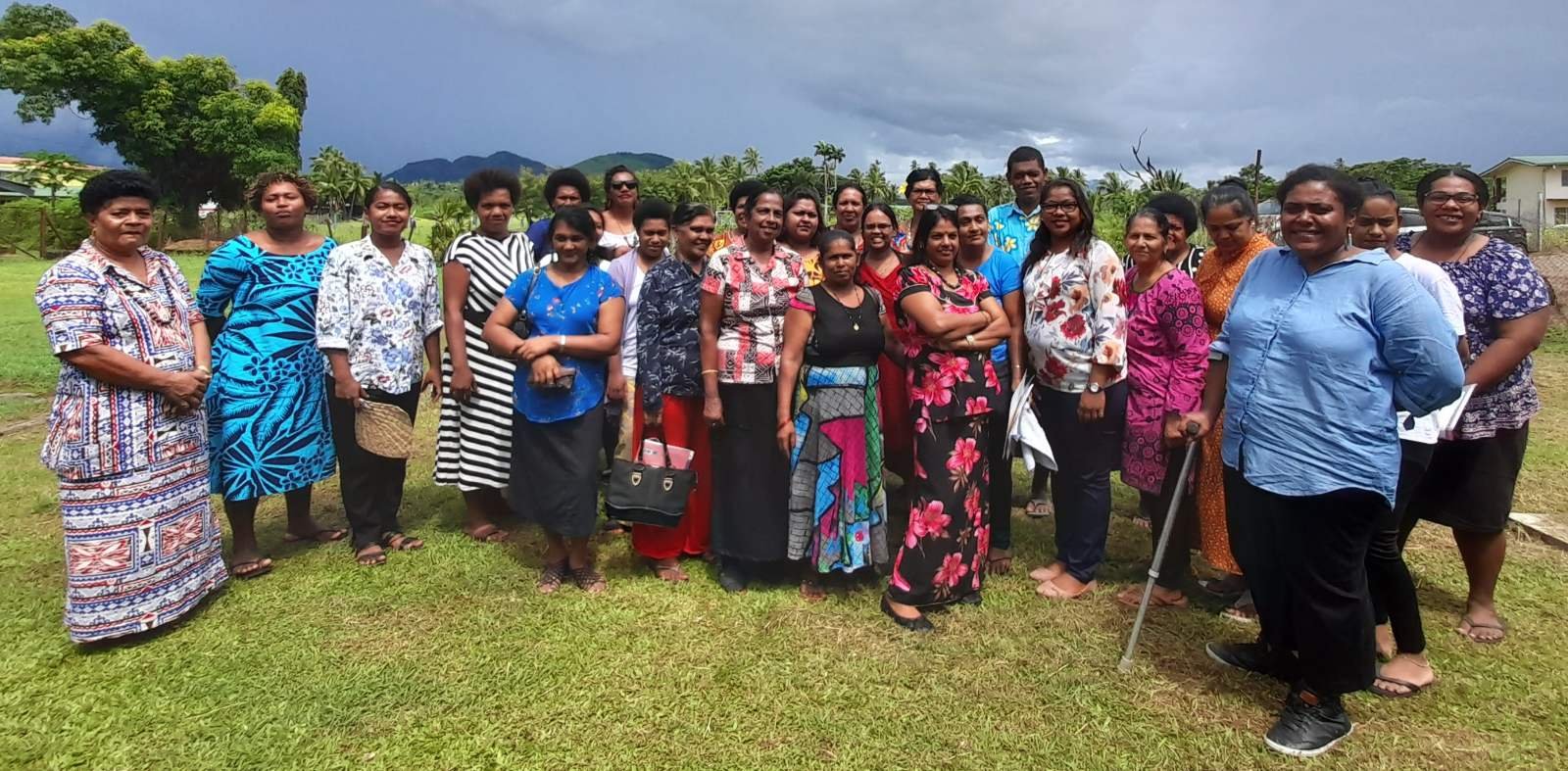
Twenty-five (25) diverse rural women leaders, members of femLINKpacific’s Rural Women Leaders Community Media Network met last week in Tavua’s District Convening for the year. “Diverse Women Shaping Gender Equality Today for a Sustainable Tomorrow” was the theme at the Convening.
Women leaders representing various local groups and organizations presented their views on what authentic leadership looks like and the type of political leadership they are hoping towards the 2022 Fiji General elections.
“Supporting one another, women supporting women is essential to achieving gender equality” said Suliana Nateru, a young woman leader member of our Rural Women Leaders Community Media Network. “Being a woman leader means being inclusive, some of the qualities are being supportive, encouraging youth, being responsible and hardworking”, added Suliana. When asked on political leadership, Mrs Vilisi Verebasaga said that a balance of male and female participation in decision making, as well as peoples living with disabilities was crucial to political security, as more than half of Fiji’s population are women.
Vilisi Verebasga, Tavua Rural Woman Leader speaking on equal participation of men and women in decision making spaces
Young women and mothers in the room also spoke on struggles of access to education with the drastic decrease of the government assisted e-transport top ups which were previously $98.00 per term, has now dropped to only $5.00 per term per child. Additionally, children are missing school due to little to no food at home, their parents who lost jobs due to the COVID19 Pandemic are still struggling to provide and are unable to send their children to school, this has been exasperated even further by the drastic increase in prices of sugar and flour.
“There’s many issues here in Tavua, we’ve been coming across COVID19, come across the floods, twice or thrice, our farms and home gardens have been really disrupted. Some of the families, they were not working, and there’s been an increase in food items, like sugar, before we used to buy $2 a KG, but now its $2.75, $2.99. Like the flour, the increase of price of flour from $12 and $13 TO $19, the increase of living is very high” says Unaisi Bakewa, Rural Women Leader of our Tavua Community Media Network, also representing Disabled Peoples Federation and Soqosoqo Vakamarama-iTaukei.
Women leaders further raised concerns with access to Education, as some children go more than a week using the same mask, while other children don’t have masks at all. Recommendations from the room, therefore are towards government assistance to provide free resources such as masks, meals, and sufficient e-transport top ups for children in need to enable them to attend classes, otherwise children from impoverished families are further “left behind” with access to education from what has been described as a strenuous learning experience i.e. 2021 virtual learning methods.
Young women leaders of Tavua speaking on issues affecting access to education
Further to this, according to the 2021 – 2022 the Fijian Government has allocated $1.5million for sanitary pads to be provided to all female students from Year 7 to Year 13. However, women in rural communities report that sanitary pad vouchers are only being provided to years 9 onwards, and the vouchers are enough to purchase only five in a pack. There packs were provided only once in the year 2021. Women of Tavua are requesting that government leaders follow through with the government assistance of providing sanitary pad vouchers to years 7 to year 13.

Commemorating World Water Day 22nd March 2022, Mrs Mela from Vanuakula Village of Tavua spoke on the importance of clean and running water, and as we commemorate World Water Day, Mela shares the struggles of having unclean water especially during Fiji's Cyclone Season. As water is an essential building block of existence, each year on March 22 we raise public awareness about the significance of clean water and sustainable management of this significant resource.
Communities represented at the Tavua District Convening includes members of the LGBTIQ + community, Marama-ni-koro’s, Young Women, members of the District Council of Social Services (DCOSS) and Community Health Care Workers.
