

Access to Education A Top Human Security Priority in Lami
Mental Health Challenges amongst Concerns
By Maxine Tuwila Lesivou
femLINKpacific has resumed it’s UNSCR 1325 meeting in the district of Lami after a lapse of 6 years; bringing together a total of twenty-five (25) Rural Women Leaders on Monday.
Susan Grey, femLINKpacific’s Executive Director says the organization is looking forward to supporting rural women and girls within the district of Lami, to meet their Human Security Priorities. “We are happy that femLINKpacific has returned to Lami to convene a diverse rural women’s network and to support women and girls and the communities of Lami in striving for gender equality and gender justice in the middle of a pandemic and growing human security threats.”
Grey added, “Lami already has strong women leaders and in feminist solidarity, we have returned to convene and help grow and amplify the voices of rural women, as we believe that transformative change can be achieved through the power of local women’s networks and through local-level convenings.”
There were a number of recommendations from femLINKpacific’s Rural Women Leaders Community Media Network members (RWLCMN) in Lami on issues affecting their Human Security priorities.
“Partnerships and network amongst identified groups in (creating) awareness so women are able to cope on a daily basis,” said Maritina Diti, a representative from Strumphet Alliance Fiji Network.
Diti added that women are experiencing increasing mental health challenges from stress and struggles on a daily basis, especially with their school children being at prolonged periods at home, due to the shut-down of the schools because of the second wave.
“Women are already struggling. Schools are closed and we’re not able to buy data for our children because most of our bread winners are without a job – and this adds to our daily stress and struggles. ”Echoing Diti’s statement was Salanieta Lawakeli, a youth representative of Lami Village.
Lawakeli said that students were experiencing difficulties accessing online programs due to limited resources and the financial burdens on their families. “For some students in our community, trying to find money for data to go online is really hard since their parents are without a job and they cannot meet their daily needs because the cost of living is really high.”
The convening discussions noted that some communities, the women would gather their children together out of their home bubbles to access a single device that is available in their community for zoom or virtual classes.
Ashie Naisara, a life long member of femLINKpacific said that the Mama Ashie Project is trying to cater for the needs of mothers and their children during this pandemic. She adds that access to education is a major issue at the moment with most of the communities in the district of Lami.
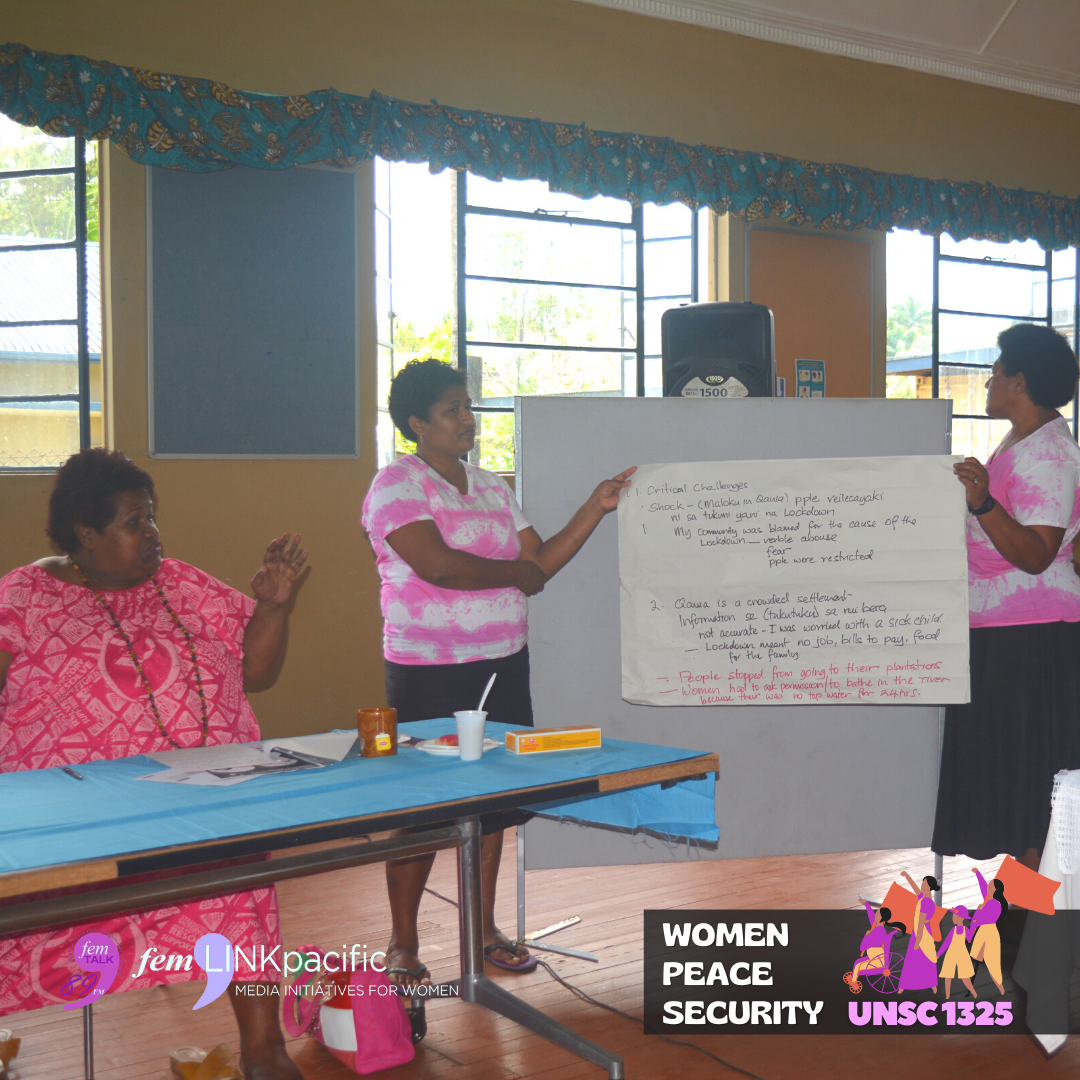
“We have identified donors to help these families that have been affected during this pandemic and these supports will go towards the education of their children. A lot of families in Lami aren’t fortunate to be able to provide technical equipment for their children so we try as much as we can to support them”, Naisara added.
Recommendations from these women leaders include the need for relevant Ministries to provide assistance for students especially when technologyy is involved. Access to Education is a major concern for these women leaders.
Frances Qounadovu, the representative from Delana Women’s Group said, “teachers and the Ministry of Education needs to look into this matter so that no child is left behind. Access to Education is what we are pushing for ever since the lockdown in April.”
RWLCMN Members in Lami were grateful for the opportunity as they’re able to voice their issues about what has been affecting them during this second-wave of the pandemic and give recommendations.
“Thank you to femLINK for offering this space so that women can voice their issues in what’s happening in Lami. The organization can take these issues into relevant forums that help support these women leaders”, Ashie Naisara adds.
Communities represented in this convening include members of the LGBTIQ + community, Women leaders from Faith Based Organizations (FBO’s), Women living with disabilities, young women, women leaders from across women led groups in the District of Lami and members of the District Council of Social Services (DCOSS).
The Lami Rural Women’s Convening or Lami “Women’s Weather Watch” - is funded by the European Union through the “Building Community Resilience to Climate Change through Civil Society Action Project. (CRCC Project).


Preparedness for Response
By Maxine Tuwila Lesivou
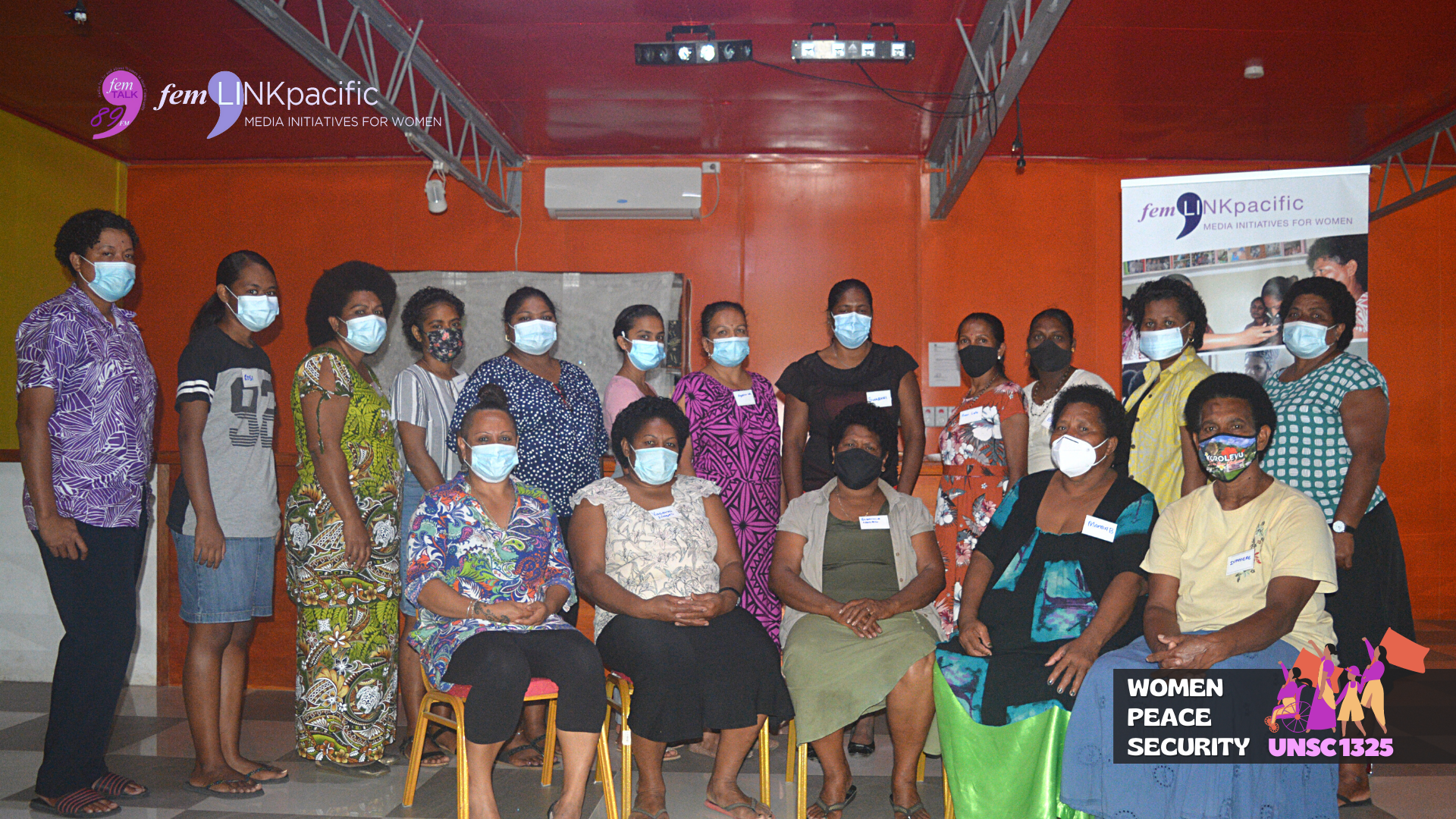
femLINKpacific had just concluded its Western District Consultation with Tavua being the last District to be convened late last week. Fifteen (15) diverse rural women leaders attended the convening from various groups, clubs and communities.
The discussion today was mainly around disaster preparedness and response specifically for Violence Against Women and Girls (VAWG).

Speaking on Friday, Hetali Lata said “during this pandemic, there’s an increasing number of domestic violence cases in my community. Women aren’t able to access the services because of fear – we need to prepare for these situations during disaster periods because it will definitely increase”
She added that in previous crisis, women aren’t able to get help and support since evacuation centers weren’t always friendly.
“Evacuation centers are mostly unfriendly to us evacuees. When a woman is being violated in an evacuation center, no one will help because we see it as a “family problem” and not a “me problem” – we need to change this mindset.”
Suliana Nateru the representative from Yaladro Youth Group shared the same sentiments and said that we need to always be prepared and made sure that we have our trusted family and friends to help support us in times of crisis.
“Having our trusted family members and friends around us during a crisis is important so they can help us in finding support and we need to always be prepared during such event.
Nateru added that when women have this depth of knowledge than we will be able to overcome challenges and make necessary changes.
“When women have this knowledge on preparedness, then we are able to better prepare ourselves and our community in identifying the gaps and influence decision makers in this country in terms of our policies” she added.
Miliakere Salaivalu shared that as a village health worker and a market vendor, we need to equip ourselves with preparedness tips especially since we’re nearing disaster period. She added that prior to TC Winston, women leaders in villages do not understand what a “category 5” is.
Salaivalu a member of the Tavua Market Vendors Association added that weather warnings need to be precise, accurate and simple so women can better prepare themselves.
“Weather warning messages needs to be clear and accurate and it needs to be communicated across not only through texts messages. The language used should be simple so ordinary citizens can understand and prepare ourselves. When the media says Category 5 cyclone, they need to simplify the information so we know. They need to make it clear because the next time, it’s important to prepare.”
The women leaders acknowledged femLINKpacific’s Women’s Weather Watch platforms for providing relevant information on what is needed and required for ordinary citizens.
WWW is an inter-operable communication platform developed initially for early warning communication to women specifically for women in the rural areas. At the heart of the system is community radio and today, the system is a two-way information system enabling network members to also provide real-time situation weather updates which are used for media and podcast productions.
Discussions from the 3 district convenings also focused on gaps that currently exist within communities and during the past three days, recommendations to these gaps from women leaders in the Western Division would be collated together and documented to drive a call for action to relevant stakeholders.
Communities represented in this convening includes District Advisory Councillors (DAC), members of the LGBTIQ + community, Young Women, members of the District Council of Social Services (DCOSS), Community Health Care workers and Village leaders
Pushing The Need for Equality in an Unequal Society
by Maxine Tuwila Lesivou
Women in Rakiraki are urging their inclusion and representation in leadership roles at the local-level such as the advisory councils, outlining that already they are at the forefront with health as ‘village nurses’ but lack the recognition in decision-making spaces.
Women leaders from various organizations, clubs, groups and networks presented their views on ways in which women leaders need to engage and be recognized for their contribution to our communities.
“We need more women in leadership roles. For example, in Rakiraki, we only have three women out of twenty-five advisory councillors. We have a lot of women village nurses and we are still not recognized – a lot needs to be done so we can achieve equality in leadership roles,” said Sereima Meli.
Meli the representative from the Naboutolu Women’s group added that women are ready to take up leadership positions however, they are still not given the opportunity, because of patriarchy in communities, where men hold the primary power and women are largely excluded from spaces such as political leadership, decision-making etc. She said that this has been a cause too of intimate partner violence and where it continues to be difficult to difficult to resolve.
femLINKpacific had just concluded its district convening for the month of October in Rakiraki yesterday. The convening was attended by 10 Rural Women Leaders from our Rakiraki Rural Women Leaders Community Media Network (RWLCMN)
“Rural women Shaping Peace and Recovery better – Women’s deliberation through perseverance, leadership and hope during COVID19” is the theme for this month’s convening.
Azakia Kalougata the representative from Rainbow Pride Foundation Rakiraki hub echoed the statement saying that mostly women are stigmatized when they seek help when they’ve been violated in their homes and communities.
“When violence occurs, the intervention in our villages mostly don’t work because most women that have been violated are stigmatized when they go to someone they trust, such as the Fiji Women’s Crisis Center (FWCC) or the police”.
Kalougata adds that the effectiveness of women’s leadership is sometimes effective to some extent however, it depends on your setting (Community/environment). He shares that women in villages are mostly not recognized for the commitment and the resilience they have especially in times of a crisis such as the current pandemic.
“In a traditional I-Taukei village, I would say that women’s voices are difficult to be heard because male priority is important but these women in rural communities are the ones that are leading responders in a crisis especially now with this pandemic – the village health nurses are looking after the entire village and community”.
Ana Naivou from the Rakiraki Market Vendors Association says that women are not accessing services because of the lack of trust within the community.
“We women are finding it hard to trust others especially when we are going through violence. We have to be careful in who to trust and who we share our issues with because we might be sharing with someone in authority and then he/she goes back to tell your families about what you’ve shared. That’s why we don’t want to access the services that are provided in the village”.
Women leaders from femLINKpacific’s Rakiraki Network recommended that women need to push for spaces that is theirs and there’s a greater need in achieving equality in leadership roles especially in this unequal society that we live in. They concluded that women can persevere through any hardships and we need to acknowledge these achievements.
The convening was attended by members of the Rakiraki Market Vendors Association, Rainbow Pride Foundation Rakiraki Hub, Soqosoqo Vaka-Marama, former members of Ra Naari Shaba and Young Women leaders from across Rakiraki.
LET US USE AND ACCESS ICTs FOR MULTIPLE CRISIS
by Maxine Tuwila Lesivou
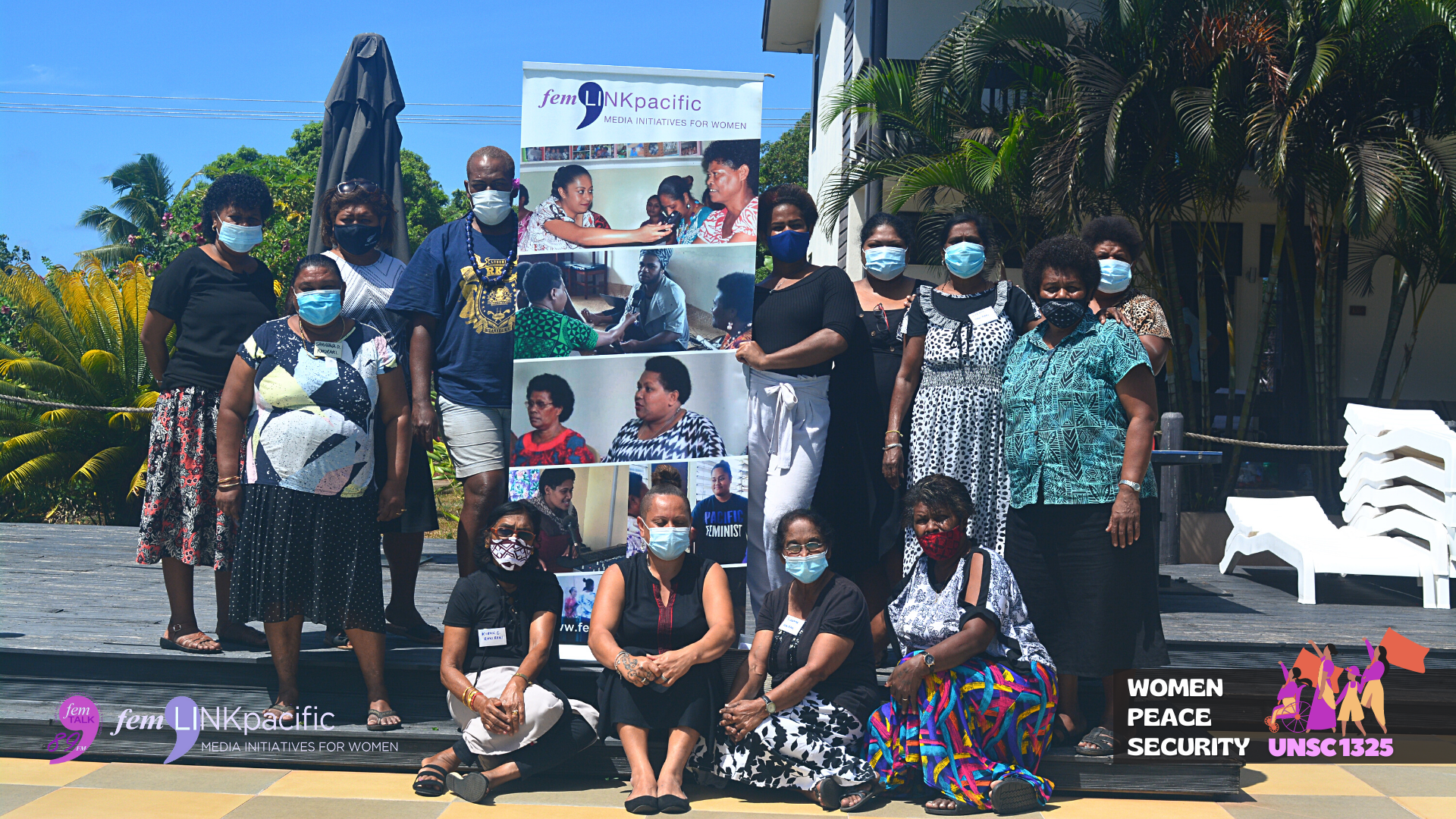
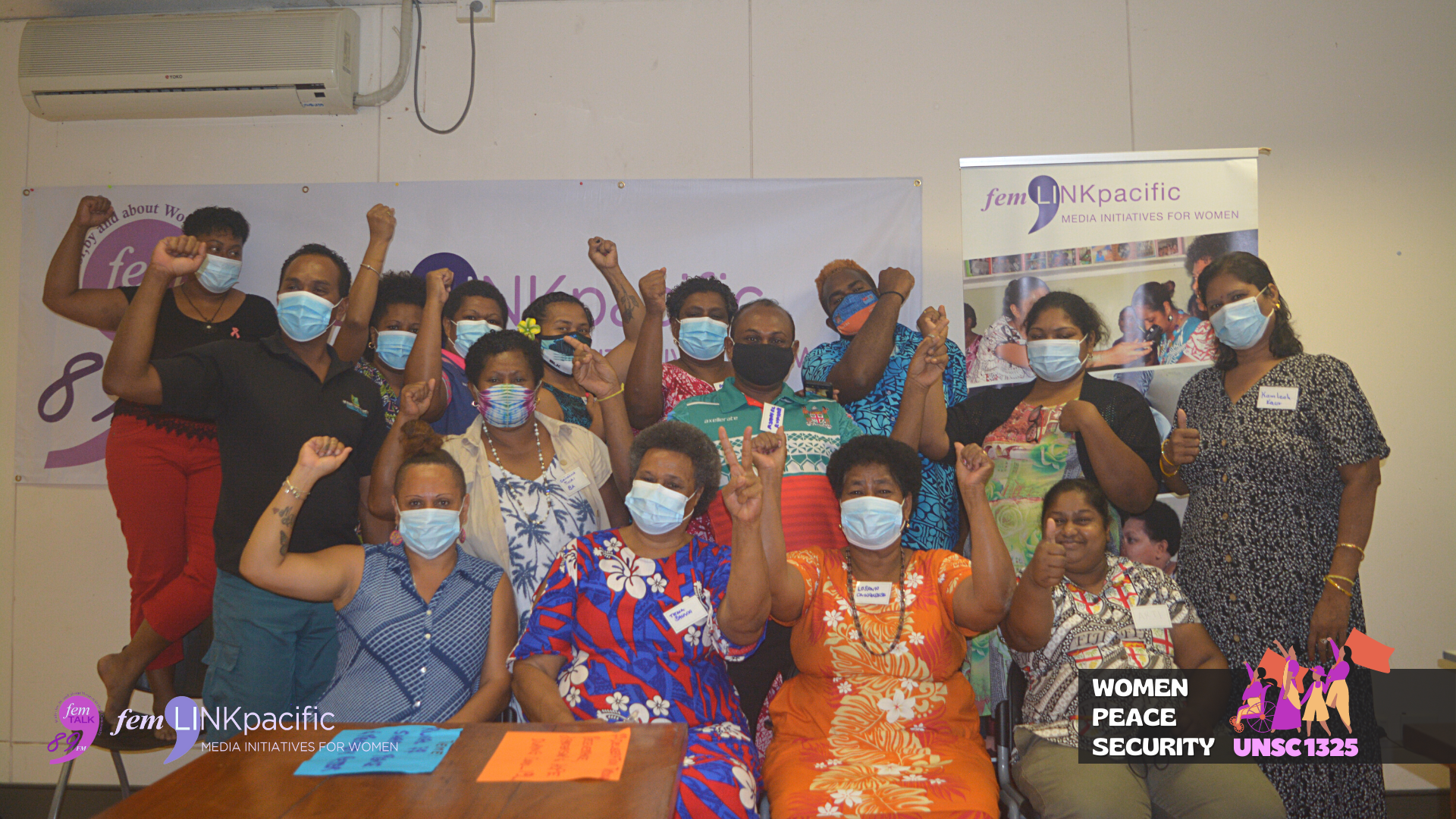
Ba rural women leaders have called for greater use of Information and Communication Technologies (ICTs) in times of crisis and especially during disaster preparedness, as Fiji prepares for the cyclone season that commences in two weeks’ time.
The Ba Rural Women Leaders Community Media Network (RWLCMN), who are members of women’s weather watch (WWW), said preparedness is the key, and the lessons of TC Winston have shown that it was through ICTs and WWW messages from femLINK’s platforms that enabled them to be prepared.
“And during TC Winston, we saw (other) people trying to prepare for the cyclone but it was too late – Winston has already arrived – and it was a category 5 Cyclone. We received messages from Women’s Weather Watch (WWW) way before Winston strike so we were prepared – that should be the practice – Preparedness is key”, said Sainiana Tinai, the representative from the Ba HART home.
Mosese Tikoduadua a representative from the Nailaga Youth group echoed this statement and said that the use of online resources, amongst others, should be utilized.
“We need to make use of the internet and the online resources we have to prepare for disasters. There are toll free lines available for us to call, if we need to get to evacuation centers. It is better to be prepared than regret later when fatalities happens because at times violence occurs in households because we are not prepared,” said Tikoduadua.
The network also called for more opportunities for greater networking, empowerment, political voice and leadership, so that women increasingly become active in their communities,
“We recommend that women be empowered and educated so they can come out of these ‘comfort zones’ and do more engagement in their communities apart from their household work”.
Kaur, the former Vice President for Ba Red Cross Branch and a member of the Varoka Tavarau Naari Shaba said, women need to also take initiatives to lead in their individual communities and groups. She said this was a collective feedback by women leaders from Ba.

Women are leaders
in their communities and play a major role in shaping peace within households and communities, not only during the pandemic. - Kamlesh Kaur
Discussions today also focused on the increasing number of domestic violence cases during this pandemic.
“We need to take heed of warnings especially before something happen so we can minimize the number of fatalities,” emphasized Sainiana Tinai. Tinai added that we need to contact relevant authorities if violence is not resolved.
Fifteen (15) diverse rural women leaders from our Ba district met yesterday to further discuss their recommendations in ways to support systems in place during the pandemic and during disasters. These recommendations included, the need for ensuring that these Women’s Human Security Priorities (WHSP) are met and addressed during this pandemic and the upcoming disaster months.
The convening also looked at ways in which the voices of women can be amplified during a crisis and the accessing of available resources for support. The theme for this convening is “Rural women Shaping Peace and Recovery better – Women’s deliberation through perseverance, leadership and hope during COVID19”.
Communities represented in this convening includes District Advisory Councillors (DAC), members of the LGBTIQ + community, Young Women, members of the District Council of Social Services (DCOSS), Community Health Care workers and Village leaders.


Together We Will Rise Up
Together we will rise up #TeamFiji. Let us Silence the Sirens.
48,323 cases during this outbreak (second wave) which commenced in April this year.
A four month old infant passed away from COVID.
528 deaths due to COVID. 353 deaths of COVID-positive Fijians with the reason for death attributed to other underlying factors. Total of Fijians that died = 881 COVID-positive Fijians.
169 are currently in hospital. 20 are in a severe condition and seven are in a critical condition.
Sep 8, 2021 Update - Ministry of Health and Medical Services.

State Cash Support and Effective Vaccination
By Maxine Tuwila Lesivou.
Government’s issue of financial support through the mobile phone outlets needs to be strengthened and improved, where there is greater access to rural communities, stronger control and more consideration of the covid risks, including the fact that a significant portion of those that need the assistance may not even have a mobile phone.
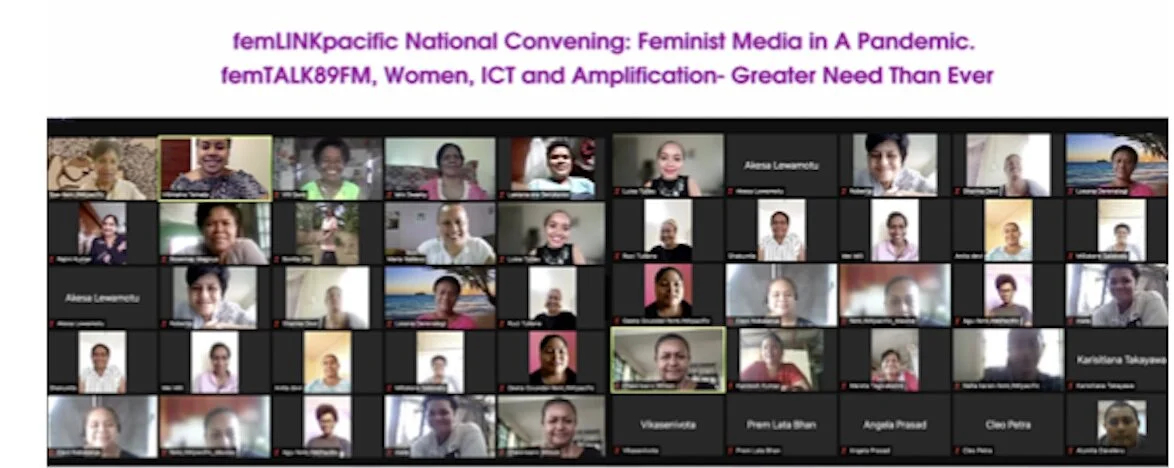
These were a number of recommendations from femLINKpacific’s Rural Women Leaders Community Media Nework (RWLCMN) where some fifty women leaders from the Central, West and the North joined a two-day virtual convening, held on Tuesday and Wednesday, last week.
The network in Rakiraki, emphasized that it would have been handy for the state to have given access to their nearby shopping centre so that for instance, those from the interior could easily access the Mpaisa – rather than coming into Rakiraki Town. “Maybe access to our Waimicia Shopping Centre, which is closer and would not involve the travel expenses, and the long queues in the town,” said Fane Lomani, Convenor for Rakiraki/Ba and Tavua.
In Nadi and Lautoka, the network acknowledged Government in giving $360 because a lot of families have been affected during this time and the cash could help support them.
“However, we also noticed the misuse of money – the $360. Many young people misused the money in buying alcohol and there was a lot of overcrowding in Digicel and Vodafones shop while withdrawing their $360,” said Agu Tuinasau the correspondent for the district of Nadi and Lautoka.
“Food vouchers would have been better instead of giving out cash assistance.” She said this was a collective feedback by women leaders from Nadi and Lautoka district.
“If the government provides food vouchers, it will be for food only and not for other things like liquor and alcohol” she added.
Discussions also focused on the increasing number of cases of COVID-19 and ways these can be tackled.
The western rural women’s network which is currently facing very high community transmission, outlined that more community awareness was needed for increased vaccination rates, and that many lacked the knowledge and the information to take that extra step of vaccination.
“I mean, it took the ‘No Jab No Job Policy’ to make some run to get vaccinated,” said a network member.
“There’s still lack of information) with the vaccine and we are still seeing a lot people breaking COVID protocols” said Kamlesh Kaur, the representative from Varoka Tavarau Nahri Shaba.
Kaur added that if we follow the protocols from MOHMS and get vaccinated, we will be able to get back to normalcy since vaccination is nothing new to us.
Viti Soro a representative from the Central Division echoed this statement and said “Vaccination is not new to our lives. It started when we were small – we’ve been vaccinated… so it is not something new”.

Fifty (50) diverse rural women leaders from our ten (10) districts were meeting in the last two (2) days to further discuss their recommendations in ways to improving government assistance and COVID-19 fatalities. These recommendations included, the need for ensuring that these Women’s Human Security Priorities (WHSP) are met and addressed during this pandemic.
This national convening also looked at ways in which femTALK89FM can provide support to women leaders in accessing information as well as highlighting the issues that COVID-19 has brought forth with the theme “Feminist Media in a Pandemic: femTALK89FM, Women, ICT and Amplification – Greater Need than Ever”.
With a specific focus on COVID-19 and Budget Allocations, this convening has equipped the fifty (50) diverse women leaders to put forth their recommendations that will be presented to policy makers to action upon.
Communities represented in this convening include District Advisory Councillors (DAC), members of the LGBTIQ + community, Marama-ni-koro’s, Women living with disability, young women, members of the District Council of Social Services (DCOSS) and community health care workers.

'We have to think of our food security because it is something many families go through"
"At this time while I'm home, I've started a little backyard farming with my family helping out. We have to think of our food security because it is something many families go through," Sesarina Naliku, Tavua .

Sesarina Naliku of Tavua with her children on her farm.
Naliku added that, it's been more than two weeks, where she has not been to the market to sell/
“I haven't been to the market to sell. I have a juice stall there, but because of the restrictions in place, I cannot get there to sell juice.”.
During femLINKpacific’s Rural Women Leaders Western Divisional Consultation in March, 35 women leaders gathered to share their stories about the impact of two tropical cyclones and the COVID-19 pandemic on their lives.
Food security, health and economic security were at the top of their human security priorities.
The issue of food security dominated their conversation because whether there was enough food determined their personal and health security.
Majority of these women leaders are farmers and market vendors.
Naliku strongly recommended that women market vendors are given seedlings.
“If (women) market vendors can be assisted with seedlings, as most of us already have land to plant.”
Naliku and other women vendors like her proposed that government will consider increasing the Ministry of Agriculture’s budget allocation for seedlings, farming tools, provide technical training and resources for diversified agriculture opportunities for women leaders and their communities.

Miliakere Salaivalu - Community Health Worker, Nadelei Village, Tavua - also at the market selling duruka, cassava and lemon and where sales are not good. Mili’s husband does the farming, while she brings and sells the produce at the market.
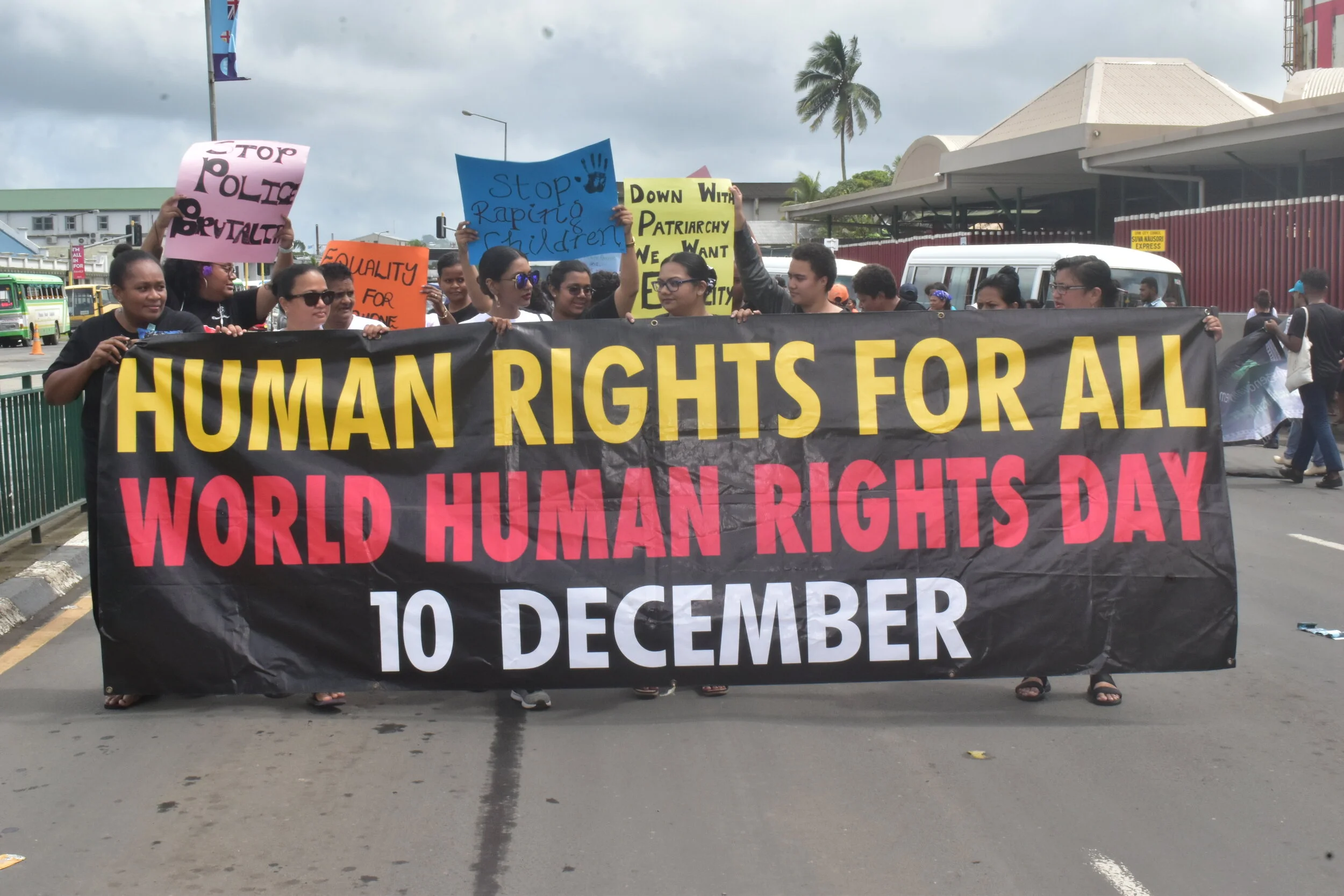
Human Rights Day 2020: Amplify, Lead, Transform
Tell me what an activist looks like?
This is what an activist looks like!

The NGO Coalition on Human Rights (NGOCHR) organized a march through Suva today (December 10) to commemorate Human Rights Day and the end of the 16 Days of Activism.
Almost 200 people marched from the Flea Market to Sukuna Park, with chants ranging from calling for safe homes to ending police brutality to freeing West Papua.
Papua!
Merdeka!
Papua!
Merdeka!
“We have been profiling, protecting, promoting and ensuring that none of our human rights are abused or if they are, then we call to attention the duty bearers and we call to attention accountability towards those that violate rights,” said Nalini Singh, Chair of the NGOCHR and Executive Director of the Fiji Women’s Rights Movement (FWRM).
While addressing the crowd after the march, Singh said for FWRM, being part of the human rights movement meant respect for women’s rights, respect for children’s rights, respect for the environment that we work in, and respect for the workplaces we work in:
“Not only demanding equal pay for equal value of work but we are talking about safe workplaces, safe homes, safe streets and a safe Fiji for all of us. A Fiji where we have our human rights protected,” she said.
What do we want?
Safe homes!
When do we want it?
NOW!

“When there’s women’s rights and where there’s human rights all connected, there’s no two ways about it: women feel peaceful, they feel secure, the communities become secure,” said Susan Grey, femLINK’s Executive Director.
Grey took this opportunity to highlight the struggles of the Rural Women Leaders Community Media Network (RWLCMN), compounded by COVID-19:
“It’s also about remembering the women who are not here with us...let us commemorate international human rights day and remember all those that are not here and whose voices we are collectively trying to amplify,” she said.
Grey also called out “leaders in Fiji” to think of those suffering: “Stop being in your bubble and thinking it’s all about you. It’s been a very challenging year....this is a time for empathy, look beyond your noses, have compassion and look at the greater picture and respect everyone’s human rights.”
What do we want?
Human rights!
When do we want it?
NOW!
Chantelle Khan, Executive Director of the Social Empowerment and Education Programmes (SEEP) in a powerful message to the crowd also acknowledged the late Batai Iliesa’s activism:
“He stood up for his human right and the rights of the people who were in that place in Nausori that day. There are some police...who may not know that human rights is to be protected. And there are people who go through this everyday and they are quiet about it because they don’t know where else to go.”
She said, “When you come and march today, when you bring your families and children to come and march with us today, that’s making the statement that Fiji needs to understand. That’s making a statement that we all believe in because that’s why we are all here.”
Tell me what a feminist looks like?
This is what a feminist looks like!
Me rokovi na dodonu ni tamata!
Create safe spaces for communities to raise issues: Swamy
“We need to create spaces where people can clearly articulate what the issues are that they are not happy about,” said Florence Swamy in a recent interview with FemTALK 89FM.
Swamy is the Executive Director of the Pacific Centre for Peacebuilding (PCP), an organization working with peacebuilders in the Pacific to transform, reduce and prevent conflict.
The organization actively works to promote restorative gender justice through inclusive decision- making, empowerment and participation and is a member of the Global Partnership for the Prevention of Armed Conflict (GPPAC) Pacific network.
Swamy said too often these safe spaces that people can come to and who they can go to are not there.
“And so conflict really comes out of a situation where there’s dissatisfaction about something or where ideas are not in sync with each other,” she said.
She said it came to the support that people need, it was about creating the spaces to talk about issues and to ensure those spaces are safe.
“But also to empowering people to be able to listen. More often than not, we are listening to form a reply to something,” she added.
Swamy explained that many times, “we need to listen to understand.”
“It’s about how do we listen to those different views and come to a resolution to benefit a larger group,” said Swamy.
In her message for the 16 Days of Activism in Ending Violence against Women and Girls, Swamy said that even with restrictions in place due to COVID-19, “advocacy continues to be important.”
“We can’t back off, we can’t slow down. We can’t say it’s not our business; it is our business wherever it [violence] is happening,” she said.
PCP works directly with communities “where women don’t have access to urban areas”.
The team was recently in Naitasiri conducting workshops on peacebuilding methodologies and human rights as well as advocacy on ending violence against women and girls (EVAWG).
Sustainable development means equal participation
“Women are not given the opportunity to participate or speak in a meeting,” said Varanisese Maisamoa, President of the Rakiraki Market Vendors Association (MVA).
Maisamoa, who attended femLINK’s Rakiraki district convening last month, said even though women were present at meetings, “they will not be given the opportunity to speak, to raise their voice or raise the issues in that meeting.”
“During village meeting men can be given the opportunity to fully participate but not us women,” she said.
“Women can be sitting in the back, in the kitchen preparing food or whatever but as long as they are there, if they are thought to be present, they are not really participating.”
Eta Tuvuki of the Burenitu Soqosoqo Vakamarama (SSVM) said the current dynamics made women feel insecure.
“Men think that they should have the full power and control over us to participate in any gatherings or meetings at all levels. [Because of this] we don’t really feel secure,” she said.
“Even though we’re part of the village coming down to this we’re not really there.”
Ana Kulaniloga, who is also a member of the Rakiraki MVA, shared her experiences of being discouraged from speaking at village meetings.
“Once, I said that I’m going to take up something in the village meeting and then somebody just told me, ‘you’re not allowed to speak there.’ I said, ‘why? I’m a villager of this village. I’m a member of this village. Why am I not allowed to speak?’”
She said her outspokenness is seen as her being “naughty” or “being proud” and she is looked down on for that.
“They have a different way of seeing me because they say I’m naughty and want to speak up in a village meeting? But we consider that as our right to speak up there but not by the community at large,” Kulaniloga explained.
“It’s their mindset that’s affecting what the women are going through in the community.”
Fane Boseiwaqa, femLINK’s convenor for the Ba, Tavua and Rakiraki districts said, “Without women’s equal access to and participation in development processes from the district and tikina level gender inclusive development will not happen and we will continue to hear the call for improvement in rural infrastructure.”
Members of the Rakiraki Rural Women Leaders Community Media Network (RWLCMN) say there must be more participation from across all governance levels, “not just talking about it but working on that – the government and all other relevant authorities to see that there is more participation of women from the village level especially.”

Lack of resources hinder economic security
“Most of the people are doing backyard gardening in order to meet their daily needs and wants,” says Swashni Devi, a community health worker in the Reservoir Settlement, Tavua.
During the district convenings in Tavua last month, Devi shared the economic impact of COVID-19 felt by communities surround the town.
“I’m from Reservoir Settlement in Tavua, it is just a settlement, we don’t have farms and people mostly rely on working outside... backyard gardening seed assistance is also given by the Ministry of Agriculture but certain families are left out,” she said.
Devi said despite assistance through the Fiji National Provident Fund (FNPF), “everybody needs assistance and government should look into it”, including for social benefit programmes such as the bus fare scheme.
According to a statement made by Women, Children and Poverty Alleviation Minister Mereseini Vuniwaqa in a Fiji Times report (5 September, 2020), ‘Government’s move to reduce bus fares for elderly citizens from $40 a month to $10 was a balancing exercise.’
The Minister says that of the 82,000 senior citizens on the programme, “average usage per month is about 52,000.”
“These days the busfare assistance have gone from $20 it has gone down to only $10 for the senior citizens which is kind of very hard for them to access to transport to go to town and hospitals,” said Devi.
The Fiji Times quoted the Minister saying, “At such a time as this, that is Government’s priority – to ensure that social pension which puts food on the table – remains at the same level.”
Unaisi Bakewa of the Tavua Disability Network said that with the pandemic, a lot of sacrifices have had to be made.
“People from the urban areas are moving back to the villages and we tend to see a distribution of resources,” Bakewa explained.
“What one family use to have...they have to share with two or three families now because of the lack of resources.”
Bakewa said that even though land is available, there is a lack of knowledge on how to utilise it adding “sometimes a lot of them they really have to come and learn, really learn the rural life.”
Irene Kumar, a member of the District Council of Social Services (DCOSS) Tavua network said these are issues faced and raised by women and therefore women must be recognized as being on the forefront.
“Our women are not in the picture. They work in the community and also at their home too but they are not recognised.”
Kumar said more opportunities need to be given to women to be part of formal decision-making spaces including in awareness campaigns.
WOMEN’S HUMAN RIGHTS GROUPS CONDEMN MISOGYNISTIC SOCIAL MEDIA POSTS AGAINST WOMEN MPS
23/10/2020
Women’s human rights groups are disgusted and appalled at the misogynistic attacks made by Kishore Kumar on social media against female members of Parliament and strongly condemn this act of violence and cyber-bullying.
The social media commentator on his Facebook page, Kishore Kumar Publications, has made several public videos vilifying and defaming female members of parliament. The public posts contain abusive and sexually derogatory remarks against certain women members of parliament.
The Fiji Women’s Crisis Centre, femLINKpacific and the Fiji Women’s Rights Movement call for urgent action to condemn all forms of violence and discrimination against women and address the disturbing series of attacks from Mr. Kumar.
FWCC Coordinator Shamima Ali said this is often how men discourage, deter and malign younger women and women in all their diversities from political participation and national discussions at all levels.
“Such comments on an open public platform are not only detrimental for women but pose great risks to their safety and national participation. This is a great example of cyberbullying, harassment and hate speech.”
“This repeated and targeted acts of psychological violence including character attacks, cyberbullying and harassment, on Honourable Lenora Qereqeretabua and other female members of Parliament, must also be condemned by all parties and the State, with further action to be taken,” said femLINKpacific Executive Director, Susan Naisara Grey.
“We condemn the violence, which includes all forms of aggression, coercion and intimidation against women as political actors, which is one of the most serious hurdles to women’s full and equal political participation,” said Ms. Grey.
“There must be no impunity for violence against women, including within the cyber and virtual space. It is unacceptable that Mr. Kumar is allowed to continue making targeted sexist attacks that are discriminatory, abusive and defamatory against women and there have been no repercussions for his action,” said FWRM Executive Director Nalini Singh.
“Violence against women is a non-partisan issue and whichever woman he targets, whether a government MP or a member of the opposition, it must be condemned and there must be justice.”
It is equally disturbing to note that Mr. Kumar is a high school teacher and that he is allowed into classrooms despite his unethical and misogynistic behaviour. There must be better standards set by the Ministry of Education for educators as they play such a significant role for young people and children.
The women’s human rights groups call for investigations from the relevant authorities, including the Fiji Police Force, the Human Rights and Anti Discrimination Commission and the Online Safety Commission.
“The Online Safety Commission should not sit silently when these crimes continue to happen almost on a daily basis,” said Ms. Ali.
“Raising awareness about cyberbullying is one thing, but the enforcement of the law is equally important. There must be consequences for those who constantly contribute to unsafe cyberspace. The silence is deafening from women MPs from both sides of the House. This is when solidarity is important,” she said.
The Fiji Government and the Fiji Police Commissioner have made strong statements about ending violence against women in the past. This is an opportunity to strengthen these statements and send a message to the public that this cannot be condoned. Fiji has also recently ratified the ILO Convention to eliminate violence and harassment in the world of work. It is unacceptable that women MPs are facing sexually and mentally abusive attacks targeted against them because of their roles.
Women and girls have faced an enormous amount of violence on social media and online spaces. Mr. Kumar has been actively sharing abusive content for years and there seems to be no justice for his victims. Abusers must be held accountable and should not be allowed to hide behind virtual spaces with impunity. We must condemn and eradicate all forms of violence against women and girls.
END
For media queries please contact:
FWCC Communications Officer Nasik Swami at nasik@fijiwomen.com or +679 9984 590
FWRM Communications Officer Maryann Lockington at info@fwrm.org.fj or +6798683182
femLINKpacific Susan Grey at susan@femlinkpacific.com or +679 8366542
Women Market Vendors Persist Despite COVID-19 Challenges
International Day of Rural Women is marked annually on October 15. In light of the coronavirus pandemic, this year’s theme is “Building rural women's resilience in the wake of COVID-19”.
“The risk is there, the risk is very real,” said Varanisese Maisamoa, President of the Rakiraki Market Vendors Association.
Maisamoa is one of many market vendors who remained active during the height of the COVID-19 pandemic in Fiji.

As a woman market vendor, she understood firsthand the risk she took to be out there selling in the market.
“Women are the person(s) in the household that literally run the house so the importance of getting the information on how to stay safe on COVID – 19 is very important."
“For women market vendors coming to the market every day, entering the shopping centres, being in contact with the customers, different customers every day - the risk is there, the risk is very real,” she shared during an interview with FemTALK 89FM in May.
While dealing with the impact of COVID-19, Fijian communities also had to bear the brunt of Tropical Cyclone (TC) Harold.
Maisamoa said during this time, many of the women farmers she had spoken to preferred to keep their produce instead of selling it due to the widespread damages of TC Harold as well as restricted movements during the lockdown period.
“After the COVID- 19 came to Fiji I talked to a couple of them and they said we got plantation(s) but we don’t want to bring it(crops) to the Market yet cause we don’t know when the shop is going to continue to close or open,” she said.
“They started to preserve whatever was there for them first to think of their family and then when Rakiraki didn’t record any case and then the supermarket began to open and all that and they started to bring in food from their garden, from their plantation.”
While it has been widely recognised that rural women are “critical agents of change in the fight against rural poverty, hunger and malnutrition” there is much that remains to be implemented in the support of these women’s access to proper infrastructure and services.
“One of the issues that I was expecting is that financially when things go wrong and tough, family will face difficulties and then the wife or the mother usually [become] victims of violence,” said Maisamoa.
For some, it’s gotten to the point where they’ve had to go outside their hometowns to sell their produce in order to earn a living.
“I do the selling because there’s a lot of unemployment here in Rakiraki,” said Ana Kulaniloga, a market vendor in the newly built Rakiraki Market.
“We have built our new market here in Rakiraki but who to buy from our new market? So we have to look outside Rakiraki where there are people employed so they can buy our produce,” she said.
Kulaniloga said even after the market has opened, she’s been travelling weekly to Tavua to sell her produce because “there’s nobody in Rakiraki to buy our produce from our table.”
“Tourism has closed, all these hotels they have closed and the sugar industry is no longer there so we are just depending on the civil servants to buy so that’s the impact,” Kulaniloga shared.
Kulaniloga said, “More awareness workshops need to be conducted in rural areas to empower people to adapt to the present situation.”
In August, the Shifting the Power Coalition released a rapid assessment report, “Mobilising Women's Leadership Solutions for Protection and Recovery in a Time of COVID-19 and TC Harold”. The report provides recommendations to ensure the protection of vulnerable groups as well as management of social and economic impacts of the pandemic, which includes dedicated funding for women-led livelihood and food security programmes.

Women's Weather Watch amplifies women's role as first responders
October 13 marks the International Day for Disaster Reduction (DRR). Designated by the United Nations General Assembly, the objective is to “promote a global culture of disaster risk reduction. According to the United Nations Office for Disaster Risk Reduction, “it is an opportunity to acknowledge the progress being made toward reducing disaster risk and losses in lives, livelihoods and health in line with the Sendai Framework for Disaster Risk Reduction 2015-2030 adopted at the Third UN World Conference on Disaster Risk Reduction in Japan in March 2015.”
This year’s DRR Day puts a focus on “good disaster risk governance” in line with Target E of the Sendai Framework: “Substantially increase the number of countries with national and local disaster risk reduction strategies by 2020” which lays the foundation for the implementation of the Sendai Framework and is closely linked with Priority for Action 2: “Strengthening disaster risk governance to manage disaster risk.”
“When it comes to building climate resilience for me as a rural women leader...we need more training before the disaster come,” said Timaima Ralolokula, President of the Veilomani Women’s Club.
Ralolokula shared this during an interview for femLINK’s Women Human Security First (WHSF) series.
She said rural communities need to experience disaster drills as a way to prepare themselves during actual disasters.
“We have to be prepared at all times. We need to know where our evacuation centre is, whether it’s [disability] friendly or not; whether it can cater for the number of people in our community and I think these are some of the things that [come to mind] [when we talk about] building climate resilience.”
Vani Tuvuki, President of the Koronubu Women’s Fellowship in Ba, said that in the height of the COVID-19 pandemic in Fiji, women in the Ba network were also carrying out awareness for Women’s Weather Watch (WWW) in order to better prepare for Tropical Cyclone (TC) Harold.
“We were always going out to do awareness on the weather because we had the SMS messages from our femLINK convenors saying there is a low pressure system and then we were also informing our communities on the weather situation because of TC Harold,” she said.
“As women frontliners, we are always on the [lookout] for whatever is going to happen.”
Through the WWW campaign, femLINK continues to highlight the leadership by women at community level and the need to apply gender equality commitments and women’s human rights standards.
Women’s Weather Watch reports and campaigns have resulted in greater visibility of the specific needs of diverse women during disasters within the national media as well as national government strategies.
What began as a simple SMS update for a core group of rural women leaders across Fiji, today Women’s Weather Watch is an inter-operable information- communications platform that not only provides a network of rural women leaders with weather updates and preparedness information, and a platform to document their lived realities through disasters and climate change.
The women are not just receiving information but are also are uplifted as the first responders – from preparedness to response and recovery.
Women’s Weather Watch connects women from across Fiji to the Fiji Met Office and the National Disaster Management Office informing decision makers and stakeholders of how women’s rights must be applied throughout all stages of disaster.
Women’s Weather Watch’s key communication message has continued to campaign for women’s participation in disaster preparedness and response strategies - to bring experiences from their disaster-affected communities to develop and communicate recommendations to inform decision-making processes.

Nadi women leaders raise priority issues

femLINKpacific recently held its Nadi convening under the theme , ‘Women, Peace and Security Shaped through Community Media During COVID-19’ in line with the International Day of Peace theme, “Shaping Peace Together”.
The convening was attended by 24 women leaders representing young women, women with disability and the LGBT community.
A key focus of the convening looked at the lack of access to proper water amenities and provision by communities in the Nadi area.
“From my group, there’s a participant [talking about] poor drainage and road conditions. Now there’s unemployment, high cost of living,” said Timaima Ralolokula, President of the Veilomani Women’s Group.
Ralolokula was summing up her group discussions during the recent Nadi district convening in an interview for femLINK’s Women’s Human Security First (WHSF) radio series.
“In the village of Bavu, [they don’t] have access to clean drinking water and...they’re only receiving water two days a week,” said Ralolokula.
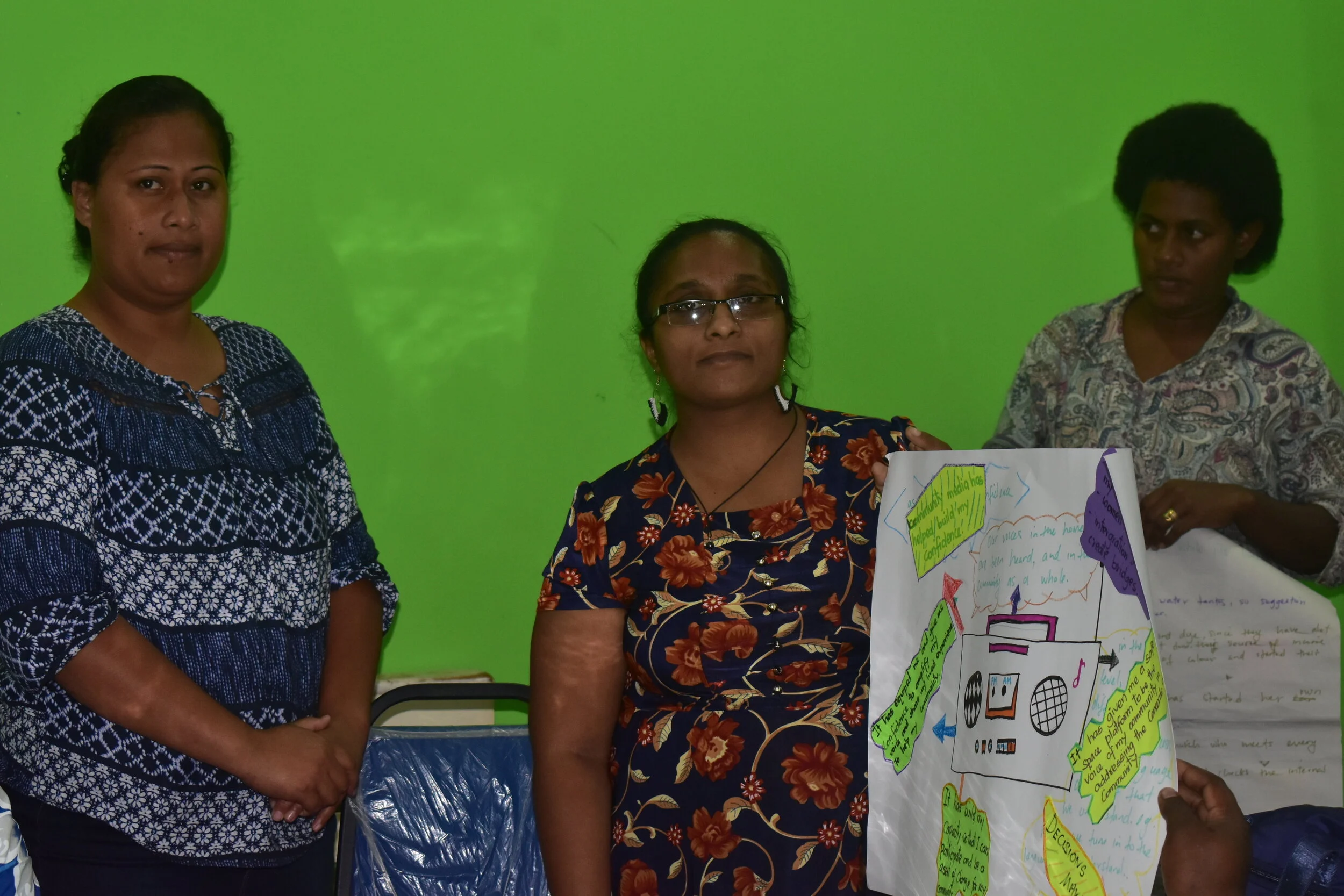
“[Community media] has supported me by giving me a safe space to be the voice of my community,” said Amoe Serau of Solovi, Nadi.
“Some of the issues that we highlighted were...water. One participant shared in the community she lived in, they depend on tanks but because of growing numbers in the community, there aren’t enough tanks and water for everyone,” she shared.
This month’s convening looks at how community media supports women as peacebuilders and the women’s own journey as leaders and participants in peacebuilding.
Productions from the Nadi convening will soon be available on femLINK’s Soundcloud page.
femLINK's district convenings are supported through the #WeRise Coalition. The Coalition believes that diverse women can achieve transformative change when working together through a vibrant, coordinated and sustainable feminist movement.
The Coalition consists of the Fiji Women's Rights Movement, International Women's Development Agency - IWDA and femLINKpacific.
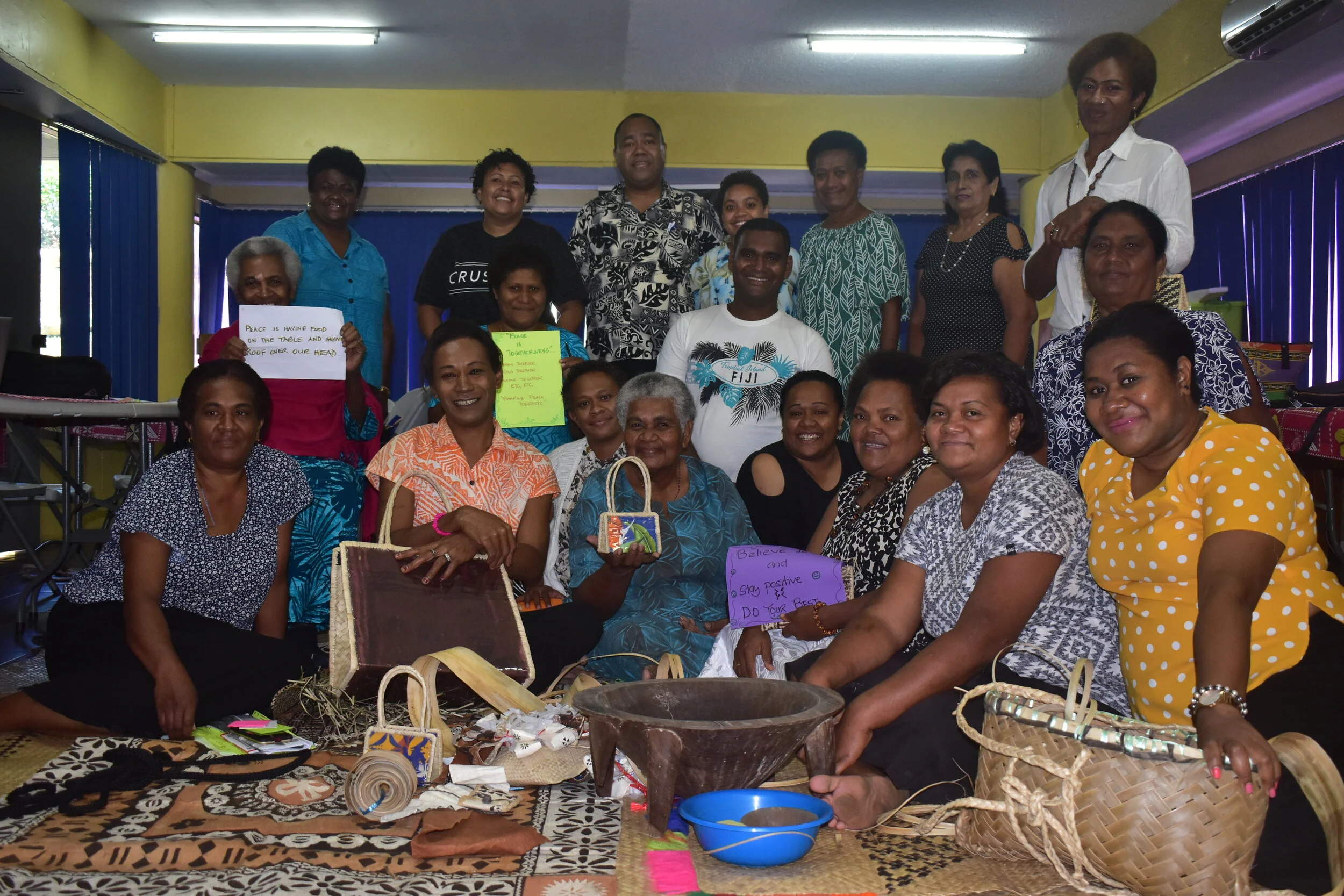
Community media as a tool for peacebuilding

Twenty women leaders – including young women and reps from the LGBT community - attended last month’s district convening in Lautoka.
As part of the convening, the women leaders formed a peace table to discuss among themselves the changes COVID-19 had brought to their communities.
Key to this discussion was the role of community media in supporting women as peacebuilders.
“Community media has been one of the very key and instrumental tools that our organisation uses in terms of amplifying our voice, particularly those of us who come from minority organisations,” shared Bonita Qio, Executive Director of the Pacific Rainbows Advocacy Network (PRAN), a grassroot movement advocating for the rights of the Trans community in the Western Division.
Qio said, “It is very hard and it’s a challenge for us to put our agenda on the table for decision-makers, for policymakers to hear.”

Adi Tubuna Namosimalua of the Ebenezer Women’s Ministry said community media had provided her community with a safe platform to address their issues and come up with solutions.
“This is a platform where we can speak freely and we can be heard and where we can express our rights and it is a place where we are included,” she said.
Namosimalua also shared how COVID-19 had affected the conditions to achieving peace.
“Peace to me is to have harmony and to be free from violence. COVID-19 has changed this as there has been changes in the resources [that’s available], health services and food and the economy,” Namosimalua shared, adding COVID-19 had strengthened her resolve as a leader and role model for other women in her community.
The full audio of this conversation will soon be available on femLINK’s Soundcloud page.
femLINK's district convenings are supported through the #WeRise Coalition. The Coalition believes that diverse women can achieve transformative change when working together through a vibrant, coordinated and sustainable feminist movement.
The Coalition consists of the Fiji Women's Rights Movement, International Women's Development Agency - IWDA and femLINKpacific.
Vanua Levu: Rural Women Leaders Community Media Network update
Labasa

Thirty two women were part of femLINK’s convening in Labasa held at the St. Thomas Anglican Church Hall. Participants included young women, women’s associations, clubs and networks with representation from 14 clubs of a total of 1223 people. 1303 households were represented with 3 members from the LGTB network, and 6 new members joining the convening.
Women leaders had the opportunity to contribute their stories on their experiences around COVID19, its impacts on their role as community leaders, their families and how this affects their role as catalysts of change and peace builders.
Women leaders discussed the rise in urban to rural drift through this COVID19 particularly for family members who had lost their jobs and were headed back to their villages.
Unfortunately, there were also rising incidents of theft from plantations and vegetable farms.
Access to transportation was hard for farmers and women who made an income selling food crops especially around the issue of pricing.
"Peace means balanced meals, proper medication and proper water services…” says Amra Wati, a sentiment that highlights the basic needs lived realities of women leader’s peace and security priorities agenda during humanitarian crisis.

Labasa Network members during the September convening at the Labasa Community media Centre.
Bua

Twenty three women were part of femLINK’s convening in Bua, held in Lekutu. Participants included young women, women’s associations, clubs and networks with representation from 8 clubs of a total of 1039 people. 1223 households were represented with 7 new members joining the convening.
Women leaders had the opportunity to contribute their stories on their experiences around COVID19, its impacts on their role as community leaders, their families and how this affects their role as catalysts of change and peace builders.
Expanding the size of the market in Nabouwalu was on the agenda for the Nabouwalu Market Vendors Association representatives present especially so that it would cater for all the women vendors who utilize that space.
Women leaders also shared their experiences in finding alternative income to supplement and/or replace the income lost when COVID19 impacted jobs across the nation. This placed extra loads on the women who had to also manage their children, spouses, extended family and community needs.
“We acknowledge the crucial role that women leaders such as yourselves play as catalysts and agents of change and peace in your homes and communities. Particularly on the pivotal role you play in mobilizing and as first responders," says femLINK's Program Manager, Kele Gavidi, who presented on furthering women’s peace and security priorities agenda during humanitarian crisis.

Tawake

Forty five women were part of femLINK’s convening in Tawake, Vanua Levu. Participants included young women, women’s associations, clubs and networks with representation from 5 clubs of a total of 469 people. 107 households were represented with 7 new members joining the convening.
Women leaders had the opportunity to contribute their stories on their experiences around COVID19, its impacts on their role as community leaders, their families and how this affects their role as catalysts of change and peace builders.
Access to improved and clean drinking water is a necessity and the women leaders of Tawake and neighboring communities reiterated this out of concern for their families and communities.
The need for proper and improved roads were echoed by the women leaders especially when accessing services and supplies including food, postal and health care.
Expanding on access to health care the women leaders shared the need to extend the nursing station in Tawake because it caters for a large population in and around Udu point.

Radio productions from tthe Vanua Levu convenings will be available soon on femLINK's Soundcloud page.
The femLINKpacific team also travelled to the Western Division for this month's district convenings of the Rural Women Leaders Community Media Network.
femLINK's district convenings are supported through the #WeRise Coalition. The Coalition believes that diverse women can achieve transformative change when working together through a vibrant, coordinated and sustainable feminist movement.
The Coalition consists of the Fiji Women's Rights Movement, International Women's Development Agency - IWDA and femLINKpacific.
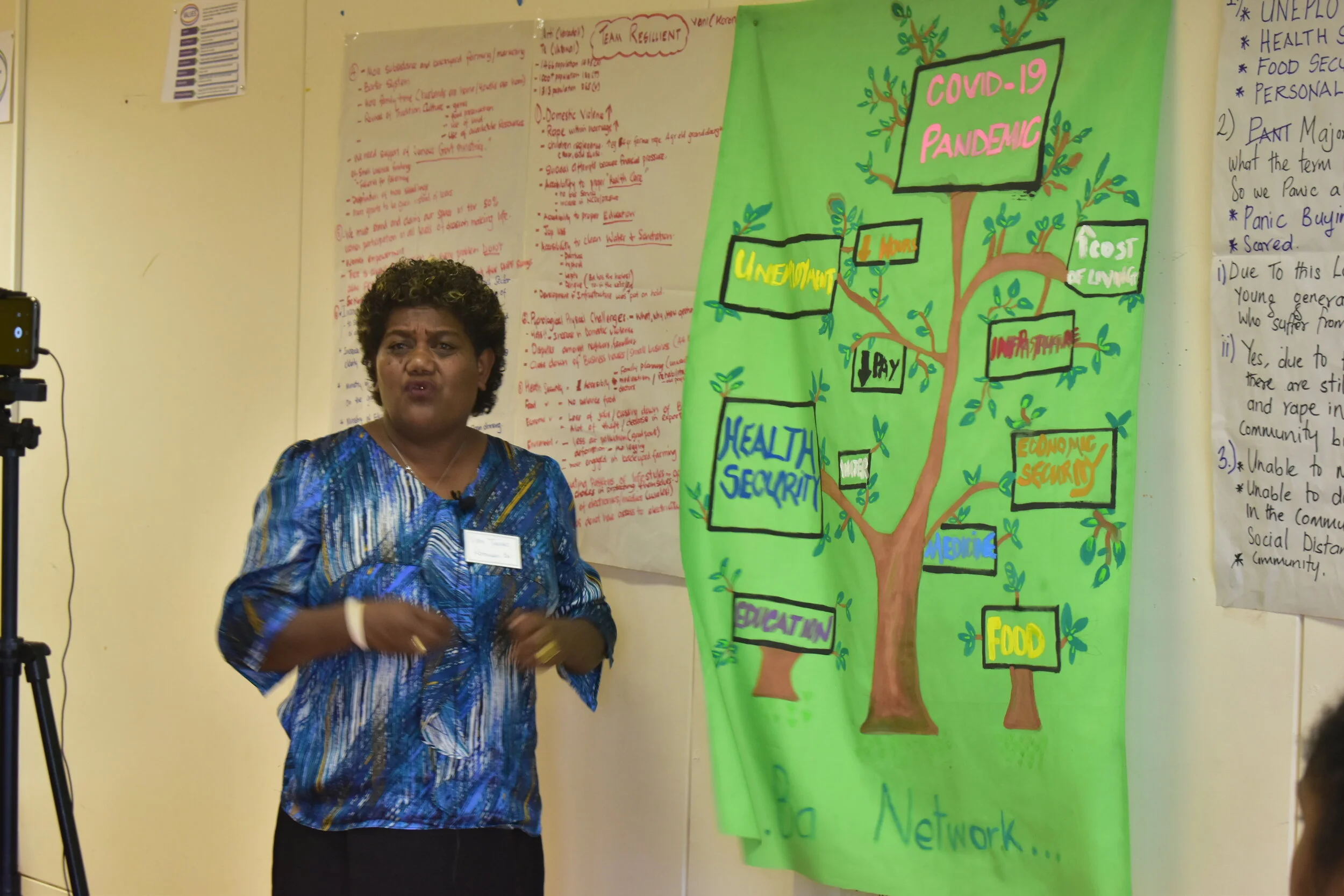
Diverse leadership needed in time of COVID-19: Ba RWLCMN
“Our representation to provincial council meetings and district councils should reflect the makeup of the community they represent,” said Divina Loloma, Chair of the United Rescue Missions and a member of the Ba network of rural women leaders.
“There should be opportunities for diverse women to enter these (decision-making) spaces...start looking into the gaps and what’s the problem in diversifying these places.”
Divina was one of fourteen women who attended the Ba district convening to discuss the role of community media in peacebuilding and particularly the significance of women leaders as catalysts of change and peace in their families and communities.
“We need to start making changes to these policies. We live in an era where we should be seeing a diverse representation in leadership,” said Divina.
“We need more women leaders for the well-being of the women in the community. Who will the women talk to when there is domestic violence? Who will speak for us?” added Kamlesh Lata, Vice President of the Varoka Tavaro Naari Sabha.
“When we think “political”, we’re thinking of the national level but we should bring it down: look at our community engagement, there needs to be women in decision-making,” says Fane Boseiwaqa, convenor for the Rakiraki, Ba, Tavua districts.
Boseiwaqa led discussions during the Ba convening under the International Day of Peace theme, “Shaping Peace Together”.
Vani Tuvuki, President of the Koronubunu Women’s Group and Ba District Council of Social Services (DCOSS) said policies need to change to reflect the times.
“We know that things raised here (district convenings) will go beyond here because of community media,” she added, emphasizing the role of community media in peacebuilding within communities.
“We are fighting for 50 percent even if the government is fighting for 30 percent diverse women’s representation in leadership,” Tuvuki said.

Adapting and the Changing Dynamics: Savusavu
Conversations around the movement of city dwellers to villages and the human security implications were one of a number of key items discussed this week during the district convening of the Savusavu Rural Women Leaders Community Media Network (RWLCMN).
With the theme of Women, Peace and Security shaped through Community Media during COVID19, commemorating International Day of Peace ("Peace Day"), which is observed around the world each year on 21 September, the women leaders considered the consider specific risks of diverse women (LBT, rural women, women living with disability etc.), and considered community action that is critical to build a sustainable and peaceful world for all of us.
“The changes that have been brought by COVID19 – of the changes in our village, is the number of school dropouts. After the lockdown – some youths in the age group from 15-18 years prefer to stay home and not return to school. So they have left school aside to go to farming,” said a network member.
These have led to both an increased focus on the land as well as a greater hive of social activities at night.
The network spoke about the impact particularly on some young people, noting too the contribution to further conversations in villages.
“The other thing that has changed (is) the life of the young people. It is also a great time for them to come to the village. We spend a lot of time during our family meetings – and we get to talk to each other about the things that is happening,” mentioned Adi Ema.
The Savusavu network also offered detailed insight into the movement of relatives from urban localities to villages in the Cakaudrove Province, and these included previous workers from Nadi in the airline industry, who have “returned to the land” to farm.
In the June Savusavu convening, the discussions of the women’s network centred around information on the CoronaVirus and the limited medium of communications such as internet, radio, TV and electricity. These were some of the contributing factors to the lack of information received and limited translation of this information to simple digestible materials and directions for people living in the rural communities and villages to follow.
Social distancing in relation to transportation was also an issue for geographically distant rural communities and villages.
Food Security was the most crucial issue during the pandemic, with changes now occurring with an improvement in accessing information. In June, key challenges revolved around the limited food access and the loss of income contributing to the increase in gender based violence, fear, anxiety, blood pressure, stress and mental health.
Some of the positives included more family time; increase in backyard farming and proper budgeting.
femLINKpacific is further documenting the current series of district convenings and will be conducting the Western Division convenings next week.