
15/10/2026
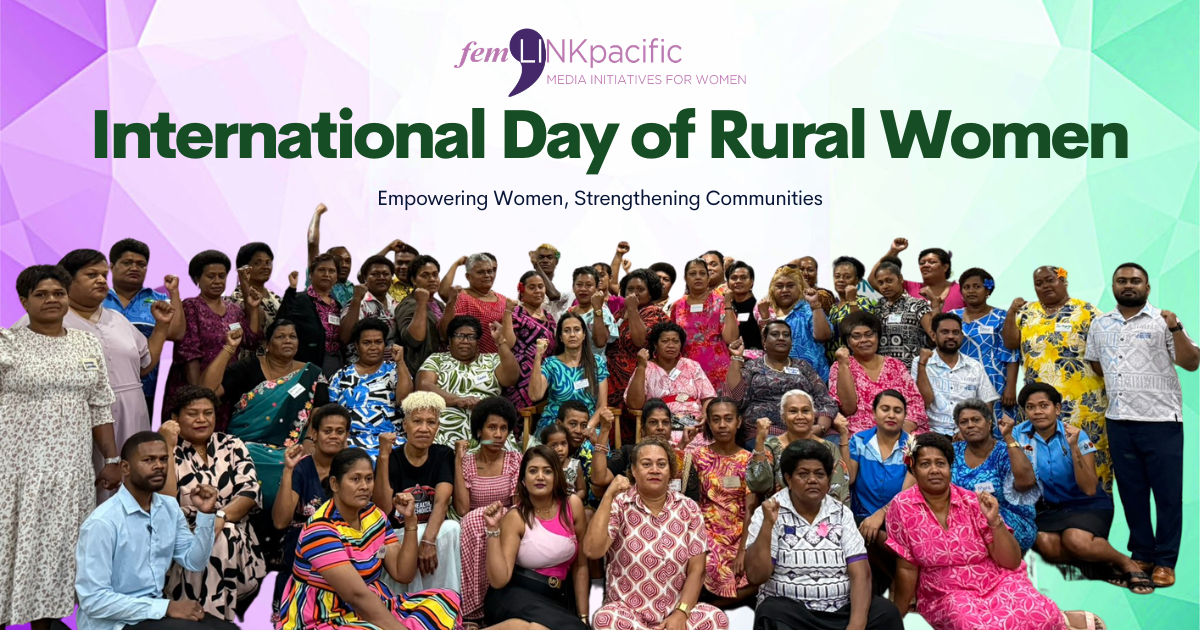
As Fiji joins the world in recognizing the contributions of rural women, International Rural Women's Day provides an important opportunity to celebrate their leadership, acknowledge the challenges they continue to face, and renew our commitment to building communities where all women can participate meaningfully in decisions that affect their lives.
For FemLINK Pacific, this year's message, “The Rise of Rural Women: Building Resilient Futures with Beijing+30,” reflects more than a celebration. It is a call to recognise rural and maritime women as leaders, communicators, peacebuilders, climate advocates and decision-makers whose knowledge and experiences are essential to Fiji's development.
Thirty years after the adoption of the Beijing Declaration and Platform for Action in 1995, the global commitment to gender equality remains as relevant as ever. Beijing+30 provides an opportunity to reflect on progress, identify persistent inequalities and demand stronger action to ensure that commitments to women's rights translate into meaningful change in women's everyday lives.
From the mat to the policy table
Since its establishment in 2000, FemLINK Pacific has worked to amplify the voices of women, particularly those living in rural, remote and maritime communities. Our approach is grounded in the belief that women who are most affected by decisions must have the opportunity to influence them.
Through our feminist community media, including femTALK Community Radio on FM89, we create spaces for women to share their experiences, discuss issues affecting their lives and bring community priorities into public conversations.
Our work is guided by the principle of moving “from the mat to the policy table” — connecting the lived experiences of women in their homes, villages, settlements and islands with the policies, institutions and decision-making processes that shape their futures.
At FemLINK Pacific, we believe that rural women are not simply recipients of information or development assistance. They are knowledge holders and active contributors to solutions for their communities.
Strengthening women's leadership and political participation
Women's meaningful participation in leadership and decision-making remains central to building an inclusive and democratic Fiji.
Through our women's political leadership initiatives, training programmes, community dialogues and engagements with political stakeholders, FemLINK Pacific supports women to strengthen their leadership skills, understand electoral and political processes, and engage in advocacy.
Rural women bring important perspectives to decisions about education, healthcare, livelihoods, infrastructure, climate resilience and community safety. Their participation helps ensure that policies respond to the realities of the people they are intended to serve.
As Fiji continues to strengthen women's representation and participation in public life, it is essential that women from rural and maritime communities are not overlooked. Their voices must be included in consultations, political processes and decisions about the allocation of public resources.
Advancing sexual and reproductive health and rights
Access to accurate information about sexual and reproductive health and rights is essential to women's dignity, wellbeing and autonomy.
These conversations are important because women and girls may face barriers to accessing reliable information and services, particularly in remote communities. Social stigma, cultural sensitivities, geographical distance and limited access to services can make it difficult to discuss health concerns openly or seek support.
By creating safe and inclusive spaces for dialogue, we aim to strengthen women's access to information and encourage communities to recognise sexual and reproductive health and rights as an important part of gender equality.
For us, empowering women includes ensuring they have the information and confidence to make informed decisions about their bodies, health and futures.
Rural women at the forefront of climate resilience
Across Fiji, rural and maritime communities are experiencing the impacts of climate change, changing weather patterns, water insecurity and natural disasters. Women often carry significant responsibilities for household food security, water management, family care and community recovery. Yet their knowledge and experiences are not always sufficiently reflected in climate and disaster planning.
FemLINK Pacific works to strengthen women's participation in disaster preparedness, climate resilience and community-level adaptation. Through engagement with technical partners, including the Fiji Meteorological Service, we support efforts to make early warning information more accessible and relevant to rural women.
These initiatives demonstrate that resilience is not only about responding to disasters after they occur. It is about investing in community knowledge, accessible information and practical solutions that strengthen women's ability to prepare for and respond to changing conditions.
Building resilient futures requires women to be involved in identifying risks, designing solutions and monitoring the decisions that affect their communities.
Women, peace and security: Leadership that strengthens communities
Peace and security are essential to sustainable development, and women have an important role to play in preventing conflict, strengthening community relationships and building peaceful societies.
FemLINK Pacific's work on Women, Peace and Security is grounded in the recognition that women's participation must extend beyond being affected by conflict or insecurity. Women must be involved in identifying security concerns, shaping responses and influencing decisions about peacebuilding.
This includes recognising the realities of women who experience gender-based violence, discrimination, social exclusion and other forms of insecurity. It also means ensuring that rural women can contribute to discussions about community safety, disaster response and the protection of human rights.
The Women, Peace and Security agenda, including United Nations Security Council Resolution 1325, reinforces the importance of women's meaningful participation in conflict prevention, peacebuilding and decision-making.
For rural and maritime women, peace is not an abstract concept. It is reflected in their ability to live free from violence, access essential services, participate in community life and contribute to decisions that affect their families and futures.
Inclusion must reach every woman
The rise of rural women cannot be measured by the progress of some women while others remain excluded. Women do not experience inequality in the same way. Young women, older women, women with disabilities, LGBTQI+ people, women living in poverty and women in remote and maritime communities may face different and overlapping barriers to participation.
FemLINK Pacific's work seeks to create spaces where diverse experiences can be recognised and reflected in community discussions, advocacy and policy engagement.
This requires us to consider not only whether women are invited to participate, but whether the spaces are accessible, whether information is available in appropriate formats, and whether women can contribute without fear of discrimination or exclusion.
An inclusive feminist future must recognise the leadership and rights of all women and girls, including those whose experiences are too often absent from public debate.
Beijing+30: From commitments to accountability
Thirty years after Beijing, the challenge is no longer simply to recognise that gender equality matters. It is to ensure that commitments are implemented, adequately funded and monitored.
It also means recognising the importance of feminist community media and grassroots women's networks in strengthening public participation and accountability.
Rural women must have opportunities to identify their priorities, monitor progress and contribute to decisions about how resources are allocated. Their participation should not depend solely on short-term projects or occasional consultations.
Building resilient futures requires sustained investment in women's leadership, accessible information, community networks and the systems that enable women to exercise their rights.
Building feminist futures together
International Rural Women's Day reminds us that the strength of Fiji's communities is closely connected to the wellbeing, leadership and participation of rural women.
At FemLINK Pacific, we remain committed to working alongside women in villages, settlements, rural districts and maritime communities to strengthen their voices, connect their experiences to decision-making and support collective advocacy for change.
The rise of rural women is not simply about giving women a voice. It is about recognising that they already have voices, knowledge and solutions — and ensuring that the spaces, resources and institutions exist for these to influence decisions.
Building resilient futures begins when rural women are recognised not as the last to be consulted, but as the leaders shaping the future of Fiji and the Pacific.
Their rise is essential to gender equality, stronger communities, climate resilience, peace and a more just and inclusive Pacific for generations to come.