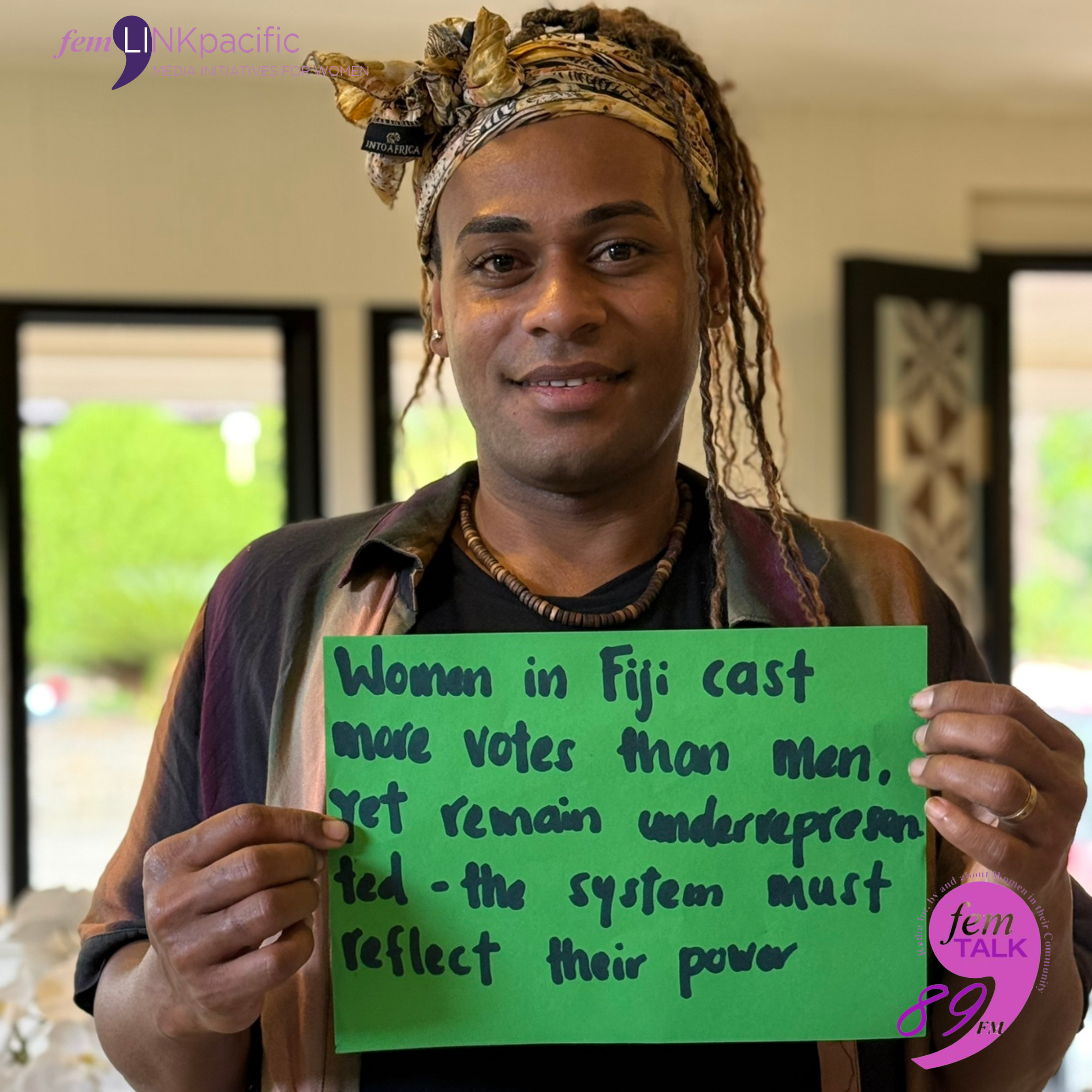
Women in Fiji cast more votes than men, yet they remain underrepresented in leadership and governance. This paradox reveals a troubling disconnect between civic participation and political power. Women demonstrate their commitment to democracy through active voting, shaping the outcomes of elections and influencing national direction.
However, the structures of representation have not evolved to reflect their influence, leaving a gap between the ballot box and the decision‑making table.
This underrepresentation carries significant consequences. When women’s voices are absent from leadership, policies risk overlooking the realities of half the population. Economic strategies may fail to account for the needs of women entrepreneurs and workers, particularly in rural and maritime communities where women sustain households and drive local economies.
Community development initiatives may miss opportunities to harness women’s leadership in building resilience, fostering collaboration, and ensuring sustainability. At the national level, governance without women’s perspectives risks perpetuating inequality and limiting Fiji’s ability to achieve inclusive growth.
The evidence is clear: women’s leadership benefits Fiji as a whole. Economically, women leaders champion inclusive policies that strengthen small businesses, expand access to resources, and promote innovation. Within communities, their leadership nurtures care, solidarity, and resilience, ensuring that responses to crises are grounded in lived realities.
Nationally, women’s participation ensures balanced governance, where decisions reflect the diversity of Fiji’s people and uphold democratic principles. The absence of women in leadership is not only unjust, it is a missed opportunity for progress.
The system must reflect women’s power. Representation must align with participation, ensuring that the strength of women’s votes translates into seats at the table. This requires dismantling barriers to political participation, reforming structures that limit women’s access to leadership, and amplifying the voices of women who already lead in their communities.
By recognizing and institutionalizing women’s power, Fiji can move toward a democracy that is fair, inclusive, and capable of delivering prosperity for all.